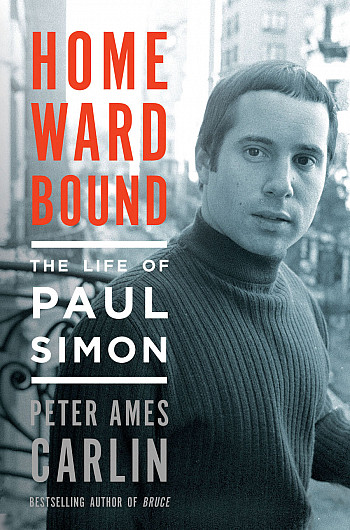
The definitive Paul Simon biography has arrived. It comes courtesy of Peter Carlin, a former writer for People magazine whose previous subjects include Bruce Springsteen, Paul McCartney and Brian Wilson.
Carlin spent years researching and writing Homeward Bound: The Life Of Paul Simon, a very ambitious and challenging undertaking, as Simon did not participate (Simon has yet to write a memoir, and seems to have little interest in doing so). The book is filled with insights and details from Simon's remarkable life and career, all documented for accuracy. Here, Carlin explains how he took on the project, and offers his thoughts on some key aspects of Simon's career.
Carlin spent years researching and writing Homeward Bound: The Life Of Paul Simon, a very ambitious and challenging undertaking, as Simon did not participate (Simon has yet to write a memoir, and seems to have little interest in doing so). The book is filled with insights and details from Simon's remarkable life and career, all documented for accuracy. Here, Carlin explains how he took on the project, and offers his thoughts on some key aspects of Simon's career.
 Carl Wiser (Songfacts): How did you go about researching and writing this book?
Peter Carlin: I'm an old hand at reporting and investigative reporting so it's always a variation of the same process: To write about an artist you need to hear/see/experience everything they've made that you can find. For this book, as with my earlier subjects, I had already done that years before I even thought about writing a book about them. When the serious work begins I start by reading everything I can get my hands on, which always adds up to tens, if not hundreds of thousands of articles, reviews, profiles, contemporaneous coverage, etc.
At the same time I start building a network of sources, reaching out to them and setting up interviews, visits to archives/libraries/etc. For this book I made multiple trips to New York, Los Angeles and to Cleveland, where the archives of the Rock 'n' Roll Hall of Fame reside. I spent time in London and other towns Paul had visited, worked in and/or left traces of himself. All of that went on for three years, more or less. I spent long days at Forest Hills High School and Queens College, reading every newspaper and yearbook published during his years there. I hired a couple of researchers to dig through the court filings in New York City and New York state. I saw Paul perform a couple of times (I had already seen him and S&G over the years).
I started writing in early '15 and finished during the late winter of '16... research continued during most of that time too, although at a slower pace. Then came the revising, the editing, the re-revising, and for God's sake don't forget the legal read and the endless telephone conversations with the (smart and charming) lawyer. And the listening to music/viewing of videos/DVDs, etc., never ends, and still hasn't and probably never will because I just dig how it sounds.
Songfacts: You describe how Paul Simon essentially took over the second episode of Saturday Night Live. How important has he been to the show, and vice versa?
Peter: Paul became a close friend of SNL's original producer Lorne Michaels just after he moved to NYC to put together the show in the spring of 1975. And though Paul didn't have a formal connection to the show, he and Lorne hung out all the time, which made him part of Lorne's inner circle of friends, a group that included the most crucial writers/actors/producers who nursed the show to life that summer and fall.Dan Aykroyd recalled how he was inspired to pursue his famous "Bass-o-Matic" sketch - an early standout in the first season - because Paul laughed at the idea so much. Paul's early appearances on the show - he hosted twice and was on maybe three or four times during the mid-late '70s - tended to be high points of their respective seasons. His first episode in '75 was almost entirely given over to music (including a Simon & Garfunkel reunion) but he did a taped bit playing basketball that was a landmark piece, and his Thanksgiving '76 episode had the classic opening of him singing "Still Crazy..." while dressed in a turkey suit. He ended up storming off stage in a tantrum... a great satire of his oh-so-serious image which he wrote himself.
He wrote a lot of his own material for the show. So while SNL certainly would have become itself without Paul, his sensibility was part of what it did become.
Songfacts: Simon has made films and has great stage presence, but he was never a big star on MTV. Why is that?
It was mostly a question of timing, I think. MTV premiered in August of 1981 just as Simon & Garfunkel were doing their Central Park show. That played as a longform video on HBO, so they didn't release videos - or maybe they did and it just didn't play on the youth/new wave-y playlist they had.
Hearts and Bones flopped in '83 and so the clips he did for that record didn't make an impact either. He did way better with Graceland because MTV couldn't ignore such a big phenomenon, but by the time Rhythm of the Saints came out his stuff would be channeled to VH1, which had an older viewership. Then he spent years on the Capeman project, then when he was back after that MTV and videos had ceased to matter so much. He still makes clips, in one form or another, but that's mostly for internet exposure because the wheel has turned so many times nobody really gives a crap about MTV anymore.
Songfacts: What do you feel is the definitive Paul Simon song?
Peter: I don't think you can say there's one definitive Paul Simon song, because his work has been so varied for so long. He's gone through so many phases in his career it's hard to imagine a person who had never heard any of it before would believe that the guy behind "Sound of Silence" and "America" could possibly be the guy behind "You Can Call Me Al" or "Wristband."
So how about a list? I think "America," "Mrs. Robinson" and "Sound of Silence" capture the essence of Simon & Garfunkel, while "Kodachrome," "Still Crazy After All These Years" and "Slip Slidin' Away" capture the '70s, the '80s-early '90s are the multi-culti years: "Late in the Evening," "You Can Call Me Al," "Diamonds on the Soles of Her Shoes," "Born At the Right Time" and "Cool, Cool Water." The '90s are The Capeman, and a lot of it is so, so great: "Adios Amigos," "Bernadette," "Vampires," "Trailways Bus." Then the '00s-til-now...hmm..."Pigs, Sheep and Wolves," "Father and Daughter," "Ready For Christmas Day," "Rewrite" and "Wristband." That's way more than you were after, but PS is way more than a guy with one definitive song.
A turning point for Simon & Garfunkel came when Simon re-worked a song he was working on called "Mrs. Roosevelt" into "Mrs. Robinson" for the 1967 movie The Graduate at the urging of director Mike Nichols. That story gets lots of attention in the book, as does the Simon & Garfunkel separation when Nichols cast Garfunkel in his movie Catch-22.
Songfacts: Mike Nichols is an important character in this story. What are your thoughts on how he affected Simon & Garfunkel?Peter: Nichols helped make them into superstars by featuring their work in The Graduate, which brought out new narrative textures in their earlier work while also presenting their music to a wider, deeper audience. Paul was dead set against putting S&G music onto the Graduate soundtrack album but eventually agreed and it was such a smash it set up their upcoming original album Bookends to do even better than their previous Parsley, Sage, Rosemary and Thyme, and of course Bookends set up Bridge Over Troubled Water, which made them bigger than the Beatles (who were breaking up anyway).
Oh but then Nichols cast the both of them into Catch-22, then had to write Paul's character out, which put Artie on a movie set for months later than expected, delaying sessions for Bridge and adding to the resentment that had been building... leading some observers to assert that Nichols was the guy who broke up S&G, him and his endless shoot for Catch-22, and then his decision to sign Artie to star in Carnal Knowledge, which so enraged Paul.
But they would have found other reasons to break up without Nichols, and they have, repeatedly, again and again ever since.
Songfacts: Did you try to get Simon to speak with you for the book?
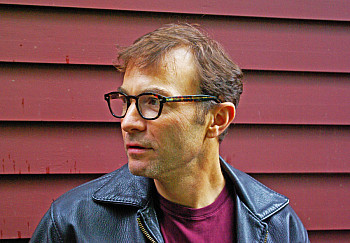 Peter: OMG yes. Repeatedly, over several years. He was very opposed to the idea, and to the entire notion that I was writing a heavily reported book about his life. Which is understandable on one level - who in their right mind would want that? But given how much of his life he's lived in public over the last 60 or so years... so many autobiographical songs, so much public feuding with Artie, so many high-profile marriages, so many huge hits and a couple of spectacular failures, maybe he should have seen it coming.
 Songfacts: Is there a story behind one of his songs that surprised you when you learned about it?
Peter: In 1961 he wrote and recorded a song called "Wild Flower," a purposefully exotic-sounding tune he released as a B-side for "Express Train," a single he wrote for Tico and the Triumphs, a doo-wop group he managed and produced at the time. "Wild Flower' is kind of a hodgepodge - a Bo Diddley beat with a snake charmer-y soprano sax and a pidgin-Hawaiian chant in the chorus that Paul and Tico & Co invented in the studio. The point was to jump onboard the craze started by the Tokens with "The Lion Sleeps Tonight," which was their version of "Wimoweh," the Weavers hit from 1949, which was their version of "Mbube," the South African pop hit written and performed by Solomon Linda, a Zulu tribesman/South African choir leader, who adapted a hunting chant he learned as a boy to the electric rhythms/sounds of the American ragtime and jazz records that had come to his country via western European traders, sailors and other imperialist so-and-so's. Which means both that Paul Simon recorded his first South African-inspired song in 1961, and that the mbaqanga/township jive music he heard from South Africa 25 years later sounded so familiar to him because it was another branch of the musical stream flowing from African/African-American sounds that in America had evolved into rhythm and blues and doo-wop. Which adds a whole other layer to the question of cultural imperialism/authenticity/etc.
Songfacts: You've also written about Bruce Springsteen. What traits do he and Simon share that have made them so successful?
Peter: Extraordinary talent, high-octane desire for success and a bottomless appetite for work.
Songfacts: How would you sum up Paul Simon's relationship with Art Garfunkel?
Peter: Extremely complicated. They're like brothers, really, their lives linked in so many crucial ways. They really do love each other, but to the same extent also resent/despise each other for having so much power over their individual existences.
Songfacts: When we spoke with Gerry Beckley, he pointed out that "America" doesn't contain any rhymes. What are some of the other Paul Simon songs that break the rules of traditional songwriting?
Peter: If we're talking song structure, he has been working around the traditional verse/chorus/verse structure for so long the individual examples barely warrant a mention. "Sound of Silence" doesn't even have a chorus, unless you count the nearly spoken phrase "...the sound of silence" at the end of each verse. Some of his African songs are built on traditional African scales that don't exist in western music.
But I think the most radical thing he did began around the Rhythm of the Saints album when he began building his songs from the percussion tracks up. He'd record percussion groups then go home and cut together the beats and flourishes into a structure that seemed to invite words, chords and melody... precisely the opposite of how most other songs are written, I believe. And he stuck with that writing structure something like 20 years or so.
Songfacts: What aspect of Paul Simon's life and career did you cover that you feel has been under-reported?
Peter: His childhood; the significance of his family's, and his, place in the American immigrant tradition of the 20th century, and how so much of his work is a musical representation of the immigrant's assimilation process. Like the great novels of Philip Roth, etc., Paul's work must be viewed in the larger historical/cultural context of where his family came from, and how they approached the challenge of becoming "real" Americans.
Songfacts: Like most wildly successful musicians, Simon has a complex personality that is not always pleasant. How did you cover this without coming off as sensationalist or derisive?
Peter: I tell the truth but I make every effort to place the less appealing parts into the larger story of a person who is not only a landmark artist, but also very capable of extraordinary kindness and generosity. I have no interest in embarrassing people or lingering over the juicy/gothic details of their failures and foibles. My goal is to understand more about their individual psychology, and to make connections between their interior landscapes and their perception of/interaction with the world around them.
Simon used many outstanding session musicians on his recordings, including the Swampers in Alabama and the Wrecking Crew in Los Angeles. Lesser known are the New York pros who played on "I Am A Rock" and "Homeward Bound." For a look at those sessions, see our talk with the guitarist, Ralph Casale.
You don't have to listen to much Paul Simon music to understand that they are the work of a complicated and sometimes troubled soul. Sometimes he does things that remind us of his darkness, but he has also created music and lyrics that remind us that no matter how dark things can seem, there's a beauty and generosity that exists around us, too. And for nearly six decades Paul's music has been a significant part of that presence in our lives.Songfacts: Why did you decide on "Homeward Bound" as the title?
Peter: I usually shy away from naming books after the subject's songs or album titles. It's just kinda... easy. But given the immigrant story beneath Paul's life and work (what are his many musical re-creations if not the assimilation process writ in music over and over again) "Homeward Bound" worked too well to ignore.
The novelist Colum McCann is the brother of a friend of mine in Portland [Oregon] and when he was out here earlier this winter we all spent a long, whiskey-fueled night that boiled down eventually to the three of us sitting in Ronan's living room with glasses and an ill-tuned guitar. When I was describing the book Colum started scribbling words and phrases on a piece of paper, all of which were ideas for a title. My favorite was "Homeward Unbound," with the subtitle, "The Seldom-Told Story of Paul Simon." I LOVED that, but got shot down by my editor (among others) for being too confusing to the conventional reader. "Homeward Bound" it was, and still is, and I like it just fine.
December 1, 2016.
Get Homeward Bound on Amazon.
More Song Writing