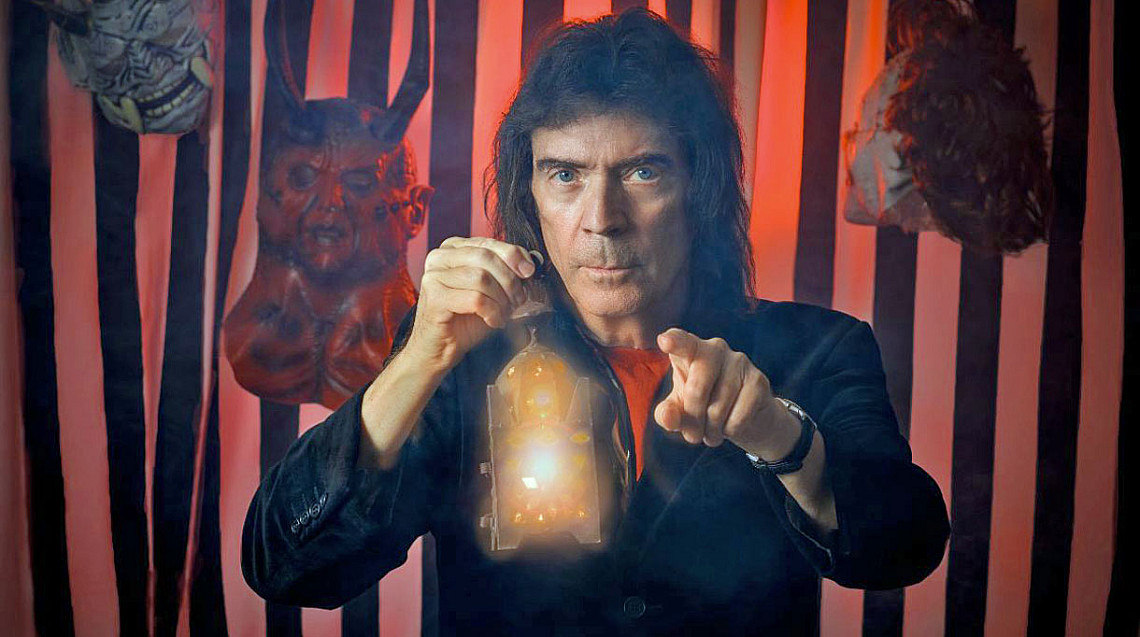
For Steve Hackett's 30th (!) solo release, 2024's The Circus And The Nightwhale, the ex-Genesis guitarist borrowed a page from the book of his former band – revisiting the concept album format. And as it turns out, parts of the album are quite autobiographical. Lyrically, Hackett touches upon a few different aspects of his life, including his childhood, his marriage, and his time with Genesis.
Joining Genesis in 1971, Hackett supplied guitar on all of the group's albums from 1971 through 1976, including such prog-rock classics as Nursery Cryme, Foxtrot, Selling England By The Pound, and The Lamb Lies Down On Broadway before exiting in 1977.
Here, Hackett goes track-by-track through The Circus And The Nightwhale, explaining the inspiration behind all of the album's 13 tracks and giving us the backstory behind the album's main character.
Joining Genesis in 1971, Hackett supplied guitar on all of the group's albums from 1971 through 1976, including such prog-rock classics as Nursery Cryme, Foxtrot, Selling England By The Pound, and The Lamb Lies Down On Broadway before exiting in 1977.
Here, Hackett goes track-by-track through The Circus And The Nightwhale, explaining the inspiration behind all of the album's 13 tracks and giving us the backstory behind the album's main character.
People Of The Smoke
It starts in gritty reality. It's very dark. In London you rarely saw the sun in those days, it was so polluted. It seems almost impossible to believe now.These Passing Clouds
But then we move on to an instrumental which is "These Passing Clouds." Which in a sense refers to the pollution, but also the ephemeral nature of the passing of time and just moving on.Taking You Down
"Taking You Down" is really about a young friend of mine when we were 9 years old, and how it worked between us – the dynamic.This is a rock song – we've got Nad Sylvan singing that. The other stuff I've done with Amanda Lehmann, the other vocalist. It's really about young life, and that time that you go through when one minute someone is your best friend, and then the next minute they just want to finish you off. That sort of aspect of young life at school.
Found And Lost
The next track is "Found And Lost," and the right of passage continues in a way. "Found And Lost" is really a very short track about first love – it seems great at the time, then moves on.It starts with mournful harmonica. Slightly jazzy, slightly bluesy. "Taking You Down" is, I would say, the album at its most mainstream rock. Heavy and slow, powerful.
Enter The Ring
The next track is "Enter The Ring," which is more Genesis-like. It talks about my pre-Genesis era, lyrically, and my time with Genesis, how thrilling that was. And then as it became more restrictive, the music takes a turn and heads into a kind of "wildfire burning through the faire" feel to it – the sound of mechanical organs and "Victoriana."So much happens briefly – things happen in vignettes. It's a more proggy track. It has my brother on it, it has the stage band on it.
Get Me Out!
"Get Me Out!" is kind of a slow waltz, a "dance of death." But it's almost rock music meets film noir, and the influences of everything, including the "Perry Mason Theme." I always liked that – it always scared the hell out of me as a kid when I first heard it."Get Me Out!," there's a time to get off the merry-go-round, there's a time to get off the roundabout, and my time in Genesis was drawing to a close, so it really talks about that. I use the term "the circus" to discuss anything that was going on with my life while touring with the band. It is a circus on the road, there's no doubt about it.
Travla
The main character on the album is a young man named Travla. He's based on Hackett, but with some twists. Steve explains:
Because it starts off in the first person, to quote Joseph Campbell with The Hero With A Thousand Faces and The Hero's Journey and all of that, everybody's lifetime is a heroic quest. Everybody has challenges to face. So, I wanted it to be both personal and universal. To say it's my story, but it's everyone's story, in a sense. Because everyone has their equivalent of these challenges.
The main character on the album is a young man named Travla. He's based on Hackett, but with some twists. Steve explains:
Because it starts off in the first person, to quote Joseph Campbell with The Hero With A Thousand Faces and The Hero's Journey and all of that, everybody's lifetime is a heroic quest. Everybody has challenges to face. So, I wanted it to be both personal and universal. To say it's my story, but it's everyone's story, in a sense. Because everyone has their equivalent of these challenges.
Ghost Moon And Living Love
It's really a love song about myself and my wife Jo. The establishment of the two of us as a couple in the face of quite a lot of difficulties both personally and professionally.Circo Inferno
Mainly an instrumental, but in a sense it's back to the idea of the circus, and the circus going round and round, fast and furious. All the soloing is furiously fast, so it's music salvos being fired.Again, a fairly short song, because I tried to keep everything fairly brief so it didn't outstay its welcome. This is why the album is 45 minutes. Normally, I'd do something much longer than that, but there was an intention to be brief, succinct, and to the point.
Breakout
"Breakout" continues the idea of "Get Me Out!" and now we're actually out of the situation. It's about establishing your own credentials. It's about autonomy. All of those reasons to have freedom and creativity.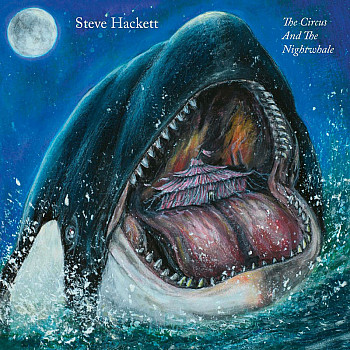
All At Sea
"All At Sea" precedes "Nightwhale," so it's a kind of musical storm of being swallowed by the whale.Into The Nightwhale
The album cover shows a circus being swallowed by a whale, which of course echoes the Jonah story [the biblical story of Jonah and the Whale] and the Pinocchio story.It's the idea of trying to survive the darkest and most challenging moments. "Into The Nightwhale" really describes that. It's really an idea of coming through this terrible thing and being able to survive it, symbolically, and being stronger for having done it. So that all those things – the heroic quest, the transcendent moment when you break through having faced your darkest fears and done all the things at the most difficult decisions and challenges - are on the other side.
Wherever You Are
"Wherever You Are" is really a cross between a rock song and a love song. Again, it's very much about my wife and myself, and it's somewhat philosophical: the reasons for living, who you are and who you're with. All of that.White Dove
"White Dove" at the end is just pure acoustic guitar – nylon guitar. I like to think of it as pure spirit. This idea of individuation and paring something right down to where you're not delegating to other musicians or singers. This is what I do. It's something that I think of as spiritual right at the end.February 13, 2024
For more Steve, visit hackettsongs.com.
Further reading:
Interview with Mike Rutherford
Interview with Tony Banks
Interview with Steve Wilson
Interview with John Petrucci
Rik Emmett Names The Five Best Guitar Riffs in Rock History
Photo: Tina Korhonen
More Song Writing