Like Peter Green (Fleetwood Mac) and Syd Barrett (Pink Floyd), Brian Jones founded a band that became far more famous after he was no longer part of it. Jones was a founder of The Rolling Stones, a charismatic guitarist who could play just about any instrument, and their de facto manager early on. Mick Jagger and Keith Richards wrote the songs, but Jones gave them flavor, adding sitar to "Paint It Black," dulcimer to "Lady Jane," recorder to "Ruby Tuesday," Mellotron to "She's A Rainbow." His lead guitar riffs powered several Stones classics, including "Get Off Of My Cloud," "Mother's Little Helper" and "I Wanna Be Your Man."
 Brian Jones in 1965Jones indulged in the lifestyle the group's success afforded him, and it cost him dearly. By 1967, his drug use became a problem and he found himself at odds with his bandmates. That year, he split with his girlfriend, Anita Pallenberg, who took up with Keith Richards.
The band fired Jones on June 8, 1969. In his autobiography Life, Richards wrote that Jones had developed an inferiority complex and had become a "rotting attachment," but at the time the split was announced as amicable, with Jones releasing a face-saving statement: "The Stones' music is not to my taste anymore. I want to play my own kind of music. The music Mick and Keith have been writing has progressed at a tangent to my own musical tastes."
On July 3, he was found dead in his swimming pool under suspicious circumstances.
The memory of Brian Jones has faded as the decades have gone by with Jagger and Richards in charge of the band - it's hard to imagine a time when they weren't. Now, for the first time, a Brian Jones documentary has appeared. Rolling Stone: Life and Death of Brian Jones was directed by Danny Garcia, who has also done acclaimed docs on The Clash, Johnny Thunders, and Sid Vicious. He and his co-writer/co-producer Nick Reynolds answered some of our questions about the film and Jones' impact on the band.
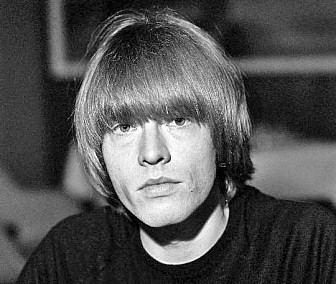 Brian Jones in 1965
The band fired Jones on June 8, 1969. In his autobiography Life, Richards wrote that Jones had developed an inferiority complex and had become a "rotting attachment," but at the time the split was announced as amicable, with Jones releasing a face-saving statement: "The Stones' music is not to my taste anymore. I want to play my own kind of music. The music Mick and Keith have been writing has progressed at a tangent to my own musical tastes."
On July 3, he was found dead in his swimming pool under suspicious circumstances.
The memory of Brian Jones has faded as the decades have gone by with Jagger and Richards in charge of the band - it's hard to imagine a time when they weren't. Now, for the first time, a Brian Jones documentary has appeared. Rolling Stone: Life and Death of Brian Jones was directed by Danny Garcia, who has also done acclaimed docs on The Clash, Johnny Thunders, and Sid Vicious. He and his co-writer/co-producer Nick Reynolds answered some of our questions about the film and Jones' impact on the band.
Nick Reynolds: Early life on the run with my father Bruce, architect of the Great Train Robbery. [We thought Nick was kidding, but it's true. His father was indeed the mastermind behind the 1963 Great Train Robbery, which also involved Buster Edwards, whom Phil Collins played in the movie Buster.]
Boarding school when he was arrested, Royal Navy electronic weapons engineer and diver, left to join a band in Australia, have been a member of the group Alabama 3, who did The Sopranos theme tune, for 20 years. Been writing and producing films and documentaries for the last six years.
Danny Garcia: Music journalism.
What did you learn about Brian Jones that you didn't know going in?
Reynolds: That he left six children behind, not five as it was previously recorded!
Garcia: That he had six children, not five.
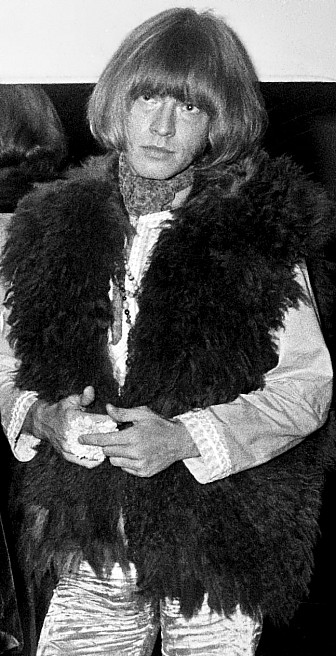 Brian Jones in 1967
Reynolds: Mainly because he wasn't a pop songwriter, he was a blues aficionado, although he co-wrote a few tracks and never got credited for them, "Ruby Tuesday" being one of them. He also co-wrote "Eight Miles High" with The Byrds while hanging out with them in a hotel in Pittsburgh, but for some reason he didn't want any credit. There's an interview online with Gene Clark where he tells the story.
Brian was very insecure and never presented the Stones a finished song according to Keith. But these days "Paint it Black" for instance is credited to Jagger/Richards/Jones. His sitar line made that song what it is. Brian was arranging all those tunes and turning them into hits.
Garcia: Brian wasn't a pop songwriter but he was a great arranger. Initially he was the leader of the group but that didn't last very long.
What are three songs where we can hear Jones' best work?
Reynolds: "Under my Thumb" with Brian on marimba. He makes the arrangement that again turns this song into a timeless classic.
"Cool, Calm & Collected" with Brian on dulcimer, banjo, harmonica and kazoo. Between The Buttons is one of the albums where Brian shines the most. Arranging every track with a vast array of instruments, proving once again he was the best musician in the band.
"We Love You" with Brian on Mellotron. Despite being off his head on Mandrax by this time, Brian manages to arrange the track with that syncopated layer of psychedelic madness. Pure genius.
Garcia: "Paint It Black." Brian's sitar line not only makes the song happen but also turns it into a timeless classic.
"Little Red Rooster." Brian was a pioneer of the slide guitar in the UK. His goal was to help spread the blues in the UK and then in the rest of the world, something he accomplished early on.
"No Expectations." Brian's last notable contribution to the Stones' catalog is another gem. In this track you can hear Brian on slide again arranging a simple track with some beautiful lines.
According to Mick Jagger, Jones wanted to be seen as the leader of the band, but that's pretty hard to do when you're not the lead singer. "Singers always get more attention than anyone else, even if they're not very good," Jagger told Mojo in 2002. "Brian really didn't like that. He thought he should get more attention."
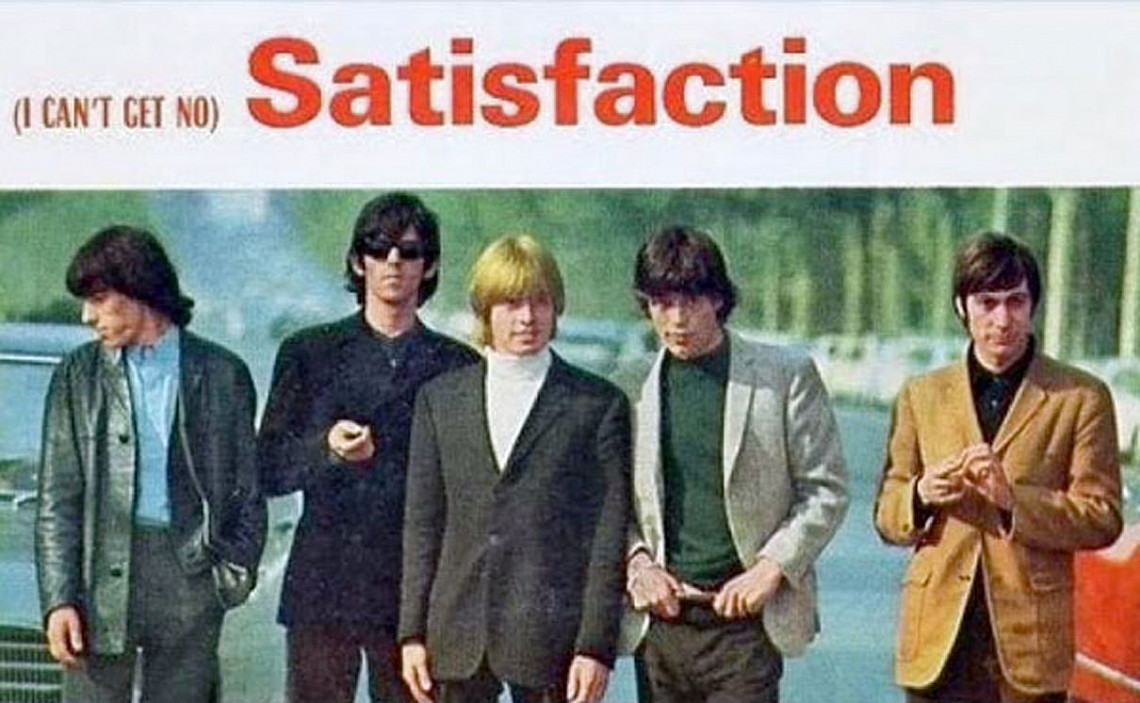
On the "Satisfaction" single, that's Jones standing front and center with Jagger stalking just behind him.
How did the The Rolling Stones' sound change after losing Jones?On the "Satisfaction" single, that's Jones standing front and center with Jagger stalking just behind him.
Reynolds: Well, that transition from a rhythm and blues band to pop band to psychedelic band to rock and roll band was done while Brian was in the band. "Jumpin' Jack Flash" was the start of that Stones sound we've become accustomed to since 1968.
But yes, the Stones sound changed with the times and obviously Mick Taylor being the great blues guitarist he is, helped them make those '70s albums some of the finest work they've done to date.
Garcia: The Stones became the guitar band we know today once Brian left the band. During the '60s the band evolved from an R&B band to a pop band to a psychedelic band until they found their sound with "Jumpin' Jack Flash" in '68.
 Danny Garcia (L) and Nick Reynolds (R). Nick is seen performing at Brixton Academy, December 2019.
The Stones alluded to the dark arts in the time before Jones died, notably on "Sympathy For The Devil." What do you make of this?
Reynolds: That's just part of the myth and the allure of the band. It is true that they hung out with Kenneth Anger and that they had a superficial interest in the occult. But it's been blown out of proportion like everything else around the Stones.
Garcia: Prince Stash [a scenester and friend of Jones] told me that he was the first one to befriend Kenneth Anger and that they didn't pay too much attention to the books he wanted them to read and all that [Aleister] Crowley stuff. They did have a superficial interest in the occult which has been blown out of proportion thanks to that song and the Their Satanic Majesties Request album title. I know Brian was interested in UFOs though.
What were some of the challenges in making the film?
Reynolds: Not being able to get any rights to any music of the Stones because the company that owns the rights didn't even respond to the multitude of emails we sent to them. Not being a big perfume company or the BBC or whatnot, apparently we weren't worth a response!
Garcia: Not being able to license Stones music. ABKCO didn't even respond to our emails.
June 6, 2020
Rolling Stone: Life And Death Of Brian Jones has made the rounds at festivals and is slated for release on DVD and streaming services (including Amazon, Sling and Vimeo) on June 12, 2020. You can order it at mvdshop.com.
Rolling Stones Songfacts
On The Road To Exile With The Rolling Stones
Photos: Olavi Kaskisuo (1), Ben Merk (2), Swane Morrison (photo of Danny), Jules Annan (photo of Nick)
More Song Writing