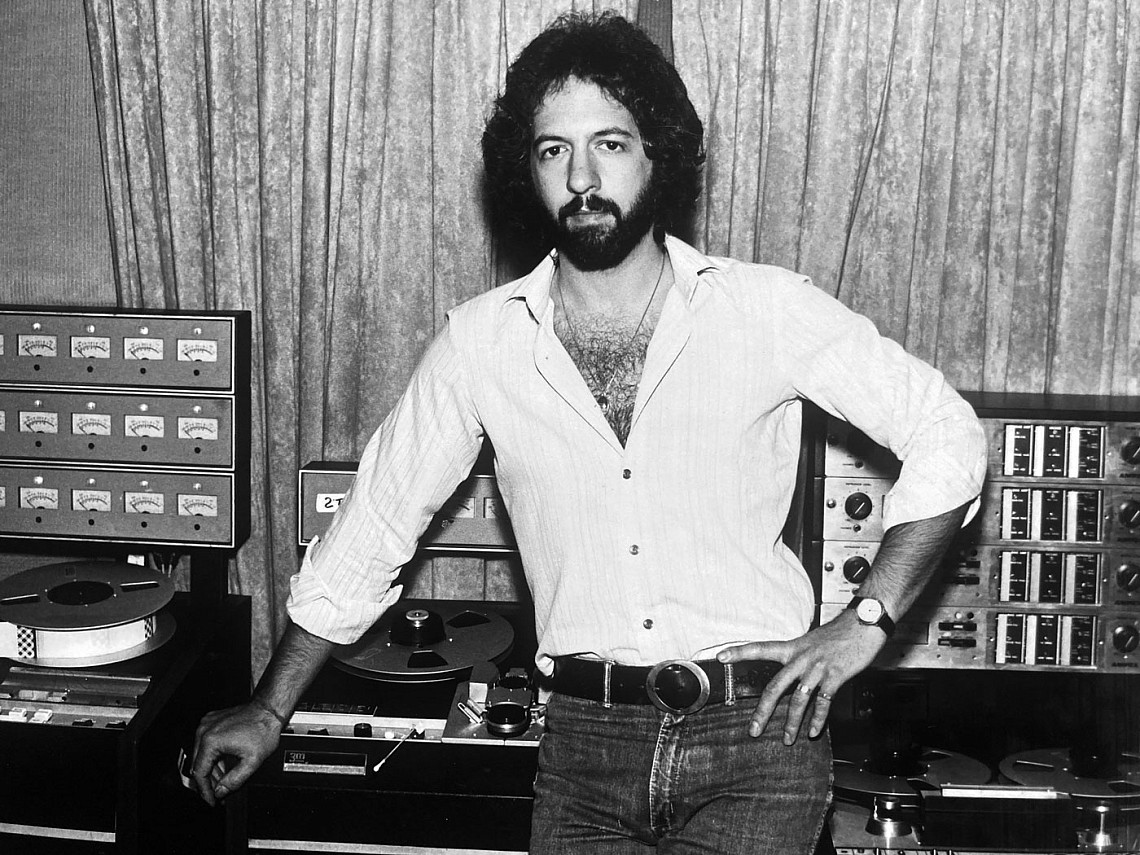
 Tom in the analog era. All photos in this story are courtesy of Tom Werman.
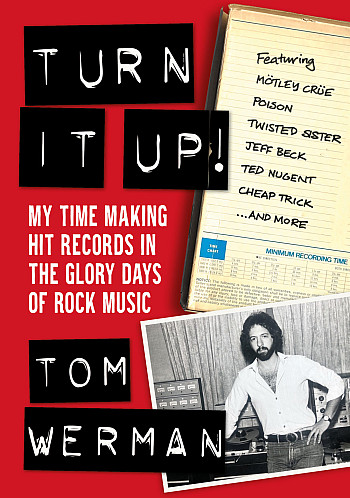
Certainly, one of the top rock producers of the '70s and '80s was Tom Werman, who oversaw landmark albums by Ted Nugent, Cheap Trick, Mötley Crüe, Twisted Sister, and Poison, among others. He has decided to finally look back on his successful career by putting pen to paper (or rather, fingers to keyboard?) with the 2023 autobiography, Turn It Up!: My Time Making Hit Records In The Glory Days Of Rock Music.
Werman spoke to Songfacts shortly before his book's release, and in addition to discussing Turn It Up!, was also quite candid in his recollections and assessments concerning the aforementioned names he's worked with. You'll never hear Ted Nugent's "Stranglehold" the same way after hearing what Tom did to it, and you'll find out which singers made his grade, and which were a struggle.
Greg Prato (Songfacts): What made you decide to write a book now?Werman spoke to Songfacts shortly before his book's release, and in addition to discussing Turn It Up!, was also quite candid in his recollections and assessments concerning the aforementioned names he's worked with. You'll never hear Ted Nugent's "Stranglehold" the same way after hearing what Tom did to it, and you'll find out which singers made his grade, and which were a struggle.
Tom Werman: Well, I came across a really irritating piece on me in a blog called Pop Dose. The guy never knew me, I never met him. It was really a slag, and I didn't quite understand it. I emailed the editor and said, "Can I write a rebuttal? Can I defend myself?" And he said sure. So I did write it, he put it in the blog, and he said, "We really enjoyed this piece. Would you write more for us?" So I did. I wrote 18 episodes that covered my career and in defense. I laid out what I did, and that became the skeleton for the book.
The other reason is, I noticed a huge increase in interest in classic rock. Y'know, every town has a classic rock station. There's maybe a hundred of them owned by iHeart Radio. I started getting a lot of podcasts, a lot of interview requests, and I felt that there was an increase in interest for this period, the '70s and '80s.
And I did one podcast on the making of Shout At The Devil, which has 150,000 hits. So, I said, "Yeah. OK. I'll try and write a book."
I wrote when I felt the spirit. I didn't sit down and pound it out like professionals. I got lucky – I got an agent really quickly, he got a good offer from a really interesting publisher in London, and there it is. It's amazing.
The original version of Cheap Trick's "I Want You To Want Me" was released on their 1977 album In Color, the first of three Werman produced for the band. It's a curious arrangement, subdued with finger snaps and a country feel, including a honky-tonk piano and tear-in-my-beer guitar solo. The version we all know and love was recorded live in Japan and released in America in 1979 on their At Budokan album.
Werman: Because it wasn't presented that way in the demo. I certainly wouldn't have toned it down that much from the way they did it live. I actually don't understand that, but Rick [Nielsen] and I had a disagreement about how the tack piano part came to be. I remember looking backwards at them on the couch and saying, "What do you think of this idea?" And I remember Rick saying, "Hey, you're the producer." So, I figured, "I can do what I want as long as they approve."
I had a keyboard player that I had used before [Jai Winding] and that I used many times afterward, and he was great. I brought him in, and I brought in a guest guitar player [Jay Graydon], which was one of two guest guitar players I ever hired.1 It was a dancehall tune. That was it. I thought it might be a single off the album [1977's In Color] the way it was recorded. And then, all of a sudden, I hear this slam-bang version from Japan and it went wild. And Dream Police sat on the shelf for eight months.
Songfacts: Tell me about the song "Flirtin' With Disaster" by Molly Hatchet.
Werman: "Flirtin'," I just liked the band. They were kind of like Skynyrd.
That was a song that they brought in, and I said, "This sounds like a hit to me." I had to use all three guys because of politics. Duane Roland was the very best, an unknown and underappreciated guy who was an incredible guitar player. Slick and syrupy. Never looked at the neck and doubled all his leads. He was pretty amazing. But I had to include the other two guys [Steve Holland and Dave Hlubek] as well.
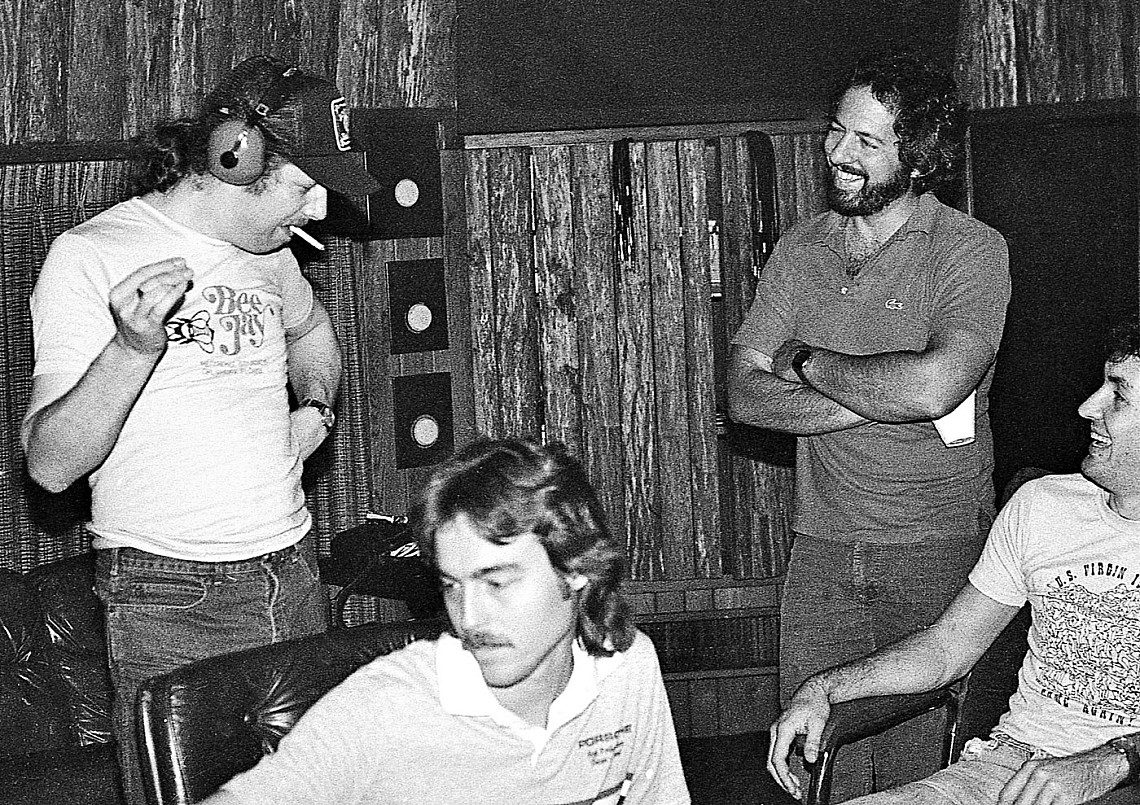 In the studio with Molly Hatchet
Songfacts: What do you remember about some other Cheap Trick songs you produced?
Werman: We did some interesting things. "Gonna Raise Hell," I remember slamming a 2x4 on the floor of the studio to double the snare drum in certain sections - choruses and some other parts. I think that's the one I put a Hammond B3 in.
We did a lot of experimenting with Cheap Trick. One of the reasons we could is they were so fast. They were a producer's gift in the studio.
Robin [Zander] could do two full songs in one afternoon. The perfect lead I'd put together with him and then he could double it maybe on the chorus, and then do harmony parts and then do it again on a second song. We were very quick. We did Dream Police in 30 days, start to finish. These days it doesn't sound like anything big, but in those days you would typically take two months to do an album, and we did one from set-up to mastering. We worked very quickly, and the reason for our success in doing it that quickly was their talent.
Songfacts: Was Mötley Crüe as wild and crazy in the studio as they supposedly were on tour and in their personal lives?
Werman: No. Vince [Neil] if he had a chance probably would have been crazy. Nikki [Sixx] and Tommy [Lee] dabbled with drugs for a while, but really considering their reputation, we did pretty well in turning out those three albums [Shout At The Devil, Theatre Of Pain, and Girls Girls Girls]. Especially Theatre Of Pain, which was a tough one. That was their low point I think behaviorally. And they were sandwiched between tours. They had to go out to support Shout At The Devil, and then they had to come in and write 12 or 14 songs in a hurry because there was another tour booked to support that album.
A songwriter in a band will spend many years writing songs. They'll be good, and they'll finally have a chance to record them for their first album. And there are maybe one or two songs left over that they didn't do on the first album that are included on the second album, but the rest of them have to be written. It's like, get off the road, go to sleep for 24 hours, and then write an album that is a follow-up to this big hit you just made. It's tough, which can lead to anxiety and self-medication.
Songfacts: It seemed like the two biggest LA hair-metal bands of the mid-to-late '80s were Mötley Crüe and Ratt. They, along with other hair-metal bands of the era, had a similar production sound. Could you sense that at the time?
Werman: No. You do what you can as a producer. It would be very difficult to say, "I want an Aerosmith sound, I want a Ratt sound, I want a Guns N' Roses sound." You really can't unless you're a genius. But what that means is, you'd rather copy somebody else than do what you think you can do best.
You are limited to approaching songs in the studio and arranging them and producing the whole thing by your talent – what you can do and what you like. Because if you don't like some approach, you probably don't know how to do it. If you want a certain drum sound, you can say, "Well, I'd like John Bonham's drum sound." That's one thing. But to say, "I want this album to sound like Zeppelin," that doesn't work.
Songfacts: Would record companies ever dictate, "Try to make it sound more like this or that?"
Werman: It's what the band is able to do. The label has really zero input, but they do have the last word... if they want it. Some of my bands 20 years later say, "He didn't do this," and, "He didn't allow us to do that." That's just a load. A producer doesn't have that kind of authority – the band hires him, they can fire him. I collaborated and I may have said, "I don't love that song. I'd rather do this song," but that's as far as it got.
The Twisted Sister example is the one that comes to mind. Dee [Snider] says he had to "beg me" to allow them to do "We're Not Gonna Take It." Which I said, "It sounds a little bit like a nursery rhyme." The chorus [sings melody], it's quite simple, you can sing it in the shower, which is one of the reasons it became a hit. So, I said, "I'd rather do this song," or, "Maybe you'd rather do this song instead." But I never had the power to say, "No. We're not going to do that. We're going to do this one that I prefer."
Unless you're a powerhouse producer working with a band for the first time and they don't really know what they're doing, they may listen to you and say, "OK. Well, he's very successful and we're just starting out, so, we'll do what he says."
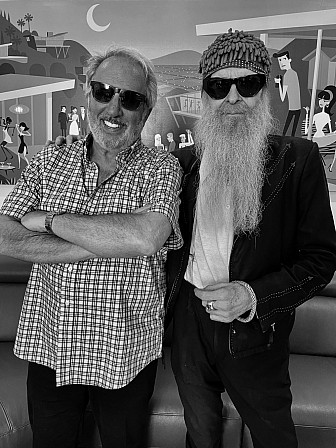 Tom with Billy Gibbons of ZZ Top
Werman: Yes. I do think he's among the better guitarists I've worked with – or the best. He has his own unique style. I think he was respected in the beginning, but when he started being political, that definitely overshadowed his guitar playing. You say Ted Nugent's name now and people only think of one thing, which is his political posture.
I tried to correct that in the book. I'm a Democrat, and sometimes my friends will say, "You still talk to Ted Nugent? How can you even work with him?" And I explain that we got along really well musically and otherwise. We didn't talk about politics. He's got a lot of integrity, especially compared to some of the other individuals I've worked with. He's a talented guy and he loves life. I think he's way too outspoken, but that's what he feels he must do. We don't relate on that level.
Songfacts: Which Ted Nugent song would you point to that really showcases his guitar playing the most?
Werman: "Stranglehold." That was good. And it was a delight for me, too. That was the first song I ever mixed, or I could direct the mix. And I can remember Ted, there's actually a postcard from him pictured in the book, saying, "Thanks. This is a great album."
The first one [Ted Nugent, 1975], he told me on the phone, "I really like what you did with 'Stranglehold.' But don't EVER do anything like that again without getting my permission first!" So I was lucky.
Songfacts: What exactly was he referring to about getting his permission?
Werman: When you hear his guitar work on "Stranglehold," you hear a couple of duets – figures he would harmonize with and go [sings a bit of a guitar line - play the clip to hear it], and then it would be like "Row Row Row Your Boat."
Somebody would go around and start it again, and they'd go together. Well, it was called "tape slap." So, I'd record what he played and have it played back behind him, but in time with him. I created duets and echoes and answers that he did not play. I think they were very good. That and the backwards cymbal that goes from left to right and right to left. It was fun.
Songfacts: In the analog days, you had to punch in to make edits. What are some songs, either by you or others, where we can hear these punch-ins?
Werman: You can't. I hope! That was so much a part of making records. I became very good at that, because I can remember sequences of notes – a lot of them – and after I'd heard a guitar solo four or five times, I knew it. So, I would just say, "Play along, and I'll get you in and out of record" – record mode. And that's it. I'd play the lead break for him and he'd play along with it, because he knew it, and I would just punch in at the right time and punch out.
It was a little more difficult with analog. It was easy with digital. But I had trained myself by editing all the single releases down from album cuts when I was working at Epic Records. They would come to me with a seven-minute song and say, "Here. We want this to be a single." So, I'd get it down to three minutes. And that – getting in and out, and listening for the right spot to edit, and being able to make it seamless to the listener – prepared me for a lot of punching in.
That's one of the reasons I did the Poison record digitally instead of analog: because I knew after watching CC [DeVille] play in the rehearsal that there would be a lot of punching in. CC was a party guy at the time. He changed afterwards. I think he's probably very clean at the moment, or has been since then, but we worked on the solo for "Nothin' But A Good Time." It's about a 30-second solo, and it took hours.
Songfacts: Did a song's lyrics ever influence how you produced it?
Werman: Yeah. "Heaven Tonight" [by Cheap Trick] was a dark song about overdosing. So yeah, you would want to have an eerie, depressing, foreboding feel to the music, and we did that. Some of the vocal lines, it would get loud and it would get very quiet.
Generally, I wasn't interested in lyrics, honestly. I changed a few lyrics in the studio, but I never took any of the publishing of any of my acts, which a lot of producers did, because I felt that arranging is part of the producer's job. I would concentrate on the music track, because that was what was important to me: the drive of the song, the double rhythm guitar part, the locomotive feel. And the lick. Establishing the lick, like "Cat Scratch Fever." Like anything that Keith Richards does – the most brilliant lick creator in the world.
Songfacts: Of the hit songs you produced, which was the most challenging?
Werman: Probably one that I would like to forget! Most challenging, I think it was probably one of the Twisted Sister songs [on 1984's Stay Hungry], because we struggled for three days to get a decent rhythm guitar sound. I know some of the ones that I enjoyed that went down easy. A lot of the Cheap Trick songs went down very easily.
Songfacts: Do you recall which Twisted Sister song that would have been?
Werman: No, I don't remember a particular song. The whole album was a challenge. The band had a lot of spirit – a great vibe – but they were among the least proficient musicians. They were a good band, but most of the other bands I worked with were better at their instruments. Twisted Sister figured out a way to come across powerfully even with that.
But it took three days to get a rhythm guitar sound for Jay Jay [French]. We tried everything. We tried different guitars, we tried different amps, we tried different microphones, we tried different placements. It was very tough. We finally settled on something, and that's a lot of dollars and a lot of time spent on something that should have come together in a few hours.
And then maybe one of the Poison songs, possibly "Nothin' But A Good Time," because of CC. Sometimes it seemed that we weren't going to be able to get a whole lead-guitar track.
With Mötley Crüe, I remember there was one day when Vince I guess had a tough night. He was very good about coming in and putting in his hours, but he didn't know the concept of "training." He wasn't in training. He didn't say, "I've got to sing tomorrow. I think I should get at least six hours sleep." He would party and do what he wanted, have a good time, and then come in and try to grind it out. One day, he came and probably sang for three hours, and we kept one line. That was challenging. Some of Vince's vocals were challenging.
And Lita Ford [Werman co-produced Ford's 1991 album, Dangerous Curves]. Again, not a specific song, but she had a lot of trouble. She's a good singer, but she had a lot of trouble with pitch. She didn't like her earphones. We put two speakers opposing each other that should have canceled out the sound and the microphone in the middle. We tried everything we could, and she had pitch problems. So finally, I had to come in an hour or two early every day and run her vocals through a synthesizer with a pitch wheel. I would play the line and say, "OK, that word is flat. That word is a little sharp." We would practice a couple of times, and then re-record it through the synthesizer, and I would just change the pitch. I'd just tweak it a little bit. If it was sharp, I'd tweak it down, and if it was flat I'd tweak it up. We did the whole album that way.
Songfacts: What's the hidden gem in your catalog - a great song you produced but most people haven't heard?
When I left the industry in 2000, I made a two-CD set for my friends and family. It was called Greatest Hits & Greatest Misses. There are 18 songs on the Hits side, and then there are about 14 on the Misses side. And there are some great songs on the Misses side – Mother's Finest. There were several groups that I worked with that I thought deserved much more. And occasionally, I'll blame some of it on the label.
Songfacts: You just mentioned the Producers, and my personal pick for the most underrated album you produced was their self-titled debut from 1981. Why do you think that album wasn't a huge hit? It was loaded with potential hit singles.
Werman: Well, I think the main reason is, it was one of the first releases on Portrait Records, which was a new label, an Epic subsidiary, and I don't think they did a good job at all. I would have far preferred that it have been on Epic.
The Producers ended up a cult band really, and they're so good, so commercial. Looked good, sounded good, wrote well. When I saw them, I said, "No problem. This is a home run." And the same with Mother's Finest. And it didn't happen. I felt so badly for the bands because I knew that they knew that they deserved better. It's their life's work and I couldn't deliver for them. That hurts. You feel quite a bit of responsibility.
 Songfacts: Do you have any advice for producers-to-be?
Werman: Well, I don't, because I don't know what they do today. I can talk maybe about what they should have done in the '70s and '80s, but my son works in A&R for Warners in LA, and what he describes as the way to sign bands and make records and promote them is complete Greek to me. It has nothing to do with what we did. We didn't make beats, we sure as hell didn't get $75,000 for one remix.
It was seat-of-the-pants for me. I just heard stuff and said, "Let's do that. This isn't good." There wouldn't have been any reason to have a record production course. I mean, you can't do that. One of the great things about being able to produce is to realize your own musical taste. I wrote in the book you're supposed to subjugate your own personal taste and help the band realize its musical vision, but really, you don't. I tried to make the record really what I wanted to hear, and if they permitted it, great. Occasionally, they'd say, "Eh, I'd rather do this," so we'd compromise. But I couldn't advise anyone today because I really don't know what they do.
October 23, 2023
To order Turn It Up!, visit Jawbone Press. Tom's official site is tomwerman.com.
More Interviews:
Ted Nugent
Billy Gibbons
Ron Nevison
Shel Talmy
Flemming Rasmussen
Richie Wise
Also try the Fact Or Fiction, Mötley Crüe edition
Footnotes:
- 1] The other was Steve Lukather of Toto, who played guitar on Cheap Trick's song "Voices," from their 1979 album, Dream Police. (back)
More Song Writing