It takes two to tangle! The trade-off of male and female voice in a song is one of the ideal ways to illustrate the tango of love - or the battle of the sexes. Here's our take on songs that use this interesting formula.
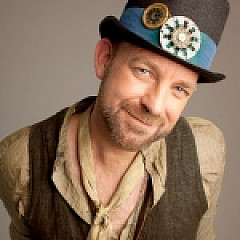
Gotye wrote himself into a corner on this one. The first verse has pretty much the full story from the guy's perspective: they had a tough breakup, he was OK with it, then she disparaged their relationship and refused to even talk to him, and he's not happy about it. With nowhere else to go with the story, Gotye decided to add the girl's side, and created one of the greatest he said, she said songs of all time.
We find out that the guy wasn't so innocent in all of this, and couldn't let it go like he said he would. She might just be somebody that he used to know, but he brought it upon himself.
Where the duet technique really shines here is in the video, where Gotye stands in front of a background that gets colored in gradually with a geometric abstract pattern, finally coloring his body as well, camouflaging him into the wall before the camera pulls back to reveal female vocalist Kimbra, likewise camouflaged, beginning her part of the song before the two of them sing together. It's a beautifully produced artistic example of this trope.
The song was released in 2011 and took a year to build into a worldwide hit. It charted #1 in the UK, Australia, Canada, France, Germany, and a dozen more countries. Kimbra wasn't the first coice for the female vocals - Gotye says he first asked a more famous Australian singer - but the New Zealander had the right vocal chops and was willing to get painted for the video.
Guess you can't list "he said, she said" songs without running into the song that actually has "she said" in the title. John Lennon wrote this early-psychedelic song about actor Peter Fonda's reminiscences of an LSD trip, quoting a conversation between himself and a female who speaks in riddles.
There's no female vocalist on this one - good thing, since the only time The Beatles used a female singer, it was Yoko. Instead, John Lennon simply relates the dialog, an odd discussion where the one thing we know for sure is that she makes him feel like he's never been born.
Psychedelics lead to inscrutable conversation, and in this case it sounds like a Harold Pinter dialog produced by Andy Warhol.
When Zach Bryan and Kacey Musgraves get together for a he-said, she-said duet, you know there will be alcohol involved, and indeed, it shows up in the first line:
Rotgut whiskey's gonna ease my mind
Rotgut whiskey is the harsh stuff - tough to drink, but after a few you won't feel it. But here's the problem: it didn't erase the memories. Bryan remembers everything about his lost love, making it impossible to get her out of his mind. He reminds her of all the good times they shared, but she remembers everything too, and her take on it tells a different story. This guy is a mess who will never be the man he always swore. Yeah, she's better off without him.
The song has a certain veracity because Bryan and Musgraves both went through divorces that fueled some of their songwriting. You can hear it on Musgraves' 2021 album Star-Crossed and on Bryan's 2022 album American Heartbreak.
Bryan and Musgraves wrote the song together. It was the first #1 hit for both and also crossed over to top the Country chart.
R&B group The Isley Brothers had a minor hit with this song in 2003, bringing the album Body Kiss to #1 on the album charts - the first time it had happened for the brothers Isley since 1975! Modern fans may be shocked to find out that this group has been around since the 1950s, through various lineups, and yet still sound fresh in the 2010s.
The song has one of the greatest mood dissonances between music tempo and the story it's telling: a confrontation between boyfriend and girlfriend, he accusing her of cheating and her trying and failing to lie her way out of it. He ends up having her pack up her stuff and throwing her out on the street. Is all this done with a lot of yelling and screaming and throwing stuff? No, only with the nicest, mellowest duet between Kim Johnson (of JS fame) and Ronald Isley. The song, like much of the Isley Brothers' later material, is written by R. Kelly, who plays the other man in the video.
Oran "Juice" Jones had the same idea with "The Rain," but when he busted his girl, he didn't give her a chance to explain. Let's hope Ronald Isley also remembered to cut up the credit cards.
There is bound to be some confusion when you record a duet with one partner and then replace her with another girl for the video. Due to contract disputes, Rock couldn't use the original recording with Crow so he brought in Moorer to sing her part instead. The single is now out there in two different versions, sometimes with Crow's video playing over Moorer's vocals. They do this just to make life hard for people who write about music - feel our pain.
Anyway, "Picture" is a duet between Rock and Crow | Moorer | Martina McBride (in live concert) | whoever else is around. The two trade large chunks of dialogue explaining their sides of the story, before uniting their voices at the end. Apparently they had broken up before the story, and Rock holed up in a hotel for a substance abuse binge, before the female half calls him back. The two also seem to have had separate lovers. But they both reaffirm that they miss each other and call to reunite. Ain't it sweet?
This one got a lot of hits on Songfacts in 2002 from people wondering if it was somehow related to the Golden Girls theme song.
Many songs find our hero in the no-sex-until-ring predicament (see "Keep Your Hands To Yourself" by The Georgia Satellites), but never like this. Meat finds himself in a car with the hottest girl in school, and he's overcome with passion. All is well until she stops him cold and asks a simple question: "Will you love me forever?"
The guy and the girl in the song are actually reminiscing about that special night, presumably from the doldrums of their loveless marriage, wondering what happened to the hopes and dreams of their youth. The he said, she said is about how they felt that night, and reflects on their negotiation. That teenage promise now has Meat Loaf "praying for the end of time," which was all you could hope for before cable.
Ellen Foley, who was on the TV show Night Court, was the female voice. Jim Steinman, who wrote the song with his melodramatic flair, is credited with performing the "Lascivious Effects." The most famous guest appearance in the song was by Phil Rizzuto, the Hall of Fame Yankees broadcaster who gives the play-by-play. Listen carefully and you'll hear that the baseball strategy is frickocked: we pick up the action with two outs, and our hero tries to reach home on a suicide squeeze, which is when the batter bunts the runner home. The squeeze play only works with less than two outs, since the defense would just throw to first and get the final out of the inning.
"Leather And Lace" - Stevie Nicks and Don Henley (1981)
The driving forces between Fleetwood Mac and the Eagles united for this honey-sweet duet in 1981. Nicks originally wrote it for Waylon Jennings and Jessi Colter's duet album Leather and Lace, but when it didn't make the cut, Nicks took the song for her own. So this is a confusing case of a title track not being included on the album it was written for. You see what they do to people who write about music?
"Leather and Lace" isn't nearly so racy as the title suggests. It's just a nice little love song shared between two master vocal talents at the peak of their careers. And by the way, why do so many he said, she said songs end up in the country genre?
The song became more one-sided when Stevie performed it live on her Bella Donna, tour where she sang it sharing a microphone with her backup singers. Instead of a give and take with Henley where we find out what it was like for each of the them the first time he walked through that door, the song becomes entirely directed at the guy, with her girlfriends there for support.
Exactly what it says on the tin, this is a song about pounding the good ol' Sealy and it doesn't waste a second pretending to be about anything else. By the vastly-under-recognized '80s new wave band Berlin, Terri Nunn's warm vocals seem to spiral into a lusty frenzy while bouncing off of some guy with the flattest monotone non-singing voice you ever heard, making it one of the more one-sided he said, she saids.
It was a controversial number for 1982. In the lyrics, Nunn, presumably directed at her male partner, refers to herself as a long list of roles, including "goddess," "bitch," "slave," "your mother," "hooker," "geisha," "slut," and so on. Whoa, slow down! If you have a taboo about female identity anywhere at all, this song will run over it.
This is the even more famous duet single hit from Nicks' debut solo album. Only it's a much darker song, with a menacing, gloomy tone. Nicks' role is that of a lover who is troubled by the rocky road of their relationship, while Petty's part is to sound a little apologetic for a couple of lines. It's the gentle guitar work of Heartbreakers guitarist Mike Campbell that ties it all together, however.
"Stop Draggin' My Heart Around" still gets plenty of airplay, has been butchered in many Karaoke bars, and was parodied by Weird Al Yankovic as "Stop Draggin' My Car Around," a tragedy of towing. The song charted higher in the US (#3) than any Stevie Nicks or Tom Petty & the Heartbreakers song.
If Tommy Mottola and Mariah Carey battled it out in song, it might sound a lot like this one. The man, who clearly has some power and influence, plucks a girl from obscurity, makes her a star, and now that she's famous, she slags him off. Her retort is that she would have made it with or without him, and now it's time to move on.
The guy is Human Leaguer Philip Oakey, who formed the group in 1978, then had two members leave in 1980 to form Heaven 17. He recruited two dancers/backup singers from a British disco (he claims his girlfriend spotted them), and made them part of the act after convincing their parents of his good intentions. He knew they could dance, and figured anyone could sing background over synthesizers.
One of these singers - Susan Ann Sulley - got a lead role on "Don't You Want Me," playing the cocktail waitress turned star, singing it to the real life guy who made her semi-famous.
The Human Leauge was on the rise in Europe, but this song found an American audience thanks to MTV, which picked up the video about six months after they launched. In the UK, it was the best-selling single of 1981, and in America, it spent three weeks at #1 in the summer of 1982.
Art did not imitate life with the Human League: the group is still together in roughly the same format, with Sulley and her friend from the disco - Joanne Catherall - still with them. They've developed a very impressive discography: 17 Top 40 hits in the UK and six in the US, including the #1 "Human."
~ "Penguin" Pete Trbovich
April 18, 2012, updated April 12, 2024
More Song Writing