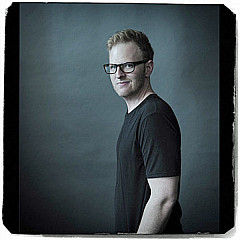
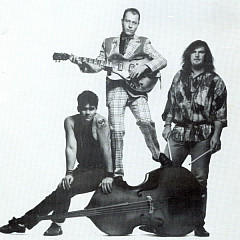
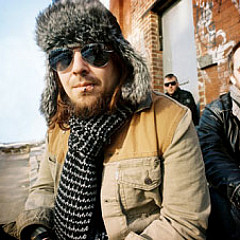
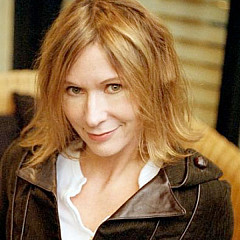
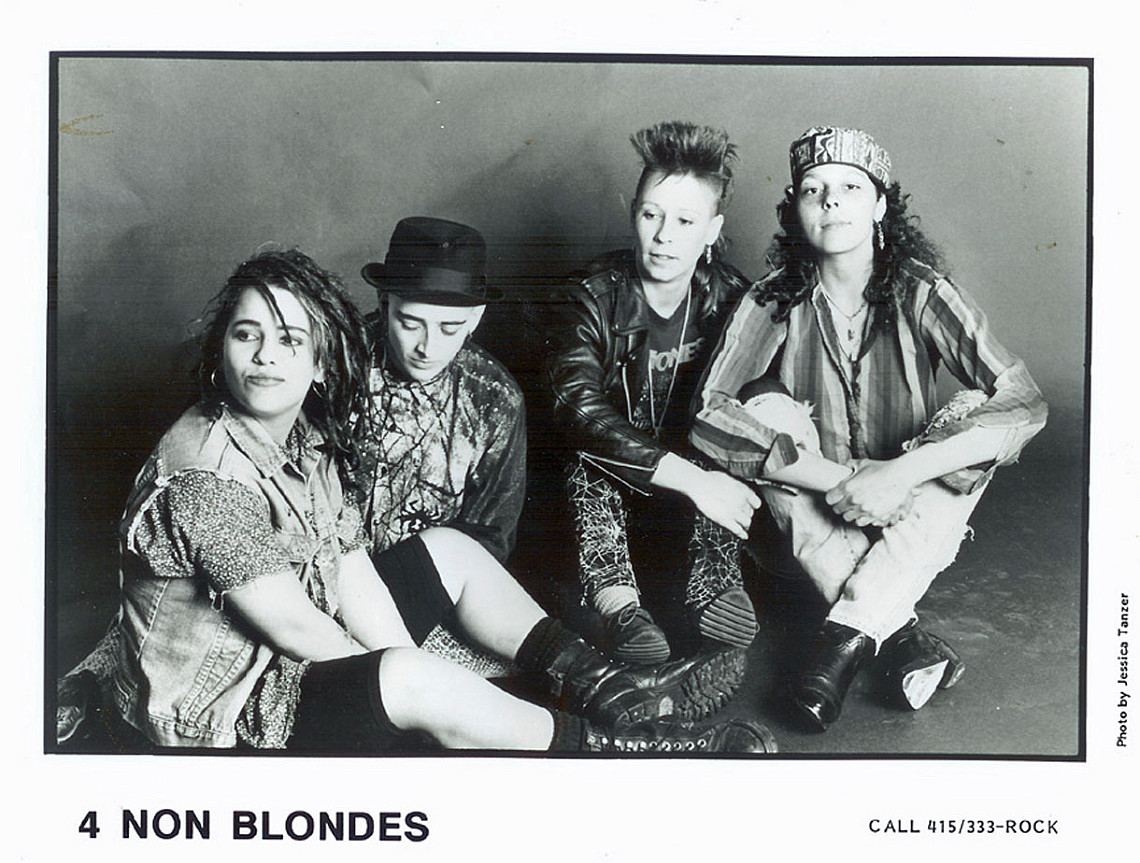
 The original 4 Non Blondes lineup (L-R): Linda Perry (vocals), Christa Hillhouse (bass), Wanda Day (drums), Shaunna Hall (guitar)
4 Non Blondes released the highly evocative hit "What's Up" in 1992, then broke up two years later without putting out a second album. Their lead singer and primary songwriter, Linda Perry, went on to write "Get The Party Started" for Pink, "Beautiful" for Christina Aguilera, and tracks for Gwen Stefani, Alicia Keys and Adam Lambert. "What's Up" got a second life when streaming became popular. The song found many new fans and put up huge numbers, with a billion YouTube views by 2021 (it's since gone over 2 billion). In 2025 it went viral on TikTok in a mashup with a Nicki Minaj song.
4 Non Blondes reunited for a one-off concert in 2014, and in 2025 got back together for a tour. Linda Perry says that mysterious second album will finally be released in 2026.
In 2004 we spoke with their bass player, Christa Hillhouse, to get the story of the band. Much of it we used in the "What's Up" Songfacts entry, but it's published here in full, complete with details on why the band broke up and what's in that second album.
Hillhouse and Perry have been in every lineup of the group, and they even toured together (opening for Bryan Adams!) after Perry released a solo album in 1998.
Their original guitarist was Shaunna Hall, who played on their debut album (Bigger, Better, Faster, More!) but was replaced before it was released in 1992 by Roger Rocha, who is still with the band. Their original drummer, Wanda Day, was replaced in 1991 by Dawn Richardson, who is also still a member. Day died in 1997.
4 Non Blondes reunited for a one-off concert in 2014, and in 2025 got back together for a tour. Linda Perry says that mysterious second album will finally be released in 2026.
In 2004 we spoke with their bass player, Christa Hillhouse, to get the story of the band. Much of it we used in the "What's Up" Songfacts entry, but it's published here in full, complete with details on why the band broke up and what's in that second album.
Hillhouse and Perry have been in every lineup of the group, and they even toured together (opening for Bryan Adams!) after Perry released a solo album in 1998.
Their original guitarist was Shaunna Hall, who played on their debut album (Bigger, Better, Faster, More!) but was replaced before it was released in 1992 by Roger Rocha, who is still with the band. Their original drummer, Wanda Day, was replaced in 1991 by Dawn Richardson, who is also still a member. Day died in 1997.
Christa Hillhouse:
The band started in San Francisco in 1989. Our first rehearsal was scheduled for October 17, the day the earthquake hit San Francisco - nobody wanted to be the first one to cancel practice.
We got signed pretty quickly. We did really well in San Francisco. We got a lot of press and we were selling out all our shows. Locally, we were doing great. With the labels, once one of them looks at you, they all jump in line. A&R people are so brainless - if you're getting attention because people are coming to your shows, they'll check you out, but once one of them approaches you, they all approach you. It's all or nothing with record labels.
We ended up signing with Interscope in June 1991. We had a shot with a couple of other labels, but we freaked them out because we were kind of weird. At the time, we were all women, we were all gay - that was the time before it was the cool thing to do - I don't even think k.d. lang was out of the closet yet.
I think the marketing thing threw a lot of labels off, because they're always looking at marketing. Even by the end of the '80s, the record companies had really switched to where they were looking for that band that had that one hit. They wanted one hit, and then who knows after that - they didn't really develop acts anymore. When we got signed, they knew 'What's Up' sounded like a hit. We were doing huge shows and selling out all the medium-sized places in San Francisco.
"What's Up"
For a short time, Linda had quit her job and she was living with me in this little two-bedroom flat in San Francisco. She wrote the song when she was in a room down the hall. I was in my bedroom having sex, and I stopped because I heard her playing that song. I remember running down the hall and saying, "Dude, what are you playing? I like that."We had a lot of rock, thrashy stuff back then, but Linda always would pull her ballads out and that was one of the ones she wrote while staying at my house. I remember being struck by it. She kept looking at me, going, "Does this sound like something? Am I plagiarizing someone?" I said, "Finish the song, it's beautiful." It caught on at our shows right away - people really liked it.
I did a tour with her about four years ago, and I hadn't seen her for about four years before that. Of everyone in the band, Linda was the pop enthusiast. It's kind of obvious, especially now, because she writes good pop songs, she always had. She has a great throat for rock, but she can still write pop songs. That's her background, it wasn't ours. I came from a funk background. I played in funk bands for like 10 years. The first drummer, Wanda, was a total punk rock/ska drummer, then the drummer who did the recording and toured with us, Dawn Richardson, she has a percussion background. She's very industrial. The music she's into that she writes is like Nine Inch Nails and all this hard-core industrial stuff. No one is really pop except Linda.
Pressure
We broke up in the middle of our second record, and the pressure was unbelievable. We had all these songs that we didn't put on the first record that were socially relevant - one was about incest, about Linda's experience with incest. As far as I'm concerned, it's the most powerful thing she's ever written.We were putting songs on the second record like that. We figured we sold 5 million records, we could do what the fuck we want, right? Well, wrong. The label was up our butts and were really putting a lot of pressure on us. It's almost like your sophomore record, you have to outdo your first record. After you've sold 5 million for your debut album, it's a little difficult. I would never walk into a recording scenario thinking, 'How many records are we going to sell?' I could totally give a shit, but I think the success part of being a songwriter is important to Linda. It doesn't make her good, bad or indifferent, we just had different goals at that point. I figured, "We can do whatever we want now - we've got money, we've got power, let's make the record we want to make."
Linda was the one who was always schmoozed by the record company. I think she was encouraged to break up the band and do her own thing. As a band, we were uncontrollable to the label. Our first record we had creative control over, but we left certain songs off the record because they were really controversial and we figured the record company wouldn't push the record that way. By the second one, it's like, 'Hey, let's do what we want,' but when you have different goals as a band, you're going to fall apart.
We're all fire signs. We kicked ass, took names and worked our asses off, but once your goals are split as a band, it's like being married and wanting different things - one person wants kids and the other wants to travel around the world. You're going to fall apart, and that's exactly what happened.
It got so stressful, within a couple of weeks the whole mood changed and Linda just wanted out. I said, "Dude, do what you have to do." Kurt Cobain had just blown his head off, so I was like, "Music is supposed to be fun. If your art is not fun, then fuck it."
It more had to do with the pressure of the labels, the way they treat artists these days. Even if you've made them a bazillion dollars, which we had at that point - 5 million CDs, think about how much money that's generating for Universal - but it doesn't matter. They keep their noses planted firmly up your ass.
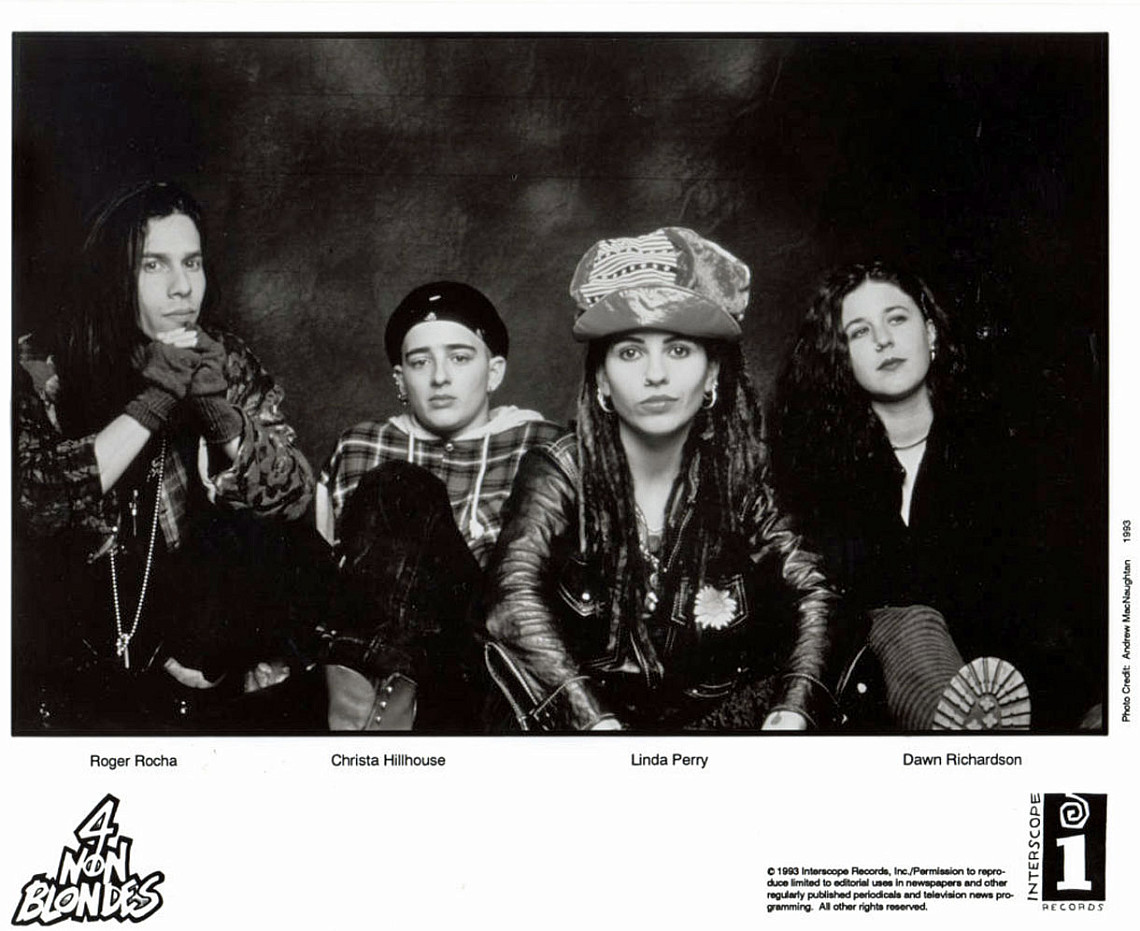 The 1992 lineup
Second Album
It's not finished. I have rough tracks from it. Some of them are really cool. The vocals are all scratch vocals. There's some cool stuff on there. We could have probably released it as is and sold a bunch because people were waiting. We were at the top of our success when we broke up in terms of getting offers. We hadn't even been to Japan yet, but we were getting stupid offers for shows.Dawn, she's a musician, and she wants to just play. I know for her, it was, "Let's do shows for another six months or a year, and then we'll be set up for a while." We were just starting to get those stupid offers where they pay for all your expenses and fly you out there and you do a set for a huge chunk of change. That was never to be. My priority was never about money.
I think things could have been done better. I don't think the people who were advising Linda were advising her best interest. She could have made a solo record, we could have still made a 4 Non Blondes record. It's drama. We're just people making mistakes. We're just musicians doing stupid stuff, making bad business decisions.
I always figured, if you want to make money, you make money, if you want to make art, you make art. Linda now is hugely successful, she's made a mint.
Opening For Bryan Adams
I did a tour with her in 1999 to promote her second solo record. We went out and had a good time. Me and her together, just the two of us, we opened for Bryan Adams in 1999. We played the House Of Blues in New Orleans. It was just us two - we had no crew, nothing. We followed their tour bus around in a van. Of course, Bryan Adams and his band were flying everywhere. We would finish the show, throw our shit in the van and I would drive. It was insane. Their crew was always surprised when we would show up. The audience would look at us and forget who we were. I would tell them we were the Indigo Girls and we just got out of rehab.Most of the contracts, the record company has the option to make six records with you, which basically means they can dump your ass after one if they feel like it. But if they don't feel like it, they have the option for your next six. After the band broke up, we were all individually contracted to Interscope Records. Not that it really mattered for me or Dawn, but for Linda, anything that she would do, I think she would be negotiating with them.
It sucks to get a six-album deal because the record company has the option for your next six records and you might hate their guts. You're the one that's trapped, not them. That's the way it is when you're struggling - when you've got nothing, you've got nothing to lose. We've gotten sued so many times from managers and lawyers who ultimately didn't have our interests in mind. It's crazy. I would say we signed an average deal, but the record company is the one who has all the power and they're the ones that are protected, never the artist.
Breakup
When we broke up we were in the studio. We were working on songs. We were working with Dave Jerden, who did Alice In Chains. The dude was rad. We were in the studio, but then you've got the label coming in and poking around and listening to what you're doing, going, "Where's the 'What's Up, Version 2.'"That's what they do. All they care about is making money. It's so anti-art. In the long run, there's one game in town, and you can play it or not. I'm a horrible schmoozer. I think 99.9% of the A&R people who work at record companies are total idiots that know nothing about music. They know marketing statistics, and they know, "Let's push this song, push this band, we'll probably sell blank number of units and make this amount of money." They don't even look at music anymore.
I remember when we were looking for a manager, I was talking to a really nice guy, I think he had been Bonnie Raitt's manager back in the '70s, and I remember him describing the way the music industry used to be, where your first record would come out and you might sell 50,000-100,000 units, enough to pay for itself. Then you make your second record, it does a little better and you start touring. By the time Bonnie Raitt won her Grammy, she'd already made like 12 records. Music companies really worked with artists. They found people they felt were talented and they helped them. Usually people don't make their best albums first. A lot of times these days, someone's best album or most successful album is their first, but any artist is guaranteed to get better in an environment that would nurture them.
For us, we did well, we sold a lot of records, but when we were touring, we did grueling shit. We toured nonstop, which was fine, but we were doing all this TV, we were doing interviews two times a day because we were really huge in Europe too. We were working our asses off and they make it seem like if you need a month off, "Well, I don't know if your fans are going to be there when you get back." It's like being a hamster in a wheel.
You figure, you sell some records, it's cool, you put 100% into your music, you make a little bit of a living and it's a beautiful thing. In reality, to be in the music business and to be successful is about other people controlling your life. I have a hard time with that and some people don't. As much as you see somebody on stage and on MTV, in reality, when you're really doing well and you're in the public eye, you have no control of your life at all. Someone's telling you what to do 24/7, it's a joke. The freedom of being a writer, musician or artist is something you have to hold on to for yourself, because once you enter into that business, it's really hard to protect.
 Money is a great distractor. When you're making bank and you're flying first class and staying in 5-star hotels, you start believing you're the big cheese. It was distracting from the reality of what was going on, which was like being a hamster in a wheel. I respect artists like Joni Mitchell who never made a record because of pressure from labels.
Linda was like, "I quit." Linda is like a little sister to me. We've been friends for years, so I wasn't going to be like, "Dude, you can't quit, what about the money?" For me, it wasn't about that, it was about looking at my friend, seeing how depressed and confused and miserable she was in that process. Fuck it, who needs it.
My brother, I love him to death but he's kind of conservative. He's very responsible, and after I made money with the 4 Non Blondes, he was like, "Here's what you need to do: You need to take this amount of money and put it here and you can have a foundation and have security." I was like, "Dude, if I was the kind of person who gave a shit, I would never have this money in the first place." It's just not who I am. Looking back, different decisions would have generated different results that might have been easier, better, whatever. But shit happens when it happens. It's very human to quit like that.
Linda did make a solo record. It was about a year before it came out. I think it was called In Flight, and it was with the people who had worked with Sheryl Crow, the Tuesday Night Music Club with Bill Bottrell producing. It was a very different record. It's definitely not a record 4 Non Blondes would have made. The vibe on it was very much about stuff Linda was experimenting with. She had a lot of time in the studio to get it the way she wanted. The record didn't go anywhere, it didn't do anything. It had some songs on it that had been redone a little bit that were being worked on for the second 4 Non Blondes record. She did a song with Grace Slick that we were going to do on that record. She changed it, added this chorus that to me was so corny, but I could tell that the label people were like, "You have to add a chorus to this song," because that's the way they think.
That record didn't do anything, then a couple years later, about 1998, she made a record called After Hours. She did it independently, and that's the one I helped her promote when I toured with her in 1999. After that's when the whole Pink thing happened.
A Deeper Dive Into "What's Up"
Any song people are going to try to read deliberate meaning into, but when Linda wrote the song, she was just sitting down the hall. We played guitar all the time - that's all we ever did. We practiced every day. I know people who think about formulas when they write a song or they think about structure, Linda has never lived that way. I'd say Linda's pretty organic in that way. She just sits down and starts singing what she's feeling.There is a difference between the songs she wrote then and the songs she writes now. She got to a point now where I think she is thinking about them structurally, but back then she played acoustic guitar and all the songs she wrote she'd just sit there and here'd they come. A lot of people write like that. I write like that - a song is kind of there already and you're like the speakers. All of a sudden there's a song in my head and I don't know where it came from.
I remember when she was writing the verses to "What's Up," and she was asking me, "Am I plagiarizing someone?" It's like she knew it too well, she thought she heard it before. I think that's why the song connects with so many people. What she was feeling she was able to translate well.
If you look at the lyrics, they don't mean anything - it's the way the song makes certain people feel. In Europe, they're not speaking English but they know every broken-English word, and that song makes them feel something.
I knew right when we played it, the song made the whole room feel this thing. It's a connection to humanity. Certain simple songs, that's what they do. There's an honesty there that breaks through that people can relate to. Then of course they played that song to death and a lot of people are really sick of it.
It also had to deal with, "We're living, we're broke, all we do is play music." It was a weird time, the late '80s. We were living pretty raw, but when you're an artist and you're living that raw existence, you're so much more open and exposed with your feelings. We definitely weren't poseur types - we've always been pretty honest as individuals. The song was an expression of something she was feeling, and it ended up being a pretty universal experience. There's just something there that's pure, that you almost can't define, and that's the thing. We were just living as honest a life as we could, and I think the music that came out of it had heart.
That song definitely helped get us signed because the label could hear a single in it. We did a lot of thrashy rock; we were opening for Primus and the Limbo Maniacs. Even the ballads we did were power ballads. Our drummer then, Wanda Day, some of the fills she put in just cracked me up. She could not hold back - she's this little firecracker. She could not play softly, but then the song did evolve.
Recording that song was interesting. We recorded it with the rest of our album in Calabasas in Southern California with this producer, and Jimmy Iovine at Interscope heard the version we recorded with Interscope and then he heard the version we did on our demo take, and Jimmy Iovine liked the demo better. It was a cassette. He and Linda met, and then Linda came and said, "We're going to re-record it." I was like, "Good," because it got a little too foofed up in major production land. We went to Sausalito and did it in one day. The version that's on the album was recorded separately from the other songs. "What's Up" was recorded separately in one day, raw, because Jimmy Iovine knew the demo version was better than the one we did with the producer and all the fancy equipment - it softened it up and took something out of it.
It was called "What's Up" because I'm a huge Marvin Gaye fan and I knew we couldn't do a song called "What's Going On." That's like, "Let's do a song called Amazing Grace." From the gate, Linda never called the song "What's Going On," she always called it "What's Up." We didn't want to use the same title as the classic Marvin Gaye song.
"Dear Mr. President"
The first single to come off the album was a song called "Dear Mr. President," and we shot a video for it. Strangely enough, I think George Sr. was president at the time, and we were having a hard time getting airplay in certain places. In Texas, they wouldn't play it because they looked at it as an assault on the Bush administration. It's kind of funny because at the time, it wasn't about the president in office, it was about the hierarchy of power and government. It wasn't specifically pointed at him. I remember being really surprised when it happened. It's a song about looking around and seeing problems and feeling like there's someone in charge who is responsible.We shot a video for "Spaceman" and we shot a video for "Superfly," but they never really got pushed or played. We did a couple of soundtracks. We did the song that's on Airheads - it's the main song in the movie, which I was really happy about (a cover of a Van Halen song called "I'm The One"). When they take over the radio station and they put on a song, and it's Van Halen, that's 4 Non Blondes, and a lot of people don't think it's us. Linda can totally do the David Lee Roth thing. Dawn learned to use a double-kick three days before we recorded it. We never played the song together until we got in the studio that day and recorded it with Jim Mankey, the guitar player from Concrete Blonde.
We did Encomium, the Led Zeppelin tribute album. We did "Misty Mountain Hop." Linda can totally sing Robert Plant, any of the cock-rock bands.
This interview took place on October 19, 2004, published in full on December 18, 2025.
Learn more about Christa at christahillhouse.net
And here's our interview with Linda Perry
More Song Writing