Belle

Album: Belle (1977)
Charted: 83
Play Video

Songfacts®:

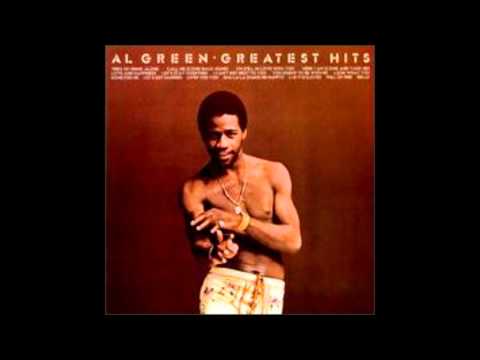
  • "Belle" was balladeer Al Green's first foray into making music for the Lord. On the track (featured on the album of the same name) Green takes listeners to the confession booth with heartfelt lyrics about why he must choose God over the woman he loves.

    Green's conversion from shaky-hipped Soul singer to spirituality introspective crooner was accelerated by having a pot of boiling grits thrown on him while he was in the shower on October 18, 1974. To add to the drama, the woman whose hands held the pot killed herself with Green's .38 caliber pistol immediately after.
  • The Belle album was Green's first recorded without Hi Records owner and longtime producer Willie Mitchell and his Hi Rhythm Section, formerly staples on Green's biggest hits. Choosing to hold the production reigns on the Belle album himself, it is also the first on which Green played lead guitar.
  • Along with the rest of the album's songs, this was co-written by Al Green, Fred Jordan and Reuben Fairfax, Jr. A modest hit, it was not Green's first choice of album single. In the August 1979 issue Melody Maker, Vivian Goldman writes that during a meeting with Green and some Pye Records staff, "Al... expressed a surprisingly brief flash of irritation when he learnt the first single was 'Belle,' not the disco 'I Feel Good' he'd anticipated."
  • The song didn't sell as well as hoped, but it captured a diverse audience who, like Green, sought music with deeper meaning beyond his prior repertory of back seat bumpers. Fans of "Belle" include Velvet Underground lead man Lou Reed, who counts it as one of his favorite singles. The semi-spiritual "Belle" has also been resurrected in Hip-Hop as the samples behind the Gravediggaz' "Killing Fields" and the Ying Yang Twinz' "Long Time."
  • Around this time, Green also branched out into the beauty business with Al Green International Hair, a line of products "for the beautification of the human being." He said: "I had always believed in looking my best, so it seemed only natural to encourage others to let their own God-given beauty shine."
  • Green confessed that members of his close circle were skeptical about his conversion and calls this song's key line - "It's you that I want but it's Him that I need" - the first time he truly began to profess his faith out loud, despite spiritual elements in his earlier songs like "Take Me to the River."
  • "Belle" represents the end of Green's free-wheeling days as a sex icon, when countless one-night stands were the norm. "I loved those women, loved their softness and sweetness and the way they gave themselves away for the chance to be lost and found in love," he wrote in his autobiography Take Me to the River. "But those days - and those ways - were past me now. God had called me to a higher place, turned me away from earthly to heavenly love, and while it hurt to say it, I had to leave the sensual for the spiritual."

Comments: 1

  • AnonymousI totally understand your God given song. Saw you at the diplomat hotel when I was 19 never forget never will!
see more comments

Editor's Picks

Stephen Christian of Anberlin

Stephen Christian of AnberlinSongwriter Interviews

The lead singer/lyricist for Anberlin breaks down "Impossible" and covers some tracks from their 2012 album Vital.

Emilio Castillo from Tower of Power

Emilio Castillo from Tower of PowerSongwriter Interviews

Emilio talks about what it's like to write and perform with the Tower of Power horns, and why every struggling band should have a friend like Huey Lewis.

Art Alexakis of Everclear

Art Alexakis of EverclearSongwriter Interviews

The lead singer of Everclear, Art is also their primary songwriter.

Graham Bonnet (Alcatrazz, Rainbow)

Graham Bonnet (Alcatrazz, Rainbow)Songwriter Interviews

Yngwie Malmsteen and Steve Vai were two of Graham's co-writers for some '80s rock classics.

They Might Be Giants

They Might Be GiantsSongwriter Interviews

Who writes a song about a name they found in a phone book? That's just one of the everyday things these guys find to sing about. Anything in their field of vision or general scope of knowledge is fair game. If you cross paths with them, so are you.

Who's Johnny, And Why Does He Show Up In So Many Songs

Who's Johnny, And Why Does He Show Up In So Many SongsSong Writing

For songwriters, Johnny represents the American man. He has been angry, cool, magic, a rebel and, of course, marching home.