We're In This Love Together

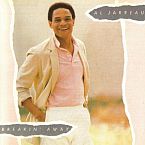
Album: Breakin' Away (1981)
Charted: 55 15
Play Video

Songfacts®:

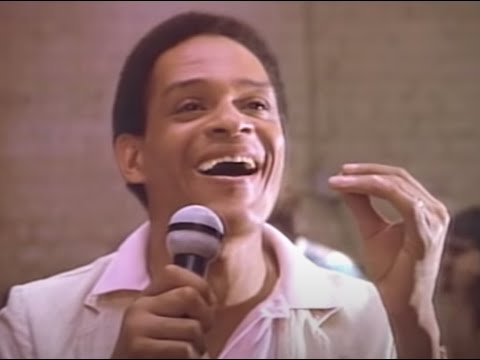
  • This breezy song is the biggest hit for Al Jarreau, a jazz singer who sometimes crossed over to pop, adult contemporary, and R&B, as he did here. The song is about finding a special love. There's no real story - we don't know how these folks got together or where they're headed - but we're treated to a bunch of metaphors that describe their bond:

    like a diamond ring
    like berries on the vine
    like a favorite song


    By keeping the details vague the message stays on point. These two are in it for the long haul.
  • The song was written by the Nashville songwriters Roger Murrah and Keith Stegall. Most of their songs were recorded by the likes of George Strait and Clay Walker, but somehow their demo tape of "We're In This Love Together" ended up in Al Jarreau's pile. They pitched it to a group called the Larsen-Feiten Band which shared a manager with Jarreau, so it's likely the tape ended up in the wrong pile.

    According to Stegall, it was the last tape in the box as Jarreau and his producer, Jay Graydon, were going through songs looking for a hit.
  • Producer Jay Graydon had that smooth sound of the late '70s and early '80s on lock. Other songs he worked on include "After The Love Has Gone" by Earth, Wind & Fire and "Turn Your Love Around" by George Benson. Musicians on the track include Steve Lukather on guitar, Steve Gadd on drums, Michael Omartian on Fender Rhodes piano, and Graydon on guitar. The saxophone solo is by Lon Price. Lukather is a member of Toto; Omartian is also a producer whose cuts include "The Next Time I Fall" by Peter Cetera and "Sailing" by Christopher Cross. Graydon's guitar can also be heard on the solo of "Peg" by Steely Dan.

Comments: 1

  • Larry Broen from Houston, TexasThis is s fantastic song that features perhaps the best ever example of the double pronged attack of a Fender Rhodes electric piano paired with a Minimoog lead sound. It is also perhaps the best ever example of the power and beauty of the Rhodes. It features the sweet, beautiful bell like, surreal sound of the Rhodes, especially in the higher register. The piano must be adjusted and also amplified correctly to get that sound at its best. The Rhodes has a weak, anemic, unpowered output signal. The amplification system needs to receive this signal with the correct impedance. If the impedance match is not right between the piano and the amp, the sound is muddy and anemic. The amp also needs to put a high gain on the signal, but low noise. Get it right and the sound is glorious, as it is on this song. More than any other, this is "The Rhodes Sound." The performance also features the famous Rhodes "bark," that is available on a well adjusted Rhodes when it is played hard. If you play a normal piano hard it gets louder. On a Rhodes, it doesn't get louder but instead it distorts and gets "meaner," popular thought of as barking at you. That capability is used in this song to get an iconic signature riff, which also may be the best ever example of this bark. The bass range of the piano is also used to great effect. After the second line in verse two "we've got the whole thing workin' out so right..." Michael Omartian does a descending lick that starts high and ends with a low chord. The sound on that low chord is another signature Rhodes sound, it's low, smooth, round, resonant, and sweet. That requires a Rhodes that is really in tune. This is a glorious Rhodes performance and piano and recording that is firing on all cylinders. On top of all that is one of the best Minimoog lead sounds on record. It sounds something like a trumpet.

    Michael Omartian had a long and successful career as a keyboardist and producer, but he may be best known as the producer of Christopher Cross' phenomenal first album. That album is largely piano driven, courtesy of Omartian, Cross doesn't play piano. Omartian came from the contemporary Christian music world and continued to participate in that throughout his career. He is associated with another superstar producer from that world that did not become a household name, Brown Bannister (no relation). Brown is best known for producing Amy Grant's first few albums, when she was Christian, before she crossed over to secular.
see more comments

Editor's Picks

Art Alexakis of Everclear

Art Alexakis of EverclearSongwriter Interviews

The lead singer of Everclear, Art is also their primary songwriter.

La La Brooks of The Crystals

La La Brooks of The CrystalsSong Writing

The lead singer on "Da Doo Ron Ron" and "Then He Kissed Me," La La explains how and why Phil Spector replaced The Crystals with Darlene Love on "He's A Rebel."

Trans Soul Rebels: Songs About Transgenderism

Trans Soul Rebels: Songs About TransgenderismSong Writing

A history of songs dealing with transgender issues, featuring Pink Floyd, David Bowie, Morrissey and Green Day.

Lajon Witherspoon of Sevendust

Lajon Witherspoon of SevendustSongwriter Interviews

The Sevendust frontman talks about the group's songwriting process, and how trips to the Murder Bar helped forge their latest album.

Jon Anderson of Yes

Jon Anderson of YesSongwriter Interviews

From the lake in "Roundabout" to Sister Bluebird in "Starship Trooper," Jon Anderson talks about how nature and spirituality play into his lyrics for Yes.

Angelo Moore of Fishbone

Angelo Moore of FishboneSongwriter Interviews

Fishbone has always enjoyed much more acclaim than popularity - Angelo might know why.