
In Red Square

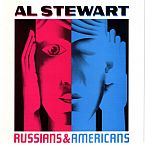
Album: Russians & Americans (1984)
Play Video

Songfacts®:

  • This Al Stewart/Peter White composition runs to 4 minutes 4 seconds, was produced by Mike Flicker, and is a song about nostalgia, although with a big qualification. It is narrated by a museum curator after the triumph of capitalism in Mother Russia. While the young pursue Western rock music, designer clothes and all the other (supposed!) benefits of the newly imported American dream, all this old man can think of is the good old days. In particular he is showing his unnamed visitor a collection of statues: Stalin, Krushchev and Lenin, in that order. While Stalin is arguably the greatest mass murderer in history, all he can think of is the fine detail of the statue, and how it's going to be melted down with all the rest. Stalin died in March 1953, but he has already been written out of the history books. The man responsible for initiating this Revisionism was Nikita Krushchev, who although not Stalin's immediate successor, was the main man by September, a position he held until 1964 when he was succeeded by Leonid Breshnev.

    In February 1956, Krushchev denounced Stalin in the so-called Secret Speech (which was leaked to the West). While Krushchev's assent to power did not lead to a total liberalisation of Soviet Communism, it did lead to the release of countless political prisoners, and a reduction in both state repression and censorship.

    The third Soviet leader mentioned in the song is Lenin, the first chronologically, and on whose death Stalin eventually succeeded.
    While both Stalin and Lenin were totally evil, Krushchev was basically a good guy - in spite of his stern appearance, his banging his shoe on the table at the UN and promising to bury the West! Certainly he is the only one of the three any right thinking Russian would consider suitable to have his statue erected in Red Square.

    While the elderly curator may have lamented the melting down of his statue of Stalin, it was not until June 2010 that the statue in Stalin's hometown of Gori was pulled down.

    Although it is not true that the Kremlin was burned down as in the song, the return of the tsars is something that need not be interpreted literally. In the liner notes to the CD, Al himself writes 'This one is set in a waxworks museum in Moscow and is an alternate lyric to "The One That Got Away" from Russians And Americans'. This is a fairly uptempo, jazzy track and saxophone dominated, unusual but by no means unprecedented for Al Stewart. >>>
    Suggestion credit:
    Alexander Baron - London, England

Comments

Be the first to comment...

Editor's Picks

Janis Ian

Janis IanSongwriter Interviews

One of the first successful female singer-songwriters, Janis had her first hit in 1967 at age 15.

Lace the Music: How LSD Changed Popular Music

Lace the Music: How LSD Changed Popular MusicSong Writing

Starting in Virginia City, Nevada and rippling out to the Haight-Ashbury, LSD reshaped popular music.

Jimmy Jam

Jimmy JamSongwriter Interviews

The powerhouse producer behind Janet Jackson's hits talks about his Boyz II Men ballads and regrouping The Time.

Dar Williams

Dar WilliamsSongwriter Interviews

A popular contemporary folk singer, Williams still remembers the sticky note that changed her life in college.

Commercials

CommercialsFact or Fiction

Was "Ring Of Fire" really used to sell hemorrhoid cream?

Reverend Horton Heat

Reverend Horton HeatSongwriter Interviews

The Reverend rants on psychobilly and the egghead academics he bashes in one of his more popular songs.