Fatal Shore

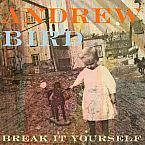
Album: Break It Yourself (2012)
Play Video

Songfacts®:

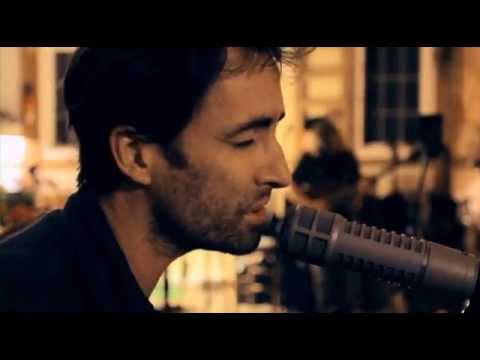
  • This laid-back track is from American singer-songwriter Andrew Bird's sixth solo studio album, Break It Yourself. The origins of the LP lie in a couple of jam sessions by a gathering of Bird's friends in the singer's western Illinois barn, near the banks of the Mississippi River. He told Spinner about the moment when he realized the sessions could lead to a commercial release. "I think day three or something," Bird recalled, "we had gotten down a couple things. We took a break and listened back. We were sitting outside in the beautiful late summer afternoon. We just listened back together and everyone was like, 'Yeah. There's nothing wrong with that.'"
  • Bird revealed to Spinner that this is one of his favorite recordings, "because it is so far back on the beat." He explained: "You don't get that kind of feel when you're all hopped up to make a record. You get that feel when you're kind of exhausted and just don't care too much. That was a late-night take."
  • The song title references the name of a book by Australian writer Robert Hughes. Published in 1987, The Fatal Shore: The Epic of Australia's Founding recounts the United Kingdom's settlement of Australia as a penal colony with convicts.
  • Lyrically, the song references the Orpheus Greek tragedy, and we also hear Bird suggesting death is as inevitable as life as he sings, "When are you comin' to shore / To never fear anymore / You never know any doubt / Like we who breathe in and out."
  • We hear Bird produce a sudden burst of whistling on this track. The multi-instrumentalist is renowned as a consummate whistler and he has used his skill on many of his songs. Bird told Spinner: "I never would've thought whistling was a valid way of making music, even though I did it incessantly. It took me a while to get up the nerve to put it in my own music. You're used to things just being hard: If it's not hard, it's not good. That's not true but it's what you think. I started doing it more when I went solo. I found it was a really effective way to get people to focus and stop their conversations. I was out there in the trenches doing solo shows. Sometimes I would just start the show by filling my lungs with air and holding out a whistle note for as long as I could. By the time I was done people would be completely silent. I knew there was more than the casual 'Sittin' on the Dock of the Bay' connection to whistling."

Comments

Be the first to comment...

Editor's Picks

Trans Soul Rebels: Songs About Transgenderism

Trans Soul Rebels: Songs About TransgenderismSong Writing

A history of songs dealing with transgender issues, featuring Pink Floyd, David Bowie, Morrissey and Green Day.

Melanie

MelanieSongwriter Interviews

The singer-songwriter Melanie talks about her spiritual awakening at Woodstock, "Brand New Key," and why songwriting is an art, not a craft.

90210 to Buffy to Glee: How Songs Transformed TV

90210 to Buffy to Glee: How Songs Transformed TVSong Writing

Shows like Dawson's Creek, Grey's Anatomy and Buffy the Vampire Slayer changed the way songs were heard on TV, and produced some hits in the process.

Robert DeLeo of Stone Temple Pilots

Robert DeLeo of Stone Temple PilotsSongwriter Interviews

Stone Temple Pilots bass player Robert DeLeo names the songs that have most connected with fans and tells the stories behind tracks from their Tiny Music album.

Matthew Wilder - "Break My Stride"

Matthew Wilder - "Break My Stride"They're Playing My Song

Wilder's hit "Break My Stride" had an unlikely inspiration: a famous record mogul who rejected it.

David Sancious

David SanciousSongwriter Interviews

Keyboard great David Sancious talks about his work with Sting, Seal, Springsteen, Clapton and Aretha, and explains what quantum physics has to do with making music.