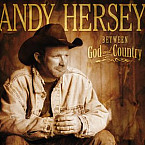
It's Not Okay

Album: Between God And Country (2007)
Play Video

Songfacts®:

  • On October 28, 2002, Robert Flores, a failing student at the University of Arizona, armed himself with shotguns and over 200 rounds of ammunition, and entered the UofA campus. His first stop was Professor Robin Rogers' office on the second floor of the nursing school building, where he shot and killed Rogers, 50. Two stories higher, on the fourth floor, he entered a classroom where an exam on critical care had been in session for 30 minutes. He confronted instructor Cheryl McGaffic, 44, and "told her he was going to give her a lesson in spirituality," says an eyewitness. He fired two shots into her chest, then stood over her and fired one more into her head, killing her.

    His last victim was Barbara Monroe, 45. After watching Flores shoot to death McGaffic, her friend and co-worker, she hid behind a desk. Flores approached her, and asked her "if she was ready to meet her maker." She said "Yes," and he shot her three times, killing her. Flores then dismissed the students from the classroom and shot himself.
  • The third victim in the shooting, Barbara Monroe, was the wife of Don Monroe, a bass player with whom singer/songwriter Andy Hersey had worked and become friends. With the help of friend Karen Carter, Hersey wrote this song to honor Monroe's memory.

    When something like this happens, "all of a sudden there's no way that anything is ever going to be the same at that point," says Hersey. "And so I was feeling that, and that's how we ended up writing it. It was a little too personal and a little too emotional, as I presented it to my friend Karen. And she said, 'It sounds good but there's a little too much anger. Let's just make it to where everyone can understand the loss. And then we can actually have something that we can present to a listening audience.' And so in that regard she helped tremendously to bring that song down to a presentable level. And that's where that song came from. 'It's not okay, it's just over.' It's not about her leaving him by choice. But it is a loss, it is an end of a relationship. Not a failed relationship, but a relationship that ended that way. I tried to write the song in reverence to them and their relationship. That song is a tribute to the love that they shared. And Don is doing fine, just so you know."
  • It is the reactions of fans to songs like this one that keeps the spark of songwriting alive in Andy Hersey. "I've had people approach me after live shows and say, 'I lost my wife to cancer.' A fellow came up, the first time I ever played that song live, with tears in his eyes and we shared a good cry. And that's how I know that songwriting, if it's genuine in its conception, does continue to be, and that's all I need to keep going as a songwriter. It has to be about real life. We can write feel-good stuff, I've got a bunch of feel-good stuff in the closet, but sometimes, if a song makes you feel bad, it makes you feel better. If someone else is sharing your pain, somebody that can sing is up there on stage sharing your pain, I would pay a ticket to see that. I go to see Willie Nelson every chance I get.

    Music is a divine premise, and it crosses all boundaries. I mean, all language boundaries. It really does. That's the pay, as a songwriter, that is the pay. That's why, as an artist, you drive miles - or ride miles - through endless weather and countless flat tires and a bunch of indignities that happen on the road, just to play your songs for a couple of people that might actually be listening, that need something in their life, or want to share something in their life. And if a songwriter can hit that on stage, you did your job, and there's always going to be a need for that. There was during the Depression, right? When jazz came about, jazz musicians were doing great during the Depression. They always made their money. And that's because people wanted to share that emotion. At the same time, as a songwriter, I don't want to forecast what the audience is feeling. All I can do is just write what I know to be true and hope that it gets conveyed that way, and that there's people there that are not sullen or dumbed down by what's happening on national radio. And just trusting that there are people that will find their art and they will find a home and find something in common with the things that an independent writer will write. It doesn't take much, baby." (Read more in the Andy Hersey interview.)

Comments

Be the first to comment...

Editor's Picks

John Waite

John WaiteSongwriter Interviews

"Missing You" was a spontaneous outpouring of emotion triggered by a phone call. John tells that story and explains what MTV meant to his career.

Charlie Daniels

Charlie DanielsSongwriter Interviews

Charlie discusses the songs that made him a Southern Rock icon, and settles the Devil vs. Johnny argument once and for all.

Barry Dean ("Pontoon," "Diamond Rings And Old Barstools")

Barry Dean ("Pontoon," "Diamond Rings And Old Barstools")Songwriter Interviews

A top country songwriter, Barry talks about writing hits for Little Big Town, Tim McGraw and Jason Aldean.

Director Nick Morris ("The Final Countdown")

Director Nick Morris ("The Final Countdown")Song Writing

Nick made some of the biggest videos on MTV, including "The Final Countdown," "Heaven" and "Don't Know What You Got (Till It's Gone)."

John Kay of Steppenwolf

John Kay of SteppenwolfSongwriter Interviews

Steppenwolf frontman John Kay talks about "Magic Carpet Ride," "Born To Be Wild," and what he values more than awards and accolades.

Supertramp founder Roger Hodgson

Supertramp founder Roger HodgsonSongwriter Interviews

Roger tells the stories behind some of his biggest hits, including "Give a Little Bit," "Take the Long Way Home" and "The Logical Song."