Guava Jelly

Album: ButterFly (1974)
Play Video

Songfacts®:

  • Barbra Streisand gives an uncharacteristically sexy performance on "Guava Jelly," a reggae tune written by Bob Marley that implies the title product can be used as an aid in lovemaking. It was released as the lead single from ButterFly, her 16th studio album, but failed to chart. It was previously recorded by Bob Marley & The Wailers in 1971 and Johnny Nash in 1972.
  • In the early '70s, Streisand worked with producer Richard Perry on a string of contemporary pop albums to modernize her sound. She continued to experiment with other genres on ButterFly, and wanted to include a reggae tune since the genre was gaining steam in the US.

    But this time around, she enlisted her hairdresser boyfriend Jon Peters to produce the release. Other than creating fashionable coifs for its stars, Peters had no previous experience in the music industry, so Streisand's record label (Columbia) was understandably dismayed by his prominent role on the album. They tasked veteran engineer Al Schmitt to remix the tracks, but he quit after three days.

    Responding to Schmitt's criticism that the songs were flat and one-dimensional, Streisand told The Los Angeles Times her singing on the album was possibly the best she'd ever done. Columbia didn't give up and enlisted saxophonist Tom Scott as an arranger to try to salvage the songs. His influence was praised by critics, but overall ButterFly earned a lukewarm reception.
  • The album title was also atypical for a Streisand release. The singer always preferred straightforward titles that were named after her or one of her notable songs, so her fans could walk into a record store and easily find her albums. The title ButterFly, however, was a symbol of her relationship with Peters, who told the singer she reminded him of a butterfly and often bought her butterfly-themed gifts.
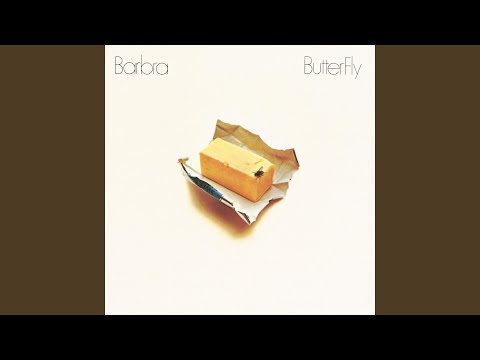
  • Peters also designed the album cover. A play on the title, it features a fly atop a stick of butter. According to photographer Carl Futura, they needed to use a dead fly to achieve the shot. "So we had to go to a garbage can and put a bag over a fly and let him suffocate to death," he recalled in a 1986 interview. "Then you had to spread out his wings and his feet with tweezers. We went through a lot of flies. And maybe the butter melted under the lights. But to me it was just another job."

    Columbia was disgusted by artwork and affixed the price sticker to the flip side, so retailers would display the back of the album instead, which featured a painting of Streisand by William Shirley.
  • The album also features Streisand's takes on David Bowie's glam-rock number "Life On Mars?," Paul Anka's gospel tune "Jubilation," and Bill Withers' R&B ballad "Grandma's Hands."
  • Despite her initial claims, Streisand looked back on ButterFly with disdain and in 1991 told Larry King it was her least favorite album.
  • Jon Peters became a successful film producer, with his earliest effort being Streisand's hit 1976 remake of A Star Is Born. He also produced the 2018 version starring Lady Gaga.

Comments

Be the first to comment...

Editor's Picks

Jon Anderson of Yes

Jon Anderson of YesSongwriter Interviews

From the lake in "Roundabout" to Sister Bluebird in "Starship Trooper," Jon Anderson talks about how nature and spirituality play into his lyrics for Yes.

David Sancious

David SanciousSongwriter Interviews

Keyboard great David Sancious talks about his work with Sting, Seal, Springsteen, Clapton and Aretha, and explains what quantum physics has to do with making music.

Billy Joe Shaver

Billy Joe ShaverSongwriter Interviews

The outlaw country icon talks about the spiritual element of his songwriting and his Bob Dylan mention.

Shaun Morgan of Seether

Shaun Morgan of SeetherSongwriter Interviews

Shaun breaks down the Seether songs, including the one about his brother, the one about Ozzy, and the one that may or may not be about his ex-girlfriend Amy Lee.

Justin Hayward of The Moody Blues

Justin Hayward of The Moody BluesSongwriter Interviews

Justin wrote the classic "Nights In White Satin," but his fondest musical memories are from a different decade.

Michael Glabicki of Rusted Root

Michael Glabicki of Rusted RootSongwriter Interviews

Michael tells the story of "Send Me On My Way," and explains why some of the words in the song don't have a literal meaning.