Here's to Life

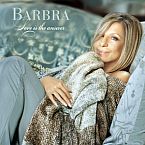
Album: Love Is The Answer (2009)
Play Video

Songfacts®:

  • This is the opening track of Streisand's collection of jazz standards, Love is the Answer. Lyricist Phyllis Molinary penned the song with composer Artie Butler. It was first recorded by jazz singer and pianist Shirley Horn, who made it the title track of her 1991 album with an arrangement and production by Johnny Mandel. The award-winning American arranger paid tribute to Molinary's lyric for this song in a letter to her, which said: "A lyric such as yours can't go unnoticed. It was both beautiful and heartfelt – just like the song itself. With a song like 'Here's to Life'; the whole project became a labor of love."
  • Love is the Answer debuted at #1 on the Billboard 200 chart for the week of October 17, 2009. This meant that Streisand became the first act to achieve a #1 album in the 1960s, '70s, '80s, '90s and 2000s. She also extended the chart record for the longest span of #1s among women. Her first chart-topping album, People reached the top position on the chart dated October 31, 1964, meaning her span of #1s stands at 44 years, 11 months and two weeks.
  • In a Q&A about the album, Streisand said she connected with the song's mature lyrics about "a person who has lived and experienced life."

    "And so it was very easy for me to sing," she continued. "It's a good reflection of my philosophy of life which is that, no matter the ups and downs, no matter what the pains and joys that one experiences - it's magical, and a privilege to be alive. So it's a toast to life."
  • The album was produced by Canadian jazz singer Diana Krall with veteran arranger Johnny Mandel brought in to arrange and conduct most of the songs. Mandel first wrote the arrangements for Krall's quartet - a bassist, guitarist, pianist, and drummer - and then Streisand recorded her vocals with just the quartet. After receiving those tracks, Mandel wrote the orchestral arrangements and put it all together. On most of the songs, Streisand wasn't pleased with the results and re-recorded her vocals. She wasn't a fan of the process because she preferred to sing with the orchestra, but it wasn't her first time recording in a tracks-first manner.

    "David Foster records that way, where you do the tracks first," Streisand said in a 2009 interview with Mercury News. "I don't particularly like it. I love the inspiration of the orchestra. But it brought me back to the way I started, so there is something very pure about it, not innocent but young and youthful - nostalgic."
  • The album was nominated for Best Traditional Pop Vocal Album at the 2011 Grammy Awards, but lost to Crazy Love by Michael Bublé.

Comments

Be the first to comment...

Editor's Picks

Little Big Town

Little Big TownSongwriter Interviews

"When seeds that you sow grow by the wicked moon/Be sure your sins will find you out/Your past will hunt you down and turn to tell on you."

Millie Jackson

Millie JacksonSongwriter Interviews

Outrageously gifted and just plain outrageous, Millie is an R&B and Rap innovator.

Don Dokken

Don DokkenSongwriter Interviews

Dokken frontman Don Dokken explains what broke up the band at the height of their success in the late '80s, and talks about the botched surgery that paralyzed his right arm.

Martyn Ware of Heaven 17

Martyn Ware of Heaven 17Songwriter Interviews

Martyn talks about producing Tina Turner, some Heaven 17 hits, and his work with the British Electric Foundation.

Sending Out An SOS - Distress Signals In Songs

Sending Out An SOS - Distress Signals In SongsSong Writing

Songs where something goes horribly wrong (literally or metaphorically), and help is needed right away.

John Lee Hooker

John Lee HookerSongwriter Interviews

Into the vaults for Bruce Pollock's 1984 conversation with the esteemed bluesman. Hooker talks about transforming a Tony Bennett classic and why you don't have to be sad and lonely to write the blues.