Papa, Can You Hear Me?

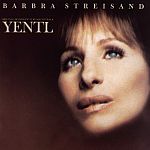
Album: Yentl soundtrack (1983)
Play Video

Songfacts®:

  • In the 1983 movie Yentl, Barbra Streisand plays the title character of a Jewish woman who finds a way to study the Talmud by disguising herself as a man. Before his death, her father secretly taught her Jewish religious law, despite it being off limits to women in their community. In this emotional song - written by Alan and Marilyn Bergman (lyrics) and Michel Legrand (music) - Yentl cries out to her late father, hoping he'll understand what she must do.
  • Streisand grew up without her father, who died when she was just a baby, so paternal numbers like this one (and her earlier hit "My Father's Song") were poignant reminders of her loss. As a director, she had to be mindful of the technical aspects of the scene and turn out an emotional performance at the same time. Marilyn Bergman recalled how Streisand achieved the balance with ease while filming "Papa, Can You Hear Me?" She told Jan Lisa Huttner in 2007:

    "On this big cold, black soundstage in London, she came off the floor telling everybody what to do: put the camera here, not enough stars, put an owl up in the tree. Then she sits down, and the camera starts, and she starts to sing like an angel, and a tear rolled down her cheek at exactly the right time. It was not artifice. I mean, it was deeply felt, but she is able to compartmentalize in such a way that she was also aware of everything else that was happening technically during that moment. I think it was in the second half of the song somewhere."
  • While she was doing pre-production work on the movie in London, Streisand recorded the songs "Memory" and "Coming In And Out Of Your Life" for her hit compilation album Memories (Love Songs in the UK).
  • Streisand worked for years to get the film project up off the ground as a non-musical drama. Ever since she read "Yentl The Yeshiva Boy," the 1962 short story by Isaac Bashevis Singer that the movie was based on, she wanted to play the title role. She optioned the film rights in 1968, the same year she starred in Funny Girl as Jewish comedienne/singer Fanny Brice, and intended for Yentl to be her next big role, but her agent advised her not to do two "ethnic pieces" in a row.

    As the years went by, she tried to generate interest in the project with potential directors and studios, but most thought the story was too culturally specific and didn't have enough mainstream appeal. After it was adapted into a play in 1975, the Bergmans had the idea to turn it into a musical and combined forces with Streisand, who had also decided to direct it. They finally got the green light from Orion Pictures in 1979 and it hit theaters in 1983.
  • Instead of staging a conventional musical where the entire cast joins in the singing, Streisand only allowed Yentl sing as a way of expressing her inner thoughts. "We worried at first about how audiences would react to this device," she's quoted by Barbra Archives, "but there was really no better way to reveal Yentl's unique perspective."
  • Although some critics dismissed Yentl as an overly sentimental vanity project, Streisand's directorial debut was generally well-received by critics and she became the first woman to be nominated and win a Golden Globe for Best Director.

    The film also earned Academy Award nominations for Best Supporting Actress (Amy Irving) and Best Original Song ("Papa, Can You Hear Me?" and "The Way He Makes Me Feel"), but Streisand was completely snubbed in the acting, directing, and writing categories. The Bergmans and Legrand, however, shared a win for Best Original Song Score and Its Adaptation or Adaptation Score at the 1983 ceremony.
  • Donna Summer, who sang the hit 1979 duet "No More Tears (Enough Is Enough)" with Streisand, performed this at the Academy Awards in 1983 in lieu of the movie's snubbed star, who skipped the ceremony.
  • The score also earned a nomination for Best Score Soundtrack For Visual Media at the 1985 Grammy Awards but lost to Prince and The Revolution for Purple Rain.
  • This peaked at #26 on the Adult Contemporary chart. It was the first time Streisand missed the Top 10 since 1979 when "Superman" petered out at #29.
  • Nina Simone covered this on her final studio album, A Single Woman (1993).
  • Lea Michele sang this in the 2010 Glee episode "Grilled Cheesus."
  • In the 2018 movie Deadpool 2, the title character (Ryan Reynolds) watches the movie with his girlfriend and insists this song is similar to the Frozen number "Do You Want to Build A Snowman?"

    The bit was based on a real-life observation by Reynolds, a frequent Frozen viewer, who noticed the similarity between the tunes when he was watching Yentl a couple weeks earlier.
  • This was parodied in the 2002 comedy Austin Powers In Goldmember with the villain Goldmember briefly singing it as, "Fahza can you hear me."
  • In The Simpsons episode "Sleeping With The Enemy" (2004), Nelson sings this about his missing father.

Comments

Be the first to comment...

Editor's Picks

Muhammad Ali: His Musical Legacy and the Songs he Inspired

Muhammad Ali: His Musical Legacy and the Songs he InspiredSong Writing

Before he was the champ, Ali released an album called I Am The Greatest!, but his musical influence is best heard in the songs he inspired.

Michael Sweet of Stryper

Michael Sweet of StryperSongwriter Interviews

Find out how God and glam metal go together from the Stryper frontman.

Devo

DevoSongwriter Interviews

Devo founders Mark Mothersbaugh and Jerry Casale take us into their world of subversive performance art. They may be right about the De-Evoloution thing.

Dennis DeYoung

Dennis DeYoungSongwriter Interviews

Dennis DeYoung explains why "Mr. Roboto" is the defining Styx song, and what the "gathering of angels" represents in "Come Sail Away."

Tom Bailey of Thompson Twins

Tom Bailey of Thompson TwinsSongwriter Interviews

Tom stopped performing Thompson Twins songs in 1987, in part because of their personal nature: "Hold Me Now" came after an argument with his bandmate/girlfriend Alannah Currie.
Evolution Of The Prince Symbol

Evolution Of The Prince SymbolSong Writing

The evolution of the symbol that was Prince's name from 1993-2000.