The Haunted Man

Album: The Haunted Man (2012)
Play Video

Songfacts®:

  • Burned out after four years of intense touring and recording and licking her wounds after an ill-starred romantic sojourn with Moon on Moon singer William Lemon, Bat For Lashes (aka Natasha Khan), returned from America to her flat in the south of England, adrift and devoid of inspiration. Slowly, her third album, The Haunted Man, began to take shape. Khan told Mojo magazine: "The second album came quickly after the first one, so I'd been on tour for what seemed a long time and I was feeling torn between places. I came back from living in New York and didn't really have any sense of home - I was lonely. I had to reconnect with my friends, family and be a normal human being again."
  • This is the title track, and along with "Lilies," they were the first songs she wrote for the record. Khan told Mojo: "They're the start point and the end point, even though 'Lilies' is the first track. The title track is definitely about the burden I'd been feeling and that's a recurring theme, although by the end there's some resolution. It's very much an album about moving on from past mistakes, burdens or patterns."
  • The recording of a male voice choir on this song is actually an echo from them singing across an Italian canyon in Perusia. Khan explained to NME: "We recorded the voices and used an amp to project the sound over a canyon near where we were recording in Italy. With that song and 'Lilies 'I was thinking about my grandmother, (but) I was also inspired by Ryan 's Daughter because it's about a woman who's stuck in this Irish village by the sea, and she waits for this soldier who comes over the hill. I used that as a visual inspiration to talk about women waiting for men in a symbolic way, whether it's in war or with someone who's not there emotionally."
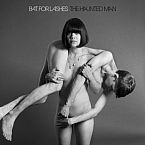
  • The album cover by New York photographer Ryan McGinley shows Khan stripped off with a naked man slung over her shoulders. Khan told the BBC that the idea for the shoot matches the mood of the record's "stripped back" theme. "I love (McGinley) as a photographer and I've been into him for a long time," she said. "I actually came across some of his work which he did with people holding wild animals and wolves and things like that and I just had this really strong epiphany in my head: 'Oh, I want to be carrying a man.'"

    "I think that goes really well with the theme of the record," she continued. "I also (liked) his approach to the body and women and men and just being quite stripped back - I'm not wearing any make-up. It's not a sexual image, it's more like just really stripping everything back and being really raw. I think nowadays there's so much emphasis on people, what they're wearing, their make-up, their styling - you know, there's like 40 people styling everyone. I got a bit jaded with all of that and I just wanted to take it right back to being really natural and direct... and presenting that in a non-sexual way."

Comments

Be the first to comment...

Editor's Picks

Graham Parker

Graham ParkerSongwriter Interviews

When Judd Apatow needed under-appreciated rockers for his Knocked Up sequel, he immediately thought of Parker, who just happened to be getting his band The Rumour back together.
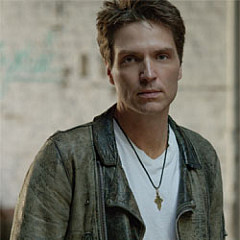
Richard Marx

Richard MarxSongwriter Interviews

Richard explains how Joe Walsh kickstarted his career, and why he chose Hazard, Nebraska for a hit.
Bob Dylan Lyric Quiz

Bob Dylan Lyric QuizMusic Quiz

Think you know your Bob Dylan lyrics? Take this quiz to find out.

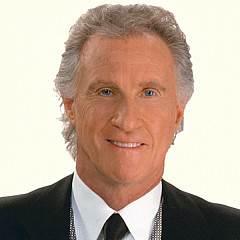
Bill Medley of The Righteous Brothers

Bill Medley of The Righteous BrothersSongwriter Interviews

Medley looks back on "Unchained Melody" and "You've Lost That Lovin' Feelin'" - his huge hits from the '60s that were later revived in movies.
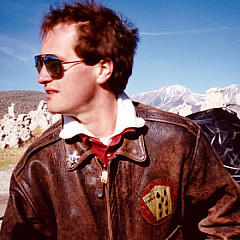
Director Nick Morris ("The Final Countdown")

Director Nick Morris ("The Final Countdown")Song Writing

Nick made some of the biggest videos on MTV, including "The Final Countdown," "Heaven" and "Don't Know What You Got (Till It's Gone)."
Lace the Music: How LSD Changed Popular Music

Lace the Music: How LSD Changed Popular MusicSong Writing

Starting in Virginia City, Nevada and rippling out to the Haight-Ashbury, LSD reshaped popular music.