Intergalactic

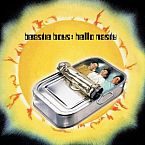
Album: Hello Nasty (1998)
Charted: 5 28
Play Video

Songfacts®:

  • Beastie Boys go to space in "Intergalactic," with alien-sounding vocals created with a vocoder, an electronic device originally created to encode speech. The funk musician Roger Troutman used the device on a lot of his songs, which were later sampled by hip-hop artists, but artists like Earth, Wind & Fire ("Let's Groove") and Daft Punk ("Around The World") really associated it with space. The original space-rock party jam, highly influential on Beastie Boys, was "Planet Rock" by Afrika Bambaataa & The Soulsonic Force, with a vocal that sounds like a vocoder but is actually a Lexicon effects unit. (Another song that sounds like vocoder but isn't: Cher's 1998 hit "Believe," done with Auto-Tune software that came on the market in 1997.)

    The robotic sound inspired the lyrics, which mention the planet Uranus (cue Butt-Head) and Mr. Spock's Vulcan death grip. Also mentioned in the lyrics are rapper Kool Moe Dee and the song "Ooh Child" by The Five Stairsteps.
  • The song dates back to 1993 when they started cooking it up for their Ill Communication album, released the following year. They had been using a beat from Bo Diddley's 1971 album Another Dimension and making up lyrics with a space theme, using "another dimension" and "intergalactic, planetary" as the hook. It wasn't very good so it didn't make the album, but they revisited it for the Hello Nasty album when Mike D procured a vocoder. They wrote a new set of verse lyrics and this time the song worked.
  • There are bits of classical music flowing through this song. Rachmaninoff's "Prelude C-sharp Minor," sampled from a recording by Les Baxter played on a synthesizer, is blended into the verses. The piece of classical music at the beginning of the song is "Night on Bald Mountain" by Modest Mussorgsky. This part is edited out of the radio version.

    Also sampled is "Love is Blue" by The Jazz Crusaders.
  • Some of the pioneering hip-hop acts that emerged in the early '80s distorted their vocals in inovative ways (check out "Jam On It" by Newcleus), but in the '90s, rappers usually went for a big, bold sound without any distortion. Beastie Boys bucked that trend, using a karaoke microphone to squiggle their raps on tracks from their 1992 album Check Your Head, notably "So What'cha Want." By the time they recorded "Intergalactic" for the Hello Nasty album, they had access to a vocoder.
  • Beastie Boys sampled themselves on this one, which they were wont to do. The word "drop" in the line, "Beastie Boys known to let the beat drop" comes from their track "The New Style" from the 1986 Licensed To Ill album.
  • "Intergalactic" was a huge hit for the Beastie Boys and helped nudge them further from their 1986 debut single "(You Gotta) Fight for Your Right (to Party)," which became a curse when they started to embody the frat boy personas from the song. By this time, they were Beastie men. Ad-Rock was dating (and later married) the punk rocker Kathleen Hanna; Mike D was married to the director Tamra Davis and had two children; and MCA married Dechen Wangdu in 1998, the year Hello Nasty was released. When it became clear the album would be another big seller (all of their albums to that point had gone multi-Platinum) they embarked on another tour, this time with a rotating stage. This time, they made it family friendly, with one tour bus where kids were welcome and the right to party was revoked.
  • Beastie Boys trade lines within the verses, a style they picked up from Run-DMC back when they were both on the Def Jam label. In each verse, they stick to a single rhyme scheme:

    Verse one: smile, guile, trial...
    Verse two: team, steam, scheme...
    Verse three: shocks, stock, Mr. Spock...
  • The group wrote this with their producer, Mario Caldato, who gets a mention in the lyric: "Mario C. likes to keep it clean."
  • This won a Grammy in 1999 for Best Rap Performance by a Duo or Group.
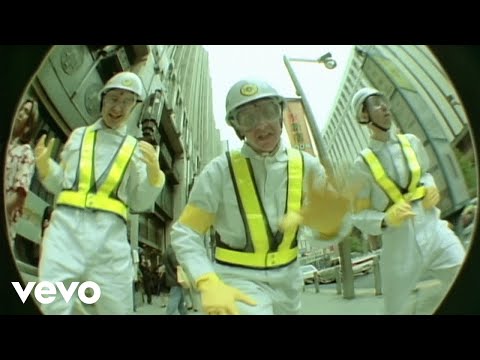
  • The video is a play on all the old Japanese flicks like Godzilla where Tokyo was destroyed by a large monster. It was filmed in Japan, and the subways you see are in Tokyo (the yellow outfits are those worn by Japanese construction workers). Like many Beastie Boys videos, it was directed by group member Adam Yauch (MCA), credited to his alter-ego, Nathanial Hörnblowér.

    In 1994, when the "Sabotage" video was nominated for six awards, Yauch went to the MTV Video Music Awards in character as Nathanial Hörnblowér and rushed the stage when it didn't win any, interrupting R.E.M. when they got an award for "Everybody Hurts." Instead of banning the Boys, MTV embraced the stunt as an "anything can happen here" moment. At the 1999 ceremony, "Intergalactic" took Best Hip Hop Video.
  • On album versions of "Intergalactic," you might hear a bit of Biz Markie freestyling at the end. This part is really the introduction to the next track on the album, an instrumental called "Sneakin' Out The Hospital."

Comments: 2

  • Jtothec from BelgiumCorrection! Roger Troutman did not use a vocoder, he used a Talkbox. Roger mastered that instrument like no other. The talkbox and vocoder may sound the same, however ... they are 2 different things. A vocoder is somebody singing in the microphone, and that microphone is plugged into a synth. What you hear, is the output of the synth. The talkbox is the sound of the synth blasted out of a speaker, which is attached to a tube, which you put into your mouth. Your mouth is then used as a speakerbox, and you can record that sound through a microphone. So a vocoder is easy to use, whereas a Talkbox requires some practice to pronounce the words correctly, because of the tube being in your mouth. Excessive practice of the talkbox can lead to headaches or your teethfillings popping out. No joke. So the talkbox is pretty hardcore. Check out YouTube and type in Talkbox vs vocoder, for sure there are tons of videos explaining that. Cheers!
  • Matt from WisconsinIn the music video on the word "green" during the lyric "when it comes to envy, ya'll is green," the green screen effect drops out and reveals the green screen in the background for a split second.
see more comments

Editor's Picks

Jon Foreman of Switchfoot

Jon Foreman of SwitchfootSongwriter Interviews

Switchfoot's frontman and main songwriter on what inspires the songs and how he got the freedom to say exactly what he means.

Adele

AdeleFact or Fiction

Despite her reticent personality, Adele's life and music are filled with intrigue. See if you can spot the true tales.

Lori McKenna

Lori McKennaSongwriter Interviews

Lori's songs have been recorded by Faith Hill and Sara Evans. She's performed on the CMAs and on Oprah. She also has five kids.

Donnie Iris (Ah! Leah!, The Rapper)

Donnie Iris (Ah! Leah!, The Rapper)Songwriter Interviews

Before "Rap" was a form of music, it was something guys did to pick up girls in nightclubs. Donnie talks about "The Rapper" and reveals the identity of Leah.

Dave Edmunds

Dave EdmundsSongwriter Interviews

A renowned guitarist and rock revivalist, Dave took "I Hear You Knocking" to the top of the UK charts and was the first to record Elvis Costello's "Girls Talk."

Andy McClusky of OMD

Andy McClusky of OMDSongwriter Interviews

Known in America for the hit "If You Leave," OMD is a huge influence on modern electronic music.