
Too Much Heaven

Album: Spirits Having Flown (1979)
Charted: 3 1
Play Video

Songfacts®:

  • In this song, the Bee Gees find a new way to express their abiding love, telling the lady that nobody gets too much heaven, so they should be together always. The group is often remembered for uptempo hits like "Stayin' Alive," but love songs like this one and "To Love Somebody" were also very effective.
  • The Bee Gees ruled 1978 with three #1 US hits, plus three more they (or at least Barry Gibb) wrote for other artists ("Shadow Dancing" by Andy Gibb, "If I Can't Have You" by Yvonne Elliman, "Grease" by Frankie Valli). Remarkably, they had another three chart-toppers in 1979, starting with "Too Much Heaven."

    It was the lead single from their Spirits Having Flown album, followed by "Tragedy" and "Love You Inside Out." By the end of the year, American listeners had gotten too much Bee Gees, and their subsequent singles fizzled. They pivoted to focus on writing songs for other artists, which worked out very well. One of their biggest songwriting hits was "Islands in the Stream," a #1 for Kenny Rogers and Dolly Parton in 1983.
  • The Bee Gees donated royalties from this song, estimated to be at least $7 million, to UNICEF. Along with Donna Summer, John Denver, Abba, and a few other big names, they pledged a song as part of the Music For Unicef Concert on January 9, 1979, held at the United Nations General Assembly in New York City. Their song, "Too Much Heaven," ended up being the #1 hit in America that week and the centerpiece of the show, which aired as a primetime special on NBC the next evening. It was later included on the soundtrack album.
  • The horn section from the band Chicago played on this track, reciprocating for the Bee Gees singing on the 1978 Chicago song "Little Miss Lovin'" along with Chicago vocalist Peter Cetera.
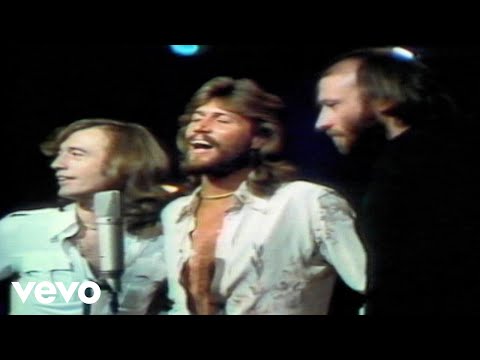
  • The Bee Gees - Barry, Robin, and Maurice Gibb - wrote this song on a very productive day when they also wrote "Tragedy" and "Shadow Dancing." They had been working on the Sgt. Pepper's Lonely Hearts Club Band movie, but were on a break from filming.
  • If it's a good one, you can never get too much chorus. This song opens with the chorus, which comes up again twice between verse lyrics, then closes out the song with three repetitions.

Comments: 1

  • Helena Skilton from QldI Was In A Childrens Home at Sandgate , My Mother was Hospilased with a nervous breakdown as a prisoner of war i poland I geewas Placed into a Childrens home I First Saw the bgees at RACQ Childrens Day Where were were treatred to see B Gees Perform Barry Was On Guitar And Twin Brothers Vocals Song IM Like a Rubber Ball Baby thats I am to you Twins Maurice & Robin Vocals Bouncy Bouncy Since Then the is Nothing that touches my Soul My Life Like You Appreciate Helena
see more comments

Editor's Picks

Stephen Christian of Anberlin

Stephen Christian of AnberlinSongwriter Interviews

The lead singer/lyricist for Anberlin breaks down "Impossible" and covers some tracks from their 2012 album Vital.

Emilio Castillo from Tower of Power

Emilio Castillo from Tower of PowerSongwriter Interviews

Emilio talks about what it's like to write and perform with the Tower of Power horns, and why every struggling band should have a friend like Huey Lewis.

Art Alexakis of Everclear

Art Alexakis of EverclearSongwriter Interviews

The lead singer of Everclear, Art is also their primary songwriter.

Graham Bonnet (Alcatrazz, Rainbow)

Graham Bonnet (Alcatrazz, Rainbow)Songwriter Interviews

Yngwie Malmsteen and Steve Vai were two of Graham's co-writers for some '80s rock classics.

They Might Be Giants

They Might Be GiantsSongwriter Interviews

Who writes a song about a name they found in a phone book? That's just one of the everyday things these guys find to sing about. Anything in their field of vision or general scope of knowledge is fair game. If you cross paths with them, so are you.

Who's Johnny, And Why Does He Show Up In So Many Songs

Who's Johnny, And Why Does He Show Up In So Many SongsSong Writing

For songwriters, Johnny represents the American man. He has been angry, cool, magic, a rebel and, of course, marching home.