St. Louis Blues

Album: Ladies Sing The Blues (1925)
Play Video

Songfacts®:

  • W.C. Handy (1873 - 1958), a middle-class African American, wrote the music for "St. Louis Blues" in one of Memphis' Beale Street bars in 1912. Some say it was plagiarized - Handy was prone to wandering the streets of Memphis and copying down the songs of itinerant street musicians. Handy claimed that he was inspired to write the tune after meeting a woman in St. Louis bemoaning the absence of her husband. "My man's got a heart like a rock cast in the sea," she remarked – a line Handy said he wrote into the song.
  • One of the first blues songs to succeed as a pop hit, a quarter century later Handy said it was still bringing him $25,000 in annual royalties, earning him over a million dollars in his lifetime.
  • This has been performed by numerous musicians of all styles from Louis Armstrong and Bessie Smith to Count Basie, Glenn Miller, Stevie Wonder, and the Boston Pops Orchestra. No version is bettered than the one by Bessie Smith. Accompanied by just Fred Longshaw on harmonium and Louis Armstrong on cornet, Smith's version was inducted in the Grammy Hall of Fame in 1993. The 1929 version by Louis Armstrong & His Orchestra was inducted there in 2008.

    Stevie Wonder recorded the song on Herbie Hancock's Jazz album Gershwin's World and won two Grammys in 1999 for his version.
  • This song has been used in a number of films.

    In 1914, it appeared in the Charlie Chaplin movie, The Star Boarder.

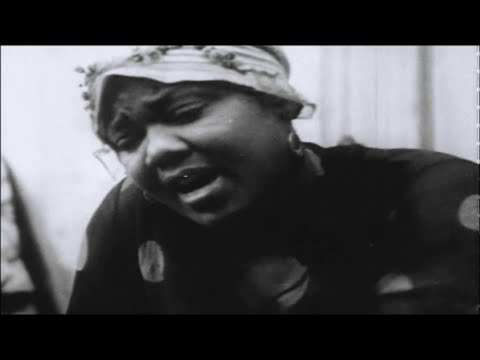
    In 1929, Bessie Smith made her only film appearance, starring in a movie titled St. Louis Blues that was based on this song.

    It was sung by Theresa Harris and played several times, including in the opening credits, in the 1933 movie Baby Face.

    St. Louis Blues, a highly fictionalized 1958 biopic of Handy that starred Nat King Cole as the blues composer, was named after his most famous song.
  • The St. Louis Blues NHL team is named after this tune, and their theme song is Glenn Miller's version of the Handy composition.
  • A 1922 recording by Handy's Memphis Blues Band was entered into the United States National Recording Registry in 2023, with the entry reading, "It was largely Handy's creative output that ennobled the blues to cross America's race and cultural lines."

Comments: 2

  • I'minindianaI find it interesting that we have shifted from music like this being all the rage, to "unholy" like literally, the song unholy lol
  • Barry from Sauquoit, NyOn December 1, 1958, Richard Cannon was a guest on the Dick Clark ABC-TV weekday-afternoon program, 'American Bandstand'...
    Can't find if he performed any songs on this appearance on 'Bandstand', but in 1958 he did release his covered version of "St. Louis Blues", it did not make any of Billboard's national charts...
    The following year, 1959, he released "You'll Never Walk Along" and "Tonight I Am A King".
see more comments

Editor's Picks

Muhammad Ali: His Musical Legacy and the Songs he Inspired

Muhammad Ali: His Musical Legacy and the Songs he InspiredSong Writing

Before he was the champ, Ali released an album called I Am The Greatest!, but his musical influence is best heard in the songs he inspired.

Michael Sweet of Stryper

Michael Sweet of StryperSongwriter Interviews

Find out how God and glam metal go together from the Stryper frontman.

Devo

DevoSongwriter Interviews

Devo founders Mark Mothersbaugh and Jerry Casale take us into their world of subversive performance art. They may be right about the De-Evoloution thing.

Dennis DeYoung

Dennis DeYoungSongwriter Interviews

Dennis DeYoung explains why "Mr. Roboto" is the defining Styx song, and what the "gathering of angels" represents in "Come Sail Away."

Tom Bailey of Thompson Twins

Tom Bailey of Thompson TwinsSongwriter Interviews

Tom stopped performing Thompson Twins songs in 1987, in part because of their personal nature: "Hold Me Now" came after an argument with his bandmate/girlfriend Alannah Currie.

Evolution Of The Prince Symbol

Evolution Of The Prince SymbolSong Writing

The evolution of the symbol that was Prince's name from 1993-2000.