This highly emotional song has been used in countless heartfelt dedications to loved ones, but the sentiment is a little skewed if you pay attention to the lyric. Check out the opening lines:
It must have been cold there in my shadow
To never have sunlight on your face
That sounds like a diss you'd hear in a rap battle, doesn't it? As the song goes on we learn that the singer has lived a life of achievement and glory, while the person she's singing about has been their invaluable support system, the wind beneath her wings. You can picture Batman singing it to Robin.
But the reason the song has endured in all those memorials is because of the chorus:
Did you ever know that you're my hero
You're everything I wish I could be
That's the sentiment most people are going for when they use it to celebrate a loved one.
"The Wind Beneath My Wings" was a #1 hit for Bette Midler in June 1989, but the song was originally recorded by Roger Whittaker in 1982 and was widely covered over the next few years. The first version to chart was by Lou Rawls, who took it to #65 in 1983. Later that year, a version by Gladys Knight & The Pips retitled "Hero (Wind Beneath My Wings)" went to #104. Others to cover the song before Midler include Lee Greenwood, Sheena Easton, Willie Nelson and Patti LaBelle. Midler's version, released in November 1988, blew away all the others to become the definitive version.
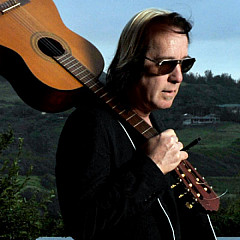
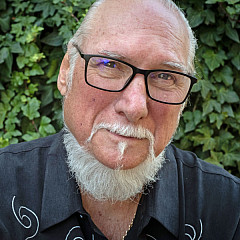
The song was written by the Nashville songwriters Jeff Silbar and Larry Henley, who have given different accounts of how it came together. Both agree that Henley came up with the title; he wrote it in a notebook full of ideas, where it sat for 10 years until 1981, when he and Silbar were working for a publisher, writing songs together in the same office.
According to Henley, he heard Silbar playing his guitar and came up with the first line: "It must have been cold there in my shadow." Silbar came up with the chord structure, and Henley thought up the rest of the lyric on a boat trip a short time later, writing the words on a paper bag.
In
Silbar's account, it was a more even collaboration. They were working together, and he saw the title in Henley's notebook and loved it, especially since he was learning to fly planes at the time. Instead of writing the chorus first like they usually did, they wrote the song from start to finish, completing most of it in one day. The next day, they tweaked the song and made the demo.
Either way, there doesn't appear to be any specific person who inspired the lyric. These were two professional songwriters in an office trying to write a song that would get recorded and hopefully become a hit.
"The Wind Beneath My Wings" was conceived as a love song from a man to a woman or vice versa, but it ended up with lyrics that were more universal, and could apply to many different types of relationships (friends, family, etc.). This is a major reason why the song was so successful.
A 1983 cover by Gary Morris was a #4 hit on the Country chart and earned the song's writers the Country Music Association (CMA) Award for Song of the Year. Morris is not a fans of Midler's version. Before performing the song at concerts, he was known to precede it by saying, "Bette is free to sing this however she wants but personally I think she butchered it."
The demo that Silbar and Henley recorded had a medium tempo. Their music publisher had the idea of slowing it down and making it a ballad.
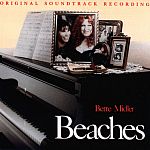
The Bette Midler version is featured in the 1988 movie Beaches, in which she starred. It appears in a dramatic scene at the end of the film after the character played by Barbara Hershey dies. The young version of Midler's character is played by Mayim Bialik, who went on to star in the sitcoms Blossom and The Big Bang Theory.
Midler revealed to The London Times February 14, 2009, that she didn't like this song at first. She explained: "It's really grown on me. When I first heard it, I said, 'I'm not singing that song,' but the friend who gave it to me said, 'If you don't sing it I'll never speak to you again', so of course I had to sing the damned song. Whatever reservations I might have had I certainly don't have any more."
"The Wind Beneath My Wings" won the Grammy Awards for Record of the Year and Song of the Year in 1990, which was a bit unusual because the song was written years earlier and had been widely covered. It wasn't eligible for an Oscar because it wasn't written specifically for the movie Beaches.
Cementing its status as the ultimate tribute song, Midler performed "The Wind Beneath My Wings" following the death montage at the Oscars in 2014. It was her first time singing at the Oscars.
After Midler's version became a hit, many other artists recorded the song, including Willie Nelson, John Tesh, Patti LaBelle, Perry Como and Judy Collins. It is one of the most performed songs of all time.
Bette Midler was a really big star when she released this song in 1988. Known as a singer, actress, and all-around entertainer, she released her first album,
The Divine Miss M, in 1972, earning the Grammy Award for Best New Artist. In 1979 she starred in the movie
The Rose and sang the
title song, which was a huge hit. In the '80s she starred in popular movies like
Down and Out in Beverly Hills and
Outrageous Fortune, and was a regular guest on
The Tonight Show Starring Johnny Carson. In 1990 she had another big hit with "
From A Distance."
"The Wind Beneath My Wings" shows up in a lot of TV shows, often for comic effect. It's appeared in episodes of Abbott Elementary, Resident Alien, The Good Place, The Goldbergs, Fresh Off The Boat, It's Always Sunny In Philadelphia, 30 Rock and Gilmore Girls.
For the song's writers, Jeff Silbar and Larry Henley, it was like striking oil, earning huge royalties and loads of awards. They've each written some songs you might have heard of, but we're guessing "The Wind Beneath My Wings" earned them more than all the others they wrote combined. Silbar's others songs include "
Where Were You When I Was Falling In Love" by Lobo and "
All My Life" by Kenny Rogers. Henley also wrote "Lizzie And The Rainman" by Tanya Tucker and "Shotgun Rider" by Joe Sun.