Baby, Please Don't Go

Album: Blues Classics 21 (1935)
Play Video

Songfacts®:

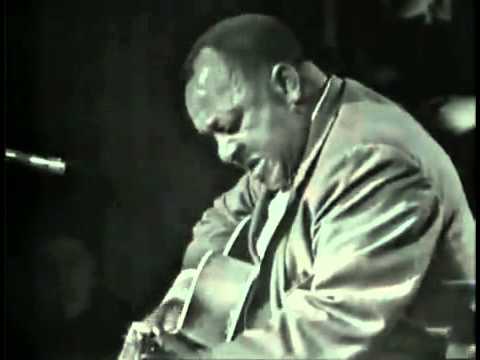
  • Blues great Big Joe Williams is credited with writing this song, but it was developed from a folk song titled "Long John," which was recorded in 1934 by John and Alan Lomax for the Library of Congress. That recording captures the song being sung by black prisoners working Darrington State Prison Farm in Texas. It was a popular tune there because "Long John" was about an escaped prisoner on the run from authorities.

    Williams changed the song, but he kept the prison theme, with lines like, "I believe there's a man done gone to the country farm, with a long chain on."
  • Lyrically, this song works up a well-worn blues cliché: His baby is leaving, and he's desperately trying to get her to stay. She's planning to leave on the midnight train, but this one is going to New Orleans, not Georgia.
  • Lester Melrose recorded Williams in Chicago for Bluebird Records. The credits on the single identify the band as Joe Williams' Washboard Blues Singers. Chasey "Kokomo" Collins played washboard and Dad Tracy played fiddle on this recording.

    Because of patchy record-keeping, historians aren't sure how many copies of the song sold. Whatever the number, it was enough to launch a successful career for Williams and to become one of the most widely covered and imitated songs in blues history.
  • Williams recorded a modernized version of the song in 1941, again for Bluebird. He recorded a third time in 1947, this one for Columbia Records.
  • Muddy Waters did the song in 1953. Chess Records recorded it under the title "Turn the Lamp Down Low." This version is the one that most strongly influenced later interpretations.
  • Van Morrison's first band, Them, covered the song in 1964, releasing it as their first single with "Gloria" as the B-side. It rose to #10 in the UK and bubbled under in America, charting at #102. "Gloria" was later released as an A-side single.

    Morrison based Them's version on John Lee Hooker's 1949 arrangement, which he titled "Don't Go Baby." He heard the song on Hooker's 1959 Highway of Blues album.
  • Jimmy Page, a session musician at the time, played guitar on Them's version. There's debate over whether or not he wrote the guitar part or simply played what Them's Billy Harrison came up with. Whether or not Page is actually the one playing is, itself, debated, but both Page biographer George Case and Morrison biographer Johnny Rogan believe he did.
  • In 1992, the Blues Hall of Fame inducted the song into its Classics of Blues Recordings category; the Rock and Roll Hall of Fame has "Baby, Please Don't Go" on their list of "500 Songs that Shaped Rock and Roll."
  • AC/DC performed the song live regularly throughout the band's lifetime. They first recorded it in 1974 on their debut album High Voltage.
  • Aerosmith did the song in 2004 on Honkin' on Bobo. Their version hit #7 on the Mainstream Rock Track Chart. The band has since made it a staple of their live sets.

Comments

Be the first to comment...

Editor's Picks

Cheerleaders In Music Videos

Cheerleaders In Music VideosSong Writing

It started with a bouncy MTV classic. Nirvana and MCR made them scary, then Gwen, Avril and Madonna put on the pom poms.

Shaun Morgan of Seether

Shaun Morgan of SeetherSongwriter Interviews

Shaun breaks down the Seether songs, including the one about his brother, the one about Ozzy, and the one that may or may not be about his ex-girlfriend Amy Lee.

Real or Spinal Tap

Real or Spinal TapMusic Quiz

They sang about pink torpedoes and rocking you tonight tonight, but some real lyrics are just as ridiculous. See if you can tell which lyrics are real and which are Spinal Tap in this lyrics quiz.

Ian Anderson of Jethro Tull

Ian Anderson of Jethro TullSongwriter Interviews

The flautist frontman talks about touring with Led Zeppelin, his contribution to "Hotel California", and how he may have done the first MTV Unplugged.

Stan Ridgway

Stan RidgwaySongwriter Interviews

Go beyond the Wall of Voodoo with this cinematic songwriter.

Dar Williams

Dar WilliamsSongwriter Interviews

A popular contemporary folk singer, Williams still remembers the sticky note that changed her life in college.