Lush Life

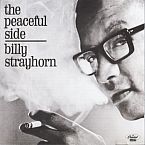
Album: The Peaceful Side (1948)
Play Video

Songfacts®:

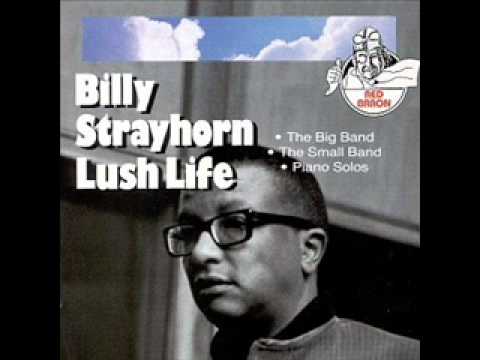
  • It is difficult to imagine many teenagers having the maturity to write a song as introspective and worldly as "Lush Life." Yet, it was 16 year-old Billy Strayhorn who set to work on the jazz standard that was originally called "Life Is Lonely." It would be many years later when he would debut the song with vocalist Kay Davis at a Carnegie Hall performance on November 13, 1948.

    Strayhorn was not the typical teenager, though. His mother fueled his desire for knowledge with books and sheet music. His classmates called him "Dictionary." Strayhorn bought his own piano by saving up money he earned as a soda jerk. All the while, the piano prodigy dreamed of a more rich – or lush – life than the one he had in the shadow of the steel industry of Pittsburgh.

    Strayhorn was 23 when he met 39-year-old Duke Ellington, who was in Pittsburgh for a show at the Crawford Grill. He impressed Ellington with an impromptu performance of a new arrangement of one of Ellington's own songs. Eventually, Strayhorn would collaborate with Ellington on some of jazz's best-known classics, including "Take the A Train." In fact, 'Take the A Train" was a hit before "Lush Life" made it's first public appearance.
  • "Lush Life" was more of an ongoing project for Strayhorn than a song intended for publication. He only played the song for friends or at parties until the Carnegie Hall performance. Ellington played seven shows at the iconic theatre that year, and Strayhorn and Davis unveiled "Lush Life" in the final show. Soon after, vocalists clamored to record it, although not all were able to do it. Over 500 covers of "Lush Life" exist, but Frank Sinatra quit trying after a few attempts to interpret the complexities of the verses in 1958. He said he would give it another try in a year, but he never did. Jazz singer and pianist Andy Bey said of the song that he has performed countless times, "A lot of songs had verses and refrains, you know, but it's like a mind boggling thing. It's not about 'ring-a-ding ding' when you do "Lush Life."
  • Many consider the John Coltrane and Johnny Hartman collaboration from 1962 to be the definitive recording of the song. Perhaps it is the song's complexities that have kept it from appearing often in popular films or on television. Other than documentaries and television tribute specials, "Lush Life" was first used in a movie in 1991 when it was part of the soundtrack for the Kenneth Branagh thriller Dead Again. Queen Latifah performed it for her 1998 movie Living Out Loud and the Chet Baker recording was used in the 2001 film Sidewalks of New York. The song was used in Spanglish in 2004, but was not included on the soundtrack. No version of the song ever charted.
  • Nobody knows exactly what Strayhorn's lyrics were intended to mean. He wrote of the "come what may places" and getting "the feel of life from jazz and cocktails." He did, indeed, live a life of jazz music and alcohol. He was known to be an alcoholic and the combination of alcohol and cigarettes are blamed for shortening his life. However, "Lush Life" has stood the test of time as a jazz standard, regardless of the meaning of the lyrics. Ellington offered his own interpretation in 1948, as the song was making is public debut in New York: "I don't know which is better, living a 'Lush Life' or singing about it."
  • With no chorus (the phrase "lush life" shows up just once, near the end of the song) and a lyric full of words and phrases that are difficult to sing and divine ("distinguée traces," "a trough full of hearts"), this song has confounded vocalists and astounded songwriters. The unflappable Donna Summer, who recorded the song for her 1982 self-titled, Quincy Jones-produced album, said: "It broke my chops trying to sing it, only because you really have to try to complement the backing without making it something that it's not."

    Kate Davis, who studied the song at the Manhattan School of Music, said, "It's the kind of song I don't think any young person is emotionally equipped to sing or play. It's very emotional and it's beautiful, but it's kind of heavy. I remember spending a lot of time with that song and realizing how you could use songs and songwriting as a way to really get to an emotional place - like when you're heartbroken and you're feeling the realities of being a human - and to bring other people to that space through words and music. So, a song like that is a great example of how you can effectively write a song that will affect someone."

Comments: 7

  • Chrissie from New South Wales AustraliaGrowing up in the Land of Oz, most Australian families were not overly familiar with the great early American songwriters/singers - unless one was brought up in a musical family. I became very immersed with Rickie Lee Jones. Her release of the standards LP "Funny Valentine" features her rendition of Lush Life. Being that this is the ONLY version I know and due to her status as a respected singer/songwriter, I was eagerly seeking her name in the article and comments. RLJ's version recorded LIVE at Perkins Palace LA on 16/4/1982 remains mesmerising.
  • Mary K James from Long Beach, CaI have known the tune Lush Life and made it part of my vocal repertoire for many years. It is one of the more musically challenging jazz vocals among the 5 or so that I made sure I learned. I had to know, why is this song such a relentless downer? We don't know. It just is. Are my audiences in 2023 going to like that? Only performing it will tell. Try SPRING CAN REALLY HANG YOU UP THE MOST.
  • Stevie L from West Valley, L.a. CountyTotally bogs my mind how such a young person is able to create this lyric. My favorite vocal? The Queen Latifa of course.
  • Madnana from UkI just happened upon this piece about Lush Life. It is an interesting and complex song. What your author missed didn't mention was that Sarah Vaughn sang a version of this song in her own inimitable way. And a fantastic job she made of it too!
  • Kathleen Bergeron from Salisbury, NcThe Coltrane-Hartman version has always been my favorite. Johnny Hartman is the only singer I’ve ever heard sing it with that last word, “too,” just right. I just wish he’d pronounced “poignant” correctly. Why in the world didn’t someone stop tape to get that right?
  • Frederic from VirginiaThe lyrics may be challenging but the difficulty with this song lies in the melodic line and the harmonic structure. Nonetheless, the web site Jazz Standards lists it as #36 in their list of the 1000 most-frequently recorded jazz standard compositions.
  • Ben Are you serious, it’s obviously about him being gay...
see more comments

Editor's Picks

Muhammad Ali: His Musical Legacy and the Songs he Inspired

Muhammad Ali: His Musical Legacy and the Songs he InspiredSong Writing

Before he was the champ, Ali released an album called I Am The Greatest!, but his musical influence is best heard in the songs he inspired.

Michael Sweet of Stryper

Michael Sweet of StryperSongwriter Interviews

Find out how God and glam metal go together from the Stryper frontman.

Devo

DevoSongwriter Interviews

Devo founders Mark Mothersbaugh and Jerry Casale take us into their world of subversive performance art. They may be right about the De-Evoloution thing.

Dennis DeYoung

Dennis DeYoungSongwriter Interviews

Dennis DeYoung explains why "Mr. Roboto" is the defining Styx song, and what the "gathering of angels" represents in "Come Sail Away."

Tom Bailey of Thompson Twins

Tom Bailey of Thompson TwinsSongwriter Interviews

Tom stopped performing Thompson Twins songs in 1987, in part because of their personal nature: "Hold Me Now" came after an argument with his bandmate/girlfriend Alannah Currie.

Evolution Of The Prince Symbol

Evolution Of The Prince SymbolSong Writing

The evolution of the symbol that was Prince's name from 1993-2000.