Back Street Kids

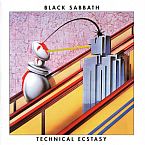
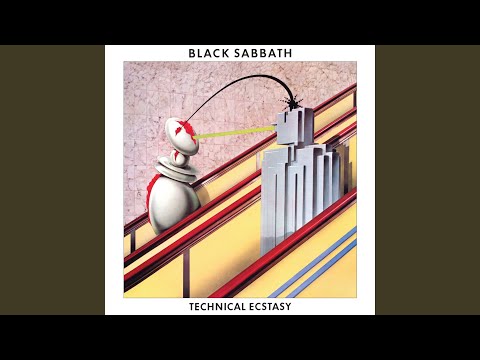
Album: Technical Ecstacy (1976)
Play Video

Songfacts®:

  • In "Back Street Kids," Black Sabbath frontman Ozzy Osbourne wasn't being metaphorical when he sang "seems that now my music's paying off my tax demands." At 28 years old, feeling uninspired, disappointed, and betrayed, he was trying to dig himself out of a big financial hole he hadn't dug. In that moment of desperation, he found himself looking back to his roots.

    Black Sabbath formed from four working-class kids in the Aston area of Birmingham, England. Osbourne felt hopeless and aimless until the night he heard "She Loves You" by the Beatles. In that moment he devoted himself to rock and roll as his way out. Sabbath's self-titled debut album was scorched by critics but beloved by fans, and the band shot into stardom. They followed it with one success after another. Then, around the 1973 recording of their fifth studio album, Sabbath Bloody Sabbath, they discovered that their manager Patrick Meehan had received $250,000 for the band's Cal Jam performance but only paid the bandmembers $1,000 each. This led to the discovery that Meehan had maneuvered things so that he legally owned the majority of the band's property. The fallout from the scam is captured on Sabotage, the band's sixth studio album and the one preceding Technical Ecstasy, on which "Back Street Kids" appears.

    For the next couple years, Osbourne said, "We were working on the road to pay lawyers' fees to keep the lawsuit going against the manager who was ripping us off. And I just said, 'Hey, man, well I didn't get involved in this to be a damn lawyer.'"

    After months of legal meetings and courtroom appearances, the band tried to get back to business. They wanted to reinvent themselves, to get away from their doom-and-gloom image and to follow modern trends. Osbourne wasn't happy about it. He didn't understand why Sabbath would take direction from the bands they themselves had once inspired. Feeling artistically frustrated on top of financially drained, he was already thinking about leaving the band, which he did less than two years later.

    Through all the doubts, Osbourne found his anchor in the one constant that had been steady throughout his life: rock and roll.

    Seems that now my music's paying off my tax demands
    So listen to the music, want to see you get so high
    'Cause I'm a back street rocker and I will be till the day I die
    Nobody I know is gonna take my rock 'n roll away from me


    There was no way for Osbourne to know where his life was going in 1976. From our historical vantage point, we can see "Back Street Kids" as a pivotal moment in his story. After an old dream had soured and things looked tired and bleak, Osbourne looked to his roots. He chose to stick with the rock and roll muse, as he would until the day he died in 2025 at 76.
  • "Back Street Kids" is the opening track on Technical Ecstasy, Black Sabbath's seventh studio album. Bassist Geezer Butler said the album was a response to punk music. Some journalists, notably Michael Hann, challenged that claim because punk had yet to really take off at that point. But in a 2021 interview with Ultimate Classic Rock, drummer Bill Ward backed Butler's sentiment, stating that Technical Ecstasy showed Sabbath's punk credentials.
  • In 2021, English musician Steven Wilson (of Porcupine Tree) remixed "Back Street Kids" from the original analog tapes and remixed the song. Sanctuary Records released it in promotion of the Super Deluxe Edition of the Technical Ecstasy re-release (the single is also included in the collection).
  • "Back Street Kids" was released as a single in France. It was also the B-side to the Philippines' version of the "It's Alright" single (the US version had a different version of "It's Alright" as the B-side).

Comments

Be the first to comment...

Editor's Picks

Janis Ian

Janis IanSongwriter Interviews

One of the first successful female singer-songwriters, Janis had her first hit in 1967 at age 15.

Lace the Music: How LSD Changed Popular Music

Lace the Music: How LSD Changed Popular MusicSong Writing

Starting in Virginia City, Nevada and rippling out to the Haight-Ashbury, LSD reshaped popular music.

Jimmy Jam

Jimmy JamSongwriter Interviews

The powerhouse producer behind Janet Jackson's hits talks about his Boyz II Men ballads and regrouping The Time.

Dar Williams

Dar WilliamsSongwriter Interviews

A popular contemporary folk singer, Williams still remembers the sticky note that changed her life in college.

Commercials

CommercialsFact or Fiction

Was "Ring Of Fire" really used to sell hemorrhoid cream?

Reverend Horton Heat

Reverend Horton HeatSongwriter Interviews

The Reverend rants on psychobilly and the egghead academics he bashes in one of his more popular songs.