
Changes

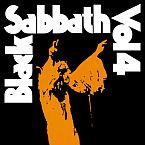
Album: Vol. 4 (1972)
Play Video

Songfacts®:

  • This very sad song deals with a divorce Black Sabbath drummer Bill Ward was going through. The lyric was written by the group's bass player, Geezer Butler, and sung by their frontman, Ozzy Osbourne. In a Songfacts interview with Butler, he explained:

    "Bill Ward and his wife were going through a divorce. When your marriage fails - that's what it was about."
  • Bill Ward, whose crumbling marriage inspired this song, didn't play on it because there are no drums on the track. The lead instrument is a piano played by Sabbath guitarist Tony Iommi. The drone in the background that sounds like a string section is actually a Mellotron, which is essentially a tape-based sampler. In this case, it was used to play back the sounds of string instruments. The Beatles used one on the intro to "Strawberry Fields Forever."
  • Black Sabbath is known for heavy rockers like "Paranoid" and "War Pigs," so it may seem surprising that they released this gentle heartbreak ballad. The group, though, were all over the map musically, even exploring jazz at times (the song "Air Dance" is a good example). Their heavy stuff is what most connected with fans and makes up the bulk of their singles, but a dive into their album cuts reveals songs like "Changes," which you wouldn't expect.
  • Speaking to ABC Audio, guitarist Tony Iommi recalled playing "Changes" on the piano as Ozzy sang over the melody. They liked how it sounded and weren't concerned that fans might react against its soft rock sound. "The first thing that it had to please was us," Iommi said. "We'd always done that with Sabbath music."

    "It wasn't, 'Is anybody gonna like it?' We have to... start off with us first, because we're presenting ourselves," he added. "So if we like it, then we just hope that everybody else liked it."
  • "Changes" is part of the fourth Black Sabbath album, conveniently titled Vol. 4. The album was released in 1972 in the middle of a very fruitful run for the group that started with their 1970 self-titled debut. They didn't get much airplay but did a lot of touring, and word got out. By the time Vol. 4 was released, they had a huge following in their native UK and were well known around that world, including America, where they did a lot of touring and recorded the album (the Record Plant in Los Angeles). This hectic pace was abetted by cocaine (the album was recorded in Los Angeles, remember), which eventually led to infighting and stagnation. Starting in 1975 with their sixth album, Sabotage, they declined in popularity. In the '80s they had a resurgence when Ronnie James Dio replaced Ozzy as lead singer. Ozzy did very well as a solo artist and eventually rejoined the group.
  • Ozzy and Kelly Osbourne reworked "Changes" as a father-daughter duet in 2003, turning into a song about daddy's little girl leaving the nest:

    Kelly:
    I love you daddy
    But I found my way


    Ozzy:
    My baby is grown now
    She's found her way


    This version was a #1 hit in the UK, a chart position no Black Sabbath or Ozzy Osbourne song never reached. It got a bump from the reality show The Osbournes, which explored the dynamic between Ozzy and Kelly.
  • The soul singer Charles Bradley did a cover of "Changes" in 2013 that Geezer Butler considers the best cover of a Black Sabbath song. "It's so soulful," he told Songfacts. "The way he puts it across is brilliant."

    This version is the theme song to the animated Netflix series Big Mouth, which debuted in 2017. The show is about kids who are going through puberty - major changes!
  • Eminem sampled the chorus to provide the hook on this 2010 song "Going Through Changes," which deals with his recovery from depression and prescription drug addiction.
  • Yungblud recorded a live cover of "Changes" during the "Back to the Beginning" Black Sabbath farewell concert at Villa Park. Released as a charity single on July 18, 2025, all proceeds from the release are being donated to Cure Parkinson's, Birmingham Children's Hospital, and Acorns Children's Hospice. The all-star performance featured Frank Bello (Anthrax) on bass, Nuno Bettencourt (Extreme) on guitar, Sleep Token's II on drums, and Adam Wakeman on keyboards. Wakeman was the keyboardist and rhythm guitarist for Osbourne's band.

Comments: 2

  • AnonymousI love this song it’s so beautiful
  • AnonymousBeautiful song. I can play it on the piano. It’s in the key of c major, which is all the white keys, and nothing else.
see more comments

Editor's Picks

Stephen Christian of Anberlin

Stephen Christian of AnberlinSongwriter Interviews

The lead singer/lyricist for Anberlin breaks down "Impossible" and covers some tracks from their 2012 album Vital.

Emilio Castillo from Tower of Power

Emilio Castillo from Tower of PowerSongwriter Interviews

Emilio talks about what it's like to write and perform with the Tower of Power horns, and why every struggling band should have a friend like Huey Lewis.

Art Alexakis of Everclear

Art Alexakis of EverclearSongwriter Interviews

The lead singer of Everclear, Art is also their primary songwriter.

Graham Bonnet (Alcatrazz, Rainbow)

Graham Bonnet (Alcatrazz, Rainbow)Songwriter Interviews

Yngwie Malmsteen and Steve Vai were two of Graham's co-writers for some '80s rock classics.

They Might Be Giants

They Might Be GiantsSongwriter Interviews

Who writes a song about a name they found in a phone book? That's just one of the everyday things these guys find to sing about. Anything in their field of vision or general scope of knowledge is fair game. If you cross paths with them, so are you.

Who's Johnny, And Why Does He Show Up In So Many Songs

Who's Johnny, And Why Does He Show Up In So Many SongsSong Writing

For songwriters, Johnny represents the American man. He has been angry, cool, magic, a rebel and, of course, marching home.