The Follow Through

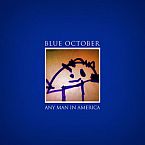
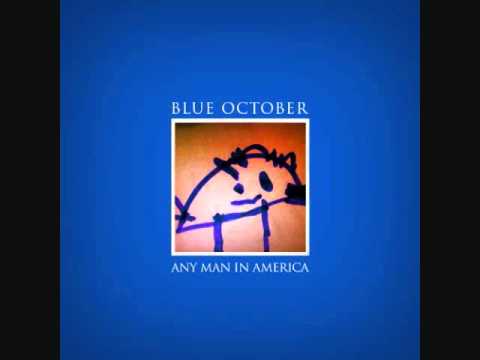
Album: Any Man In America (2011)
Play Video

Songfacts®:

  • Any Man In America chronicles an emotionally draining custody battle singer Justin Furstenfeld fought with his ex wife over his daughter Blue Reed. "It's been rough, dude," he told Noisecreep. "The court stuff has been brutal. The new Blue October album is going to be called 'Any Man in America' because in the past two years I've learned that men in this country get screwed by the judicial system. I had people telling me that I had to lay back and take it like rape. They said I wasn't necessarily going to enjoy it, but that I had to deal with it. All my ex had to do is say that I was cheating too and they said, 'He's a rock star, he's got tons of money.' But I don't have a lot of money - she spent it all!

    They fought for a year and a half in court. They even used lyrics to a song I had written four years before I had even met my wife about a guy killing someone. My ex said I had written it about her, which was complete bulls---, but they believed her. All of a sudden I had warrants out on me and I they wouldn't allow me to see my daughter because I was 'dangerous.' I was like, 'What the hell is going on with my life!'"
  • Furstenfield intended this Any Man In America closing track "to convey hope for the future." He explained to AntiMusic: "Hope has to be there; I mean, there's a baby involved. It's basically, 'Look, let's lay down our bulls--t and move on. We've got to move on and be stronger. Let's stop fighting. Please.' It's the happy ending that every parent wishes for upon getting a divorce. It's divorce's happy ending.

    Now put that happy ending in the mix with conniving lawyers, brutal lies, and constant threats and you have yourself trapped with a serial accuser. It is a fact that a serial accuser will do anything in their power for the sake of control - which in my case is to keep me away from our child. The one thing I've learned the most is when a mother loses her child, she is sorrowful, sympathetic, and sad. When a father loses his child he instantly wants to fight and do anything in his power to get them back. Now take those two personalities to court and put a muzzle on the guy and you have my situation."
  • Furstenfeld explained the song's meaning to Artist Direct: "I'm talking to my ex. We've got lay things down because I'm going to follow through. My daughter is everything I've ever wanted to be—innocent. All of my happiness is in her. After 'The Worry List,' I'm basically writing to Blue that I might've been gone but I never walked out. There's a bunch of stories you just heard. When you get older and listen to this, you might be mad at me for putting this out, but I wanted you to hear the truth. After that, it's 'The Follow Through.' It's not about who sees it, but what you do and how you follow through with everything you say to that little girl. If you don't show up, you're such an a--hole. I want to smack every dad who could possibly be there to see their kid and didn't show up. That's just horrible. If I'm granted time, I'll fly up there and be with her because she's so perfect and I love being with her."

Comments

Be the first to comment...

Editor's Picks

Mike Campbell

Mike CampbellSongwriter Interviews

Mike is lead guitarist with Tom Petty & the Heartbreakers, and co-writer of classic songs like "Boys Of Summer," "Refugee" and "The Heart Of The Matter."

Donny Osmond

Donny OsmondSongwriter Interviews

Donny Osmond talks about his biggest hits, his Vegas show, and the fan who taught him to take "Puppy Love" seriously.

Carl Sturken

Carl SturkenSongwriter Interviews

Hitmaker Carl Sturken on writing and producing for Rihanna, 'N Sync, Christina Aguilera, Kelly Clarkson, Donny Osmond, Shakira and Karyn White.

American Hits With Foreign Titles

American Hits With Foreign TitlesSong Writing

What are the biggest US hits with French, Spanish (not "Rico Suave"), Italian, Scottish, Greek, and Japanese titles?

Mick Jones of Foreigner

Mick Jones of ForeignerSongwriter Interviews

Foreigner's songwriter/guitarist tells the stories behind the songs "Juke Box Hero," "I Want To Know What Love Is," and many more.

The Police

The PoliceFact or Fiction

Do their first three albums have French titles? Is "De Do Do Do, De Da Da Da" really meaningless? See if you can tell in this Fact or Fiction.