This opulent, string-swept ballad from Blur's third album, Parklife, is about a couple's unsuccessful attempt to navigate through a rough patch in their relationship.
Well, you and I collapsed in love
And it looks like we might have made it
Yes, it looks like we've made it to the end
Croons singer-songwriter Damon Albarn in the chorus, sounding the death knell on the pair's time together.
This song was produced by Stephen Hague at RAK Studios in London, unlike the rest of Parklife, which was produced by Stephen Street. Hague was chosen for his expertise in overseeing string arrangements, having previously worked with the likes of New Order and Pet Shop Boys.
Hague was a fan of Blur's demo of "To The End" and decided to keep most of it, including the original vocals, despite the fact that Albarn recorded them while stoned. The demo also featured French backing vocals by Albarn's girlfriend at the time, Elastica's Justine Frischmann, but she was later replaced by Stereolab's Lætitia Sadier.
"To the End" is a favorite among Blur themselves. Bassist Alex James is said to have sobbed with joy when he heard the finished mix. Drummer Dave Rowntree also expressed his love for the song as part of a
Parklife listening party on X (formerly known as Twitter) in 2020: "I'm crying. I love this tune."
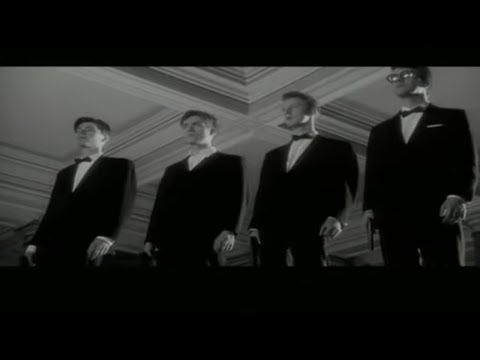
The official video for "To The End" was directed by David Mould and shot at the National Museum and the Libochovice Chateau in the Czech Republic. The visual is an homage to the acclaimed 1961 French New Wave film Last Year at Marienbad in terms of both plot and black-and-white cinematography. In the video, Albarn and guitarist Graham Coxon are caught in a love triangle with an enigmatic woman played by Sadier.
Blur performed this song on Top Of The Pops June 9, 1994. Albarn was in a very bad place mentally at the time, struggling with depression and cocaine in light of his newfound fame. "I remember being at Top Of The Pops for the single 'To The End' and thinking, 'I can't cope. Please, somebody switch me off.' I tried a back man, a herbal man, and an acupuncture man, nothing really helped and everyone had a different reason why I felt the way I did," Albarn told NME in 1995.
Eventually, Albarn regained his health by cutting back on his drug intake and starting to work out. "I still drink a lot and smoke a bit of dope but generally I think I've learnt how to be a sane pop person."
Blur recorded a French version of this song that was later released as a B-side to "
Parklife." The band then recorded a third rendition of "To The End" at Abbey Road Studios in London with French singer-songwriter Francoise Hardy titled "To The End (La Comedie)." This version was released as a single in France even though Hardy wasn't happy with it. Writing in her 2018 memoir,
The Despair of Monkeys and Other Trifles, Hardy said: "I have to say that the recording is not very good overall and that my participation brought absolutely nothing to the song - quite the contrary! But Damon and his acolytes were so proud of it and seemed to attach such importance to my appraisal that I never shared my reservations with them. However, I do not regret the splendid fountain of youth this adventure turned out to be."
Albarn broke down in tears after performing this song as part of Blur's highly anticipated reunion headline set at Glastonbury Festival in 2009. According to the
Daily Mirror, Albarn's emotional outburst came after an argument with his girlfriend, Suzi Winstanley. A source added: "It was an emotional night for the lads anyway. Damon was simply overwhelmed by the reaction of the crowd."
"To The End" was the second single released from
Parklife, peaking at #16 on the UK chart. It had the second-lowest chart performance among the singles from the album, with "End Of A Century" reaching #19. "
Girls and Boys" and "
Parklife" achieved greater success, peaking at #5 and #10 respectively.
Parklife was a huge success, reaching #1 and staying on the UK albums chart for an incredible 94 weeks. According to Albarn, the album was inspired by London Fields, a darkly comic murder mystery novel by Martin Amis. In an interview with NME in 1995, Albarn elaborated: "For me, the album is like a loosely linked concept involving all these different stories. It's the travels of the mystical lager-eater, seeing what's going on in the world and commenting on it."