This song is about changing established society, starting in the middle of a conversation between two people (the Joker and the Thief). The Thief sympathizes with the Joker, who wants to escape his position in life and hates the values of society. The third verse suddenly shifts the scene, changing from a conversation to an almost unrelated verse filled with imagery of princes, women, and barefoot servants guarding a castle, establishing a place in the past. These figures are said to represent established society. "Somewhere in the distance, a wildcat does growl" suggests danger is approaching, then suddenly "Two riders are approaching" links us back to the first two verses. The riders are the Joker and the Thief, coming to establish a different set of values. The guarded castle suggests there will be confrontation.
While Bob Dylan did the original version of the song, it wasn't well known until
Jimi Hendrix released a transformative cover. Dylan liked Hendrix' version so much, he began playing the song in that style. Jimi Hendrix replaced the harmonica parts with guitar and sped up the song.
In addition to Hendrix, this song has also been covered by Lenny Kravitz, Pearl Jam, Dave Matthews Band, U2, Eric Clapton, The Grateful Dead and Neil Young.
Bob Dylan got a good laugh out of hearing that the Village Voice's Richard Goldstein misinterpreted the line "two riders were approaching" as "two writers were approaching."
In 2006 the Australian rock group Wolfmother had success with a song called "Joker & the Thief," which was inspired by lines from this song.
The song's confusing narrative structure was intentional. The final two lines were originally its opening ones:
Outside in the distance, a wildcat did growl
Two riders were approaching, the wind began to howl
Dylan switched them around just before recording. He never explained his reasoning to anyone on record.
In The Bible in the Lyrics of Bob Dylan (published by Wanted Man in 1985), theologian Colbert Cartwright finds more than 60 Biblical allusions in the John Wesley Harding album. "All Along the Watchtower" lines up with Isiah 21:5–9, which reads (King James version):
They prepare the table, they spread the rugs, they eat, they drink. Arise, O princes, oil the shield! For thus the Lord said to me: "Go, set a watchman, let him announce what he sees. When he sees riders, horsemen in pairs, riders on asses, riders on camels, let him listen diligently, very diligently." Then he who saw cried: "Upon a watchtower I stand, O Lord, continually by day, and at my post I am stationed whole nights. And, behold, here come riders, horsemen in pairs!" And he answered, "Fallen, fallen is Babylon; and all the images of her gods he has shattered to the ground."
Isiah deals with sin, repentance, and God's mercy. The Kingdom of Judah was in danger, and Isiah prophesied that the Jewish people could win back God's favor and protection from their enemies if they renounced their sinful ways and embraced Godly living. Dylan wrote "All Along The Watchtower" in 1967, when the United States was also witnessing internal division, social disintegration, and conflicts with dangerous foreign enemies in Cuba and the Soviet Union.
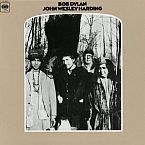
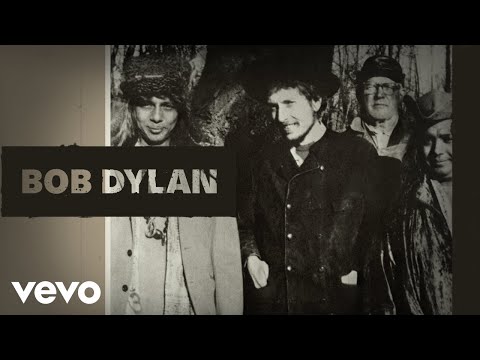
Dylan's eighth studio album, John Wesley Harding, marked a significant evolution in his songwriting style. Dylan said, "John Wesley Harding was a fearful album - just dealing with fear, but dealing with the devil in a fearful way, almost. All I wanted to do was to get the words right." He changed his lyrical approach to be less ambiguous and stream-of-consciousness, becoming more deliberate and purposeful in his choice of symbols. "All of the imagery was to be functional rather than ornamental," he said.
Writing about this song in the booklet to the 1985 box-set compilation Biograph, Dylan notes, "It probably came to me during a thunder and lightning storm. I'm sure it did."
A funny thing about the album is that it names its titular character incorrectly. The late-1800s Texas outlaw went by John Wesley Hardin, not Harding, as the recording's title has it.
In
All the Songs, Phillipe Margotin and Jean-Michel Guesdon suggest that the joker in the song is Dylan himself (interestingly, Don McLean also characterized Dylan as a jester in "
American Pie") and the thief as Dylan's manager, Albert Grossman. In this interpretation, the lines "businessmen, they drink my wine, plowmen dig my earth" refer to the music industry treating Dylan as a moneymaking commodity. The confusion referred to in the song is the chaos of 1960s society.