All The Tired Horses

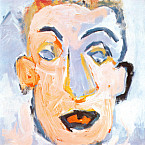
Album: Self Portrait (1970)
Play Video

Songfacts®:

  • All the tired horses in the sun
    How am I supposed to get any writing done?


    "All The Tired Horses" repeats those two lines (and only those lines), over and over again, from start to end. Lyrically, the song's absurdly simple for an artist who made his legend on his words more than anything else, but that seeming absurdity is a crucial part of the song's story.

    Just off the heels of Nashville Skyline, which sold well but left many longtime fans confused (and some flat-out angry) because of its country styling and simple, life-affirming lyrics, Self Portrait further separated Dylan from his old fanbase. This was his intention.

    In a 1984 interview with Rolling Stone, Dylan said that at the time of Self Portrait, he was tired of people hounding him at his home on MacDougal Street in Greenwich Village, New York, just as they'd done during his attempted retreat into the quiet of Woodstock (the town, not the festival). "I said, 'Well, f--k it,'" Dylan told the magazine. "I wish these people would just forget about me. I wanna do something they can't possibly like, they can't relate to."

    Dylan was a cultural figurehead in ways that are hard to understand today. He was viewed not only (or even primarily) as an entertainer, but also as a political revolutionary leader and as a spiritual guru. It was all too much for him (or any sane person), and by the time of Self Portait, he wanted out.

    He was largely successful in his quest, but over time, appreciation for Self Portrait has grown. "All The Tired Horses" may have felt inexplicable at the time of its release, and it may still be inscrutable today, but it's a beautiful song with an air of mystery and mysticism about it.

    "All The Tired Horses" was the perfect way to make his statement of defiant rejection, because the song itself removes Dylan entirely and calls to mind his burn-out, as the women sing of sitting and watching tired horses bask in the sun, not feeling inspired to do much of anything.
  • No one is sure who plays guitar on this one, because the musicians weren't identified. We do know, though, that it was some two-person combination of Bob Dylan, Al Kooper, or David Bromberg.
  • In 1970, Greil Marcus opened his Rolling Stone review of the album with the question: "What is this s--t?" That pretty much summarized the general reaction to it.
  • This is the only non-instrumental Dylan song on which he doesn't sing a single word. The vocals were all done by Hilda Harris, Albertine Robinson, and Maeretha Stewart.
  • Many songs fade out at the end, and some fade in, but this is one of the few that does both. The effect is that of a fever dream or ghost passing through a room.
  • An emotive version by Irish folk musician Lisa O'Neill soundtracks the climactic ending to Peaky Blinders in the 2022 series finale, "Lock And Key." O'Neill, who wrote a song called "Bobby D" about her admiration for Dylan, is a big fan of "All The Tired Horses," but a straight re-creation wouldn't work for the scene.

    "I had to do something different with it," she explained in a 2023 Songfacts interview. "I guess I went in the opposite direction, and they slowed it right down. I had to figure out how low I could go with my voice and how high I could go."

    O'Neill had help from fellow Irish musicians Cormac Begley (bass concertina and piccolo concertina) and Colm Mac Con Iomaire (violin), who contributed ideas and played on the track, along with Ruth O'Mahony Brady on piano.

    They recorded the song over the course of two days at an old horse stables in Cabinteely, South Dublin, by constant candlelight in honor of O'Neill's friend, the Irish singer/fiddler Mick O'Grady, who was dying at the time.

    "This all contributed to the energy and the charge of the final track," O'Neill noted.

Comments

Be the first to comment...

Editor's Picks

Art Alexakis of Everclear

Art Alexakis of EverclearSongwriter Interviews

The lead singer of Everclear, Art is also their primary songwriter.

La La Brooks of The Crystals

La La Brooks of The CrystalsSong Writing

The lead singer on "Da Doo Ron Ron" and "Then He Kissed Me," La La explains how and why Phil Spector replaced The Crystals with Darlene Love on "He's A Rebel."

Trans Soul Rebels: Songs About Transgenderism

Trans Soul Rebels: Songs About TransgenderismSong Writing

A history of songs dealing with transgender issues, featuring Pink Floyd, David Bowie, Morrissey and Green Day.

Lajon Witherspoon of Sevendust

Lajon Witherspoon of SevendustSongwriter Interviews

The Sevendust frontman talks about the group's songwriting process, and how trips to the Murder Bar helped forge their latest album.

Jon Anderson of Yes

Jon Anderson of YesSongwriter Interviews

From the lake in "Roundabout" to Sister Bluebird in "Starship Trooper," Jon Anderson talks about how nature and spirituality play into his lyrics for Yes.

Angelo Moore of Fishbone

Angelo Moore of FishboneSongwriter Interviews

Fishbone has always enjoyed much more acclaim than popularity - Angelo might know why.