Baby, Let Me Follow You Down

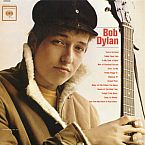
Album: Bob Dylan (1962)
Play Video

Songfacts®:

  • "Baby, Let Me Follow Down" is an old song that was nearly lost to time. Eric Von Schmidt resurrected it in the late 1950s, somewhat accidentally. During that era and into the early 1960s, it was part of a folk music revival, particularly in Greenwich Village, New York.

    Bob Dylan (the most famous character from that folk music revival) was good friends with Schmidt: One of the album covers shown on the cover of Dylan's 1965 album Bringing It All Back Home is Von Schmidt's first album, The Folk Blues of Eric Von Schmidt.

    "Baby, Let Me Follow You Down" was first recorded as "Don't Tear My Clothes" by the State Street Boys in January 1935. Washboard Sam did his own version in 1936. Harlem Hamfats covered it in May '37. At this point the musical and lyrical motif was established: do what you'd like, but just don't tear my clothes. By October of that year, Rosetta Howard did a version with the Hamfats, changing the title to "Let Your Linen Hang Low." By 1938, Blind Boy Fuller changed the name to "Mama Let Me Lay It On You" for his own rendition and took it in a lascivious direction, telling his woman all the things he'll do for her if she'll just let him "lay it on her." That Fuller recording is the one that Von Schmidt first heard.

    Von Schmidt credited Reverend Gary Davis for writing "three quarters" of his own version of the song, which is more ambiguous and seems to have a spiritual bent, although he still begs the girl to take him home. Davis was a blues and gospel musician from South Carolina. He was popular during the folk music revival and influenced many recognizable '60s acts, including the Grateful Dead and Peter, Paul and Mary.

    Many times in his career people have accused Dylan of stealing songs because he didn't come right out and say exactly where he got a song's skeleton from, but on Bob Dylan he leads off this song with the statement, "I first heard this from Ric von Schmidt. He lives in Cambridge. Ric is a blues guitar player. I met him one day on the green pastures of the Harvard University."

    Though not a radio hit, the song was popular with Dylan's fans, and he played it regularly at live shows. During his Bob Dylan World Tour 1966, he played it in full electric. During the legendary Last Waltz concert, the official sendoff of the Band (who backed Dylan for much of his early career), Dylan performed a medley that included this song and "Forever Young."
  • In 1993, Eric Von Schmidt told Larry Jaffee of SongTalk: The Songwriter's Newspaper that he played the song one night in 1960 while Dylan was hanging out. Dylan loved the song and quickly put his own spin on it (possibly influenced by Dave Van Ronk's version), eventually adding it to his debut album. Von Schmidt's name was mistakenly put on the album as part of the song's copyright, but authorship was assigned to Reverend Gary Davis, and Von Schmidt never saw a cent of royalties.
  • Dylan recorded the song on November 20, 1961, at Columbia Recording Studios, Studio A. He did it in a single take.
  • Originally, the song had only two verses and a chorus. Dylan added another verse.
  • Two years after the album's release, Dylan's song publisher Whitmark & Sons copyrighted the tune as a Dylan composition. This despite the fact that Dylan himself outright says in the initial recording that he learned it from Eric Von Schmidt.
  • In the book Hoot! by Robbie Woliver, Carly Simon says that this was the song Albert Grossman wanted to use to turn her "into a female Bob Dylan." She recorded it with The Band backing her, along with Mike Bloomfield and Al Kooper. Without going into any more detail, she says, "But the producer tired to sabotage the project and recorded the B-side in the wrong key."

Comments

Be the first to comment...

Editor's Picks

Gary Brooker of Procol Harum

Gary Brooker of Procol HarumSongwriter Interviews

The lead singer and pianist for Procol Harum, Gary talks about finding the musical ideas to match the words.

Andy McClusky of OMD

Andy McClusky of OMDSongwriter Interviews

Known in America for the hit "If You Leave," OMD is a huge influence on modern electronic music.

Waiting For The Break of Day: Three Classic Songs About All-Nighters

Waiting For The Break of Day: Three Classic Songs About All-NightersSong Writing

These Three famous songs actually describe how they were written - late into the evening.

Donald Fagen

Donald FagenSongwriter Interviews

Fagen talks about how the Steely Dan songwriting strategy has changed over the years, and explains why you don't hear many covers of their songs.

Graham Nash

Graham NashSongwriter Interviews

Graham Nash tells the stories behind some of his famous songs and photos, and is asked about "yacht rock" for the first time.

Michael Sweet of Stryper

Michael Sweet of StryperSongwriter Interviews

Find out how God and glam metal go together from the Stryper frontman.