Death Is Not The End

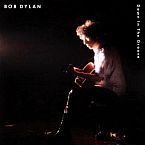
Album: Down In The Groove (1988)
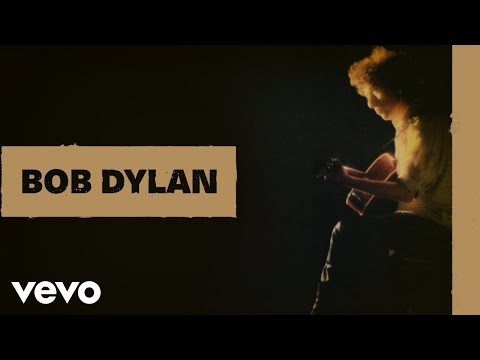
Play Video

Songfacts®:

  • In "Death Is Not The End," Bob Dylan assures us that life continues after this earthly incarnation ends. In each verse he lists a series of foreboding scenarios, the most intense of which speaks of cities on fire "with the burning flesh of men." In each chorus, he soothes our fears, repeating "death is not the end" in a gently croaking voice that's comforting to some and creepy to others.
  • Clydie King sang background vocals on the song. She also sang on "Sweet Home Alabama" and was rumored to have secretly married Dylan. The claim first materialized when Dylan's girlfriend Susan Ross told the story to newspapers in 1998. In 1973, using the moniker Brown Sugar, King recorded a single titled "Loneliness (Will Bring Us Together Again)" that hit #44 on the R&B chart.
  • Mark Knopfler of Dire Straits co-produced "Death Is Not The End" with Dylan five years before the song was released on Down in the Groove, Dylan's 25th album. The pair recorded the track while working on Dylan's 22nd album, Infidels, in 1983.

    Dylan wasn't confident with the new studio technology of the era, so he went looking for someone to help. David Bowie, Elvis Costello, and Frank Zappa all declined his invitation before Knopfler accepted. The Dire Straits frontman later admitted that there were challenges because the way the two of them approached music was very different, and those fears were realized when Dylan decided to pull the track from Infidels shortly before publication.

    Knopfler also plays guitar on the song, and his Dire Straits bandmate Alan Clark added keyboards.
  • A collection of hip-hop and R&B musicians called Full Force sang backing vocals on the song.
  • Sly Dunbar and Robbie Shakespeare of Sly and Robbie played on the song. They were a Jamaican production team and rhythm section that were very active from 1980 through the early 2000s. Dunbar did the drums and Shakespeare provided bass for "Death Is Not The End." Shakespeare died in 2021 at aged 68 from complications following kidney surgery.
  • One-time Rolling Stones guitarist Mick Taylor plays guitar on the song.
  • Nick Cave and the Bad Seeds covered "Death Is Not The End" in 1996 on their ninth studio album, Murder Ballads. In a piece for Alternative Press, journalist Dave Thompson humorously called it "We Are The World"-esque because it features several singers, including Cave, his former girlfriend and early collaborator Anita Lane, Kylie Minogue (who's featured on "Where The Wild Roses Grow" earlier on the album), PJ Harvey (who also appears on Murder Ballads in the song "Henry Lee"), and Bad Seeds members Thomas Wydler and Blixa Bargeld. Cave later said that he felt the cover was beautiful but that it was also "kind of jokey."

Comments

Be the first to comment...

Editor's Picks

Stephen Christian of Anberlin

Stephen Christian of AnberlinSongwriter Interviews

The lead singer/lyricist for Anberlin breaks down "Impossible" and covers some tracks from their 2012 album Vital.

Emilio Castillo from Tower of Power

Emilio Castillo from Tower of PowerSongwriter Interviews

Emilio talks about what it's like to write and perform with the Tower of Power horns, and why every struggling band should have a friend like Huey Lewis.

Art Alexakis of Everclear

Art Alexakis of EverclearSongwriter Interviews

The lead singer of Everclear, Art is also their primary songwriter.

Graham Bonnet (Alcatrazz, Rainbow)

Graham Bonnet (Alcatrazz, Rainbow)Songwriter Interviews

Yngwie Malmsteen and Steve Vai were two of Graham's co-writers for some '80s rock classics.

They Might Be Giants

They Might Be GiantsSongwriter Interviews

Who writes a song about a name they found in a phone book? That's just one of the everyday things these guys find to sing about. Anything in their field of vision or general scope of knowledge is fair game. If you cross paths with them, so are you.

Who's Johnny, And Why Does He Show Up In So Many Songs

Who's Johnny, And Why Does He Show Up In So Many SongsSong Writing

For songwriters, Johnny represents the American man. He has been angry, cool, magic, a rebel and, of course, marching home.