Goodbye Jimmy Reed

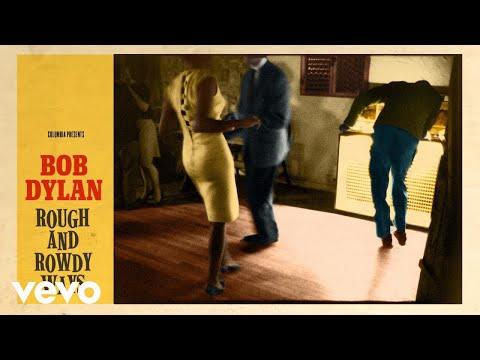
Album: Rough And Rowdy Ways (2020)
Play Video

Songfacts®:

  • Bluesman Jimmy Reed was born on September 6, 1925, in Dunleith, Mississippi. He's one of the most influential musicians in American history. Elvis Presley, the Rolling Stones, The Animals, and Hank Williams Jr. have all cited him as a key formative figure in their own music. Some of his biggest hits were "Bright Lights, Big City," "Baby What You Want Me to Do," and "Big Boss Man."

    Reed died of respiratory failure on August 29, 1976. The Blues Hall of Fame inducted him in 1980, and the Rock and Roll Hall of Fame inducted him in 1991.

    In "Goodbye Jimmy Reed," Dylan is saying farewell to the blues great. There's more to it than a simple nod to a beloved musician, however.

    The whole song revolves around religion, spirituality, and traditional cultural ways. Dylan uses Reed as a symbol of, or at least a touchstone to, a simpler, more virtuous era. Reed is an emblem of an old (and, according to Dylan, lost) code of morality.
  • Dylan has done this before, using a bluesman as a figure of spiritual purity in a moral wasteland, in "Blind Willie McTell." Two lines in particular tie the songs together.

    "Goodbye Jimmy Reed" has:

    Came to see where he's lying in this lost land

    "Blind Willie McTell" has:

    Seen the arrow on the doorpost
    Saying, "This land is condemned
    All the way from New Orleans
    To Jerusalem"


    In both cases, Dylan contrasts the musician with a lost, condemned land. In both cases, the songs are full of overt Christian allusions.
  • Some lyric analysis:

    I can tell a Proddy from a mile away

    "Proddy" is slang term for Protestants and was once a common derogatory name that Catholics used in for non-Catholics.

    Give me that old-time religion, it's just what I need

    "Old-Time Religion" is a gospel song that's been around since 1873. It's frequently a standard in Protestant hymnals, tying it back to the lyric about telling a "Proddy" from a mile away.

    For thine is the kingdom, the power, the glory

    This is the last line in the Lord's Prayer, which is one of the most important prayers in the Biblical New Testament. Jesus taught it as the primary way to pray to God.

    I can't play the record 'cause my needle got stuck

    Record players used to be the most common way people listened to music. They're still around today but mostly bought only by a relatively small cult fan base. Record players play music with a needle that sticks out the end of a short mechanical arm.

    Can't you hear me calling from down in Virginia?

    In 1958, Jimmy Reed released a song titled "Down in Virginia" on his album Rockin' with Reed.

Comments

Be the first to comment...

Editor's Picks

Chris Tomlin

Chris TomlinSongwriter Interviews

The king of Christian worship music explains talks about writing songs for troubled times.

John Kay of Steppenwolf

John Kay of SteppenwolfSongwriter Interviews

Steppenwolf frontman John Kay talks about "Magic Carpet Ride," "Born To Be Wild," and what he values more than awards and accolades.

Martyn Ware of Heaven 17

Martyn Ware of Heaven 17Songwriter Interviews

Martyn talks about producing Tina Turner, some Heaven 17 hits, and his work with the British Electric Foundation.

Sugarland

SugarlandSongwriter Interviews

Meet the "sassy basket" with the biggest voice in country music.

Song Titles That Inspired Movies

Song Titles That Inspired MoviesSong Writing

Famous songs that lent their titles - and in some cases storylines - to movies.

Director Paul Rachman on "Hunger Strike," "Man in the Box," Kiss

Director Paul Rachman on "Hunger Strike," "Man in the Box," KissSong Writing

After cutting his teeth on hardcore punk videos, Paul defined the grunge look with his work on "Hunger Strike" and "Man in the Box."