I Shall Be Free

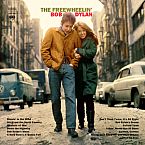
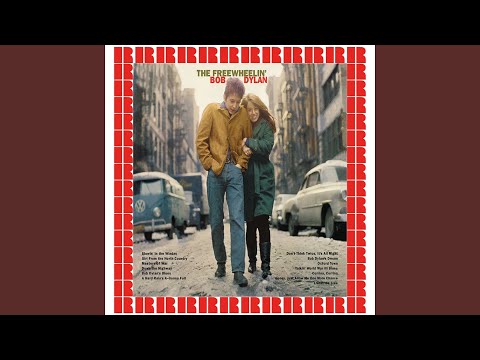
Album: The Freewheelin' Bob Dylan (1963)
Play Video

Songfacts®:

  • This is the last song on Bob Dylan's second album, The Freewheelin' Bob Dylan. It's a rewrite of Leadbelly's "We Shall Be Free," which was recorded with Woody Guthrie and Sonny Terry in 1944. Dylan admired all of these singers, but Guthrie was his early idol. In 1961, when Guthrie was hospitalized with Huntington's disease in Greystone Park Psychiatric Hospital in New Jersey, Dylan visited him (Dylan's visits were to an apartment nearby where Guthrie spent his Sundays as an outpatient). Two years later, Dylan released a song called "Last Thoughts on Woody Guthrie" in tribute (Guthrie died in 1967).

    The roots of "I Shall Be Free" go even further back than that 1944 song, though. In his essay "Don't Leave Me Here: Non-Commercial Blues: The Field Trips, 1924–1960" (included in Nothing but the Blue: The Music and Musicians, edited by Lawrence Cohn), John H. Cowley traces the song back as far as the mid-19th century. Cowley reveals the song, like most early American songs, to have been the evolution of many earlier songs.

    Dylan's particular version is a satirical talking blues song about a drunk who gets called by the president and is asked for advice on how to make the country better. There's more to it than that, but the whole thing is so winding and absurd that trying to pin down exactly what it's about ends up sounding equally winding and absurd.

    There may be more than humor at play here, though. In his early career, Dylan made his name with political songs and was taken on as a sort of political mascot by the progressive intellectual crowd of the day.

    In the song, President Kennedy asks Dylan, who plays the character of a hard-drinking and irrational man, "My friend, Bob, what do we need to make the country grow?" This may be Dylan poking fun at his own status or the people conferring that status upon him (or both).

    The song also may be making fun of politics in general, as indicated in the verse:

    Now, the man on the stand he wants my vote
    He's a-runnin' for office on the ballot note
    He's out there preachin' in front of the steeple
    Tellin' me he loves all kinds-a people
    (He's eatin' bagels
    He's eatin' pizza
    He's eatin' chitlins
    He's eatin' bulls--t!)


    Or maybe Dylan is having fun with all this while also making a point about the absurdity of politics.
  • President Kennedy, the 35th president of the United States, was assassinated a little less than one year after Dylan recorded this song on December 6, 1962. Kennedy was a hero to the progressive movement which Dylan was identified with early in his career before pointedly breaking ranks shortly after The Freewheelin' Bob Dylan, on which this song appears.

    After Kennedy asks Dylan how to make the country better, Dylan responds:

    I said, "My friend, John, Brigitte Bardot
    Anita Eckberg
    Sophia Loren"
    (Put 'em all in the same room with Ernest Borgnine!)


    The identity of "John" is unknown, if indeed it was anyone in particular.

    Bardot was an actress and sex symbol of the 1950s and 60s.

    Eckberg was a Swedish actress who starred in many films, including Boccaccio '70 in 1962, the year this song was recorded.

    Loren was an Italian actress and singer.

    Borgnine was an American actor.

    It's interesting that all the actresses are from outside America while the one male actor is American. That may be nothing at all, though, and Dylan could have simply picked the other actresses because they were beautiful women and sex symbols of their day.
  • Later, the song references Willie Mays, Yul Brynner, Charles de Gaulle, and Robert Louis Stevenson.

    Mays was a great baseball player, enshrined in the Hall of Fame.

    Brynner was a popular actor. He also shows up in the lyric to the '80s hit "One Night In Bangkok."

    Charles de Gaulle was the French general that led the French Resistance against Nazi occupation in World War II.

    Scottish writer Robert Louis Stevenson wrote Treasure Island, Strange Case of Dr. Jekyll and Mr. Hyde, A Child's Garden of Verse, and many other books.

    In the song's copyright filing, the names Yul Brynner, Charles de Gaulle, Ernest Borgnine and some others were changed, possibly for legal reasons.
  • Dylan did five takes of the song, which he recorded in Studio A of Columbia Recording Studios. The second take became the master track heard on the album.
  • This and "Corrina, Corrina" are the only songs on Freewheelin' that end with fade-outs (when the sound gradually fades into silence rather than the song coming to a stop).
  • This is one of two songs with "I Shall Be Free" in the title. A year after this, on Another Side of Bob Dylan, Dylan released "I Shall Be Free No. 10." He also wrote "I Shall Be Released" in 1967.
  • Dylan never performed this song live.

Comments: 1

  • Miles from Az"JOHN" Is John F Kennedy.
see more comments

Editor's Picks

Cheerleaders In Music Videos

Cheerleaders In Music VideosSong Writing

It started with a bouncy MTV classic. Nirvana and MCR made them scary, then Gwen, Avril and Madonna put on the pom poms.

Shaun Morgan of Seether

Shaun Morgan of SeetherSongwriter Interviews

Shaun breaks down the Seether songs, including the one about his brother, the one about Ozzy, and the one that may or may not be about his ex-girlfriend Amy Lee.

Real or Spinal Tap

Real or Spinal TapMusic Quiz

They sang about pink torpedoes and rocking you tonight tonight, but some real lyrics are just as ridiculous. See if you can tell which lyrics are real and which are Spinal Tap in this lyrics quiz.

Ian Anderson of Jethro Tull

Ian Anderson of Jethro TullSongwriter Interviews

The flautist frontman talks about touring with Led Zeppelin, his contribution to "Hotel California", and how he may have done the first MTV Unplugged.

Stan Ridgway

Stan RidgwaySongwriter Interviews

Go beyond the Wall of Voodoo with this cinematic songwriter.

Dar Williams

Dar WilliamsSongwriter Interviews

A popular contemporary folk singer, Williams still remembers the sticky note that changed her life in college.