I Shall Be Free No. 10

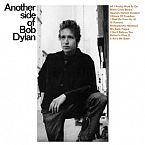
Album: Another Side of Bob Dylan (1964)
Play Video

Songfacts®:

  • In spirit, "I Shall Be Free No. 10" is a continuation of "I Shall Be Free," which appeared on Freewheelin' Bob Dylan one year and two albums before this song's release. That one is an interpretation of a 1944 song which itself was traced through history as far back as the mid-19th century. Dylan seems to be recognizing this history by adding the "No. 10" to the title.

    Both songs are satirical talking blues, and both seem to be having fun with the same general ideas.

    Early in his career, Dylan's political songs made him a celebrity among progressive intellectuals. By the time he recorded "I Shall Be Free No. 10," he'd started looking to separate himself from the scene. He made this clear in conversation with his romantic partner and friend Joan Baez, but he also discusses it in his songs and in his communication with the press. One high-profile public incident summed up his thinking at the time.

    In December 1963, a few months before recording the song, the Emergency Civil Liberties Committee gave Dylan the Tom Paine Award (Paine was part of the American Revolution and an influential political thinker).

    Dylan got very intoxicated at the awards ceremony, and in his acceptance speech he insulted the audience with a long screed where he told them: "First of all because they're young and it took me a long time to get young and now I consider myself young. And I'm proud of it. I'm proud that I'm young. And I only wish that all you people who are sitting out here tonight weren't here, and I could see all kinds of faces with hair on their heads - and everything like that, everything leading to youngness, celebrating the anniversary when we used overthrow of the House Un-American Activities just yesterday - because you people should be at the beach."

    He closed by saying, "There's no black and white, left and right to me anymore. There's only up and down and down is very close to the ground. And I'm trying to go up without thinking about anything trivial such as politics."
  • In "I Shall be Free No. 10" you can see Dylan poking fun at the progressive ideology he'd been made a symbol of:

    I'm just average, common too
    I'm just like him, the same as you
    I'm everybody's brother and son
    I ain't different from ayone
    It ain't no use a-talking to me
    It's just the same as talking to you


    In this, the opening verse, Dylan is making fun of false humility but he's also revealing the direction he'd soon take. After the early political part of his career, Dylan made clear that he was first and foremost an individual and not part of anyone's ideological group. He rejected any attempts to associate with him with one tribe or the other. After Another Side of Bob Dylan he made Bringing It All Back Home, where lyrically and musically he made a clear break from the old world he'd cultivated to become more experimental and less political.
  • In the song, Dylan mentions provoking Cassius Clay, which was the birth name of the great boxer and cultural icon Muhammed Ali. Ali changed his name after becoming a Muslim in 1961.
  • Now, I'm liberal, but to a degree
    I want ev'rybody to be free
    But if you think that I'll let Barry Goldwater
    Move in next door and marry my daughter
    You must think I'm crazy!
    I wouldn't let him do it for all the farms in Cuba


    There's all kinds of interesting subtext in this verse.

    Barry Goldwater was a Republican Senator from Arizona who ran for the presidency in 1964 and lost. His real claim to fame, though, is that he resurrected the Conservative political movement in the United States and strongly influenced libertarianism.

    The verse seems to be pointing out the hypocrisy of the liberal circles Dylan ran in, pointing out the contradiction of saying "I'm liberal" but rejecting all conservatives.

    It also has a quiet support for full-blown communism (which contradicts the claim "I'm liberal, but to a degree"), with the claim, "I wouldn't let him do it for all the farms in Cuba." Cuba at that time was one of the United States primary enemies. Only a couple years before Dylan recorded this song, the Cuban Missile Crisis had seen the two nations facing each other down over a possible nuclear conflict.
  • Dylan recorded the song on June 9 and 10, 1964, in Studio A at Columbia Recording Studios. Dylan's fifth take of the song was edited onto the fourth for the final.
  • Dylan never performed this song live.

Comments

Be the first to comment...

Editor's Picks

Cheerleaders In Music Videos

Cheerleaders In Music VideosSong Writing

It started with a bouncy MTV classic. Nirvana and MCR made them scary, then Gwen, Avril and Madonna put on the pom poms.

Shaun Morgan of Seether

Shaun Morgan of SeetherSongwriter Interviews

Shaun breaks down the Seether songs, including the one about his brother, the one about Ozzy, and the one that may or may not be about his ex-girlfriend Amy Lee.

Real or Spinal Tap

Real or Spinal TapMusic Quiz

They sang about pink torpedoes and rocking you tonight tonight, but some real lyrics are just as ridiculous. See if you can tell which lyrics are real and which are Spinal Tap in this lyrics quiz.

Ian Anderson of Jethro Tull

Ian Anderson of Jethro TullSongwriter Interviews

The flautist frontman talks about touring with Led Zeppelin, his contribution to "Hotel California", and how he may have done the first MTV Unplugged.

Stan Ridgway

Stan RidgwaySongwriter Interviews

Go beyond the Wall of Voodoo with this cinematic songwriter.

Dar Williams

Dar WilliamsSongwriter Interviews

A popular contemporary folk singer, Williams still remembers the sticky note that changed her life in college.