
I Want You

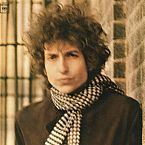
Album: Blonde on Blonde (1966)
Charted: 20
Play Video

Songfacts®:

  • "I Want You" is only about three minutes long but contains an enormous cast of characters. There's a guilty undertaker, a lonesome organ grinder, a drunken politician weeping, the Queen of Spades, and many more. The song feels like a stream-of-consciousness thing spit out on the spot, but that feeling was arrived at by extensive revision, as Dylan created several drafts before coming to the final one.

    The fast, upbeat sound of the song is radio friendly, but the strange characters in the lyrics add mystery and complexity that isn't usually found in pop music. The chorus of:

    I want you
    I want you
    I want you so bad


    would be absurdly trite if it wasn't balanced by the surreal poetry of the other lyrics.

    Those other lyrics also contain conflicting emotions that, when sung with the upbeat sound, sound sort of paradoxical. In the beginning there's funeral imagery and then later Dylan snatching someone's flute and drinking from a broken cup. There seems to be some sort of bitterness or anger underneath the happy veneer.

    This has always been part of Dylan's genius, making songs intelligible enough to be coherent, yet infusing them with unanswered questions that have people debating his intent 50 years later.
  • One of the characters in the song has been linked to Brian Jones of The Rolling Stones. Jones played flute, suggesting he may have been the "dancing child with his Chinese suit," whose flute Dylan takes and then treats not-too-cutely. The Jones association is bolstered by the fact that fact that a couple lines later Dylan sings "because time was on his side," referring to "Time Is On My Side," the first Stones song to break the Top 10 in the United States.
  • Musician Al Kooper, who worked with Dylan throughout his career and is probably best known for playing that killer, slightly-out-of-time organ in "Like a Rolling Stone," loved "I Want You" and was desperate to record it. Dylan responded by refusing to record the song night after night.

    Kooper had been instrumental in the making of Blonde on Blonde. He'd hang with Dylan in the hotel room while Dylan came up with the songs and then rush to the studio to prep the rest of the band for recording. This way, when Dylan arrived, they'd be ready.

    Dylan toyed with Kooper by slyly refusing to play "I Want You" until the very last day. Even then Dylan didn't volunteer to record it. To force Dylan's hand, Kooper taught the song to the band without asking permission first.
  • Guitarist Wayne Moss improvised his guitar part and blew Kooper's mind. He didn't give any notice beforehand and just started playing it. "I had the basic arrangement in my head, but then Wayne Moss played that sixteenth-note guitar run, and I wasn't ready for that! It was a wonderful addition to what I had in mind!" Moss was a Nashville session musician, and Kooper had never heard anyone in New York who could play as fast as he could.
  • This is one of the songs that Dylan has identified as successfully capturing the "wild mercury sound" he was reaching for in Blonde on Blonde.
  • A cover by Sophie B. Hawkins was released in 1992 as the follow-up to her hit "Damn, I Wish I Was Your Lover." It flopped, but earned an endorsement from Dylan himself. Hawkins told Songfacts: "I was on a plane going to Los Angeles, sitting in coach, and Dylan's manager came back into coach to talk to me. He said Bob heard my version of 'I Want You' and really liked it."

    This earned Hawkins an invite to the Bob Dylan 30th Anniversary Concert Celebration at Madison Square Garden on October 16, 1992, where she performed the song. The album from the performance was released on Hawkins' label, Columbia, which left her off the set, a snub that stung.

Comments: 1

  • Luke from British ColumbiaTo me the dancing child with his Chinese flute is symbolic of the eastern religions that the Beatles and others were trying out at that time. "I did it because he lied" is because Dylan has a different truth. "All my fathers, they've gone down; true love, they've been without it" is because his ancestors are Jewish and don't recognise Christ as the Messiah.
see more comments

Editor's Picks

Janet Jackson

Janet JacksonFact or Fiction

Was Janet secretly married at 18? Did she gain 60 pounds for a movie role that went to Mariah Carey? See what you know about Ms. Jackson.

Amanda Palmer

Amanda PalmerSongwriter Interviews

Call us crazy, but we like it when an artist comes around who doesn't mesh with the status quo.

Graham Parker

Graham ParkerSongwriter Interviews

When Judd Apatow needed under-appreciated rockers for his Knocked Up sequel, he immediately thought of Parker, who just happened to be getting his band The Rumour back together.
Rush: Album by Album - A Conversation With Martin Popoff

Rush: Album by Album - A Conversation With Martin PopoffSong Writing

A talk with Martin Popoff about his latest book on Rush and how he assessed the thousands of albums he reviewed.

Martin Page

Martin PageSongwriter Interviews

With Bernie Taupin, Martin co-wrote the #1 hits "We Built This City" and "These Dreams." After writing the Pretty Woman song for Go West, he had his own hit with "In the House of Stone and Light."

Rob Thomas of Matchbox Twenty

Rob Thomas of Matchbox TwentySongwriter Interviews

Rob Thomas on his Social Distance Sessions, co-starring with a camel, and his friendship with Carlos Santana.