Mississippi

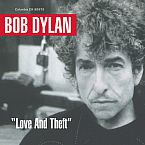
Album: Love And Theft (2001)
Play Video

Songfacts®:

  • Bob Dylan's "Mississippi" almost didn't see the light of day.

    The song was initially intended to be on Time Out Of Mind in 1997, but it was dropped from that album. Something about it just wasn't working in Dylan's mind. He very well could have discarded it permanently.

    He did the same with "Blind Willie McTell," a song that only snuck out to the public at first through bootlegs and is now considered one of his masterpieces. Another of Dylan's discarded scraps became "Wagon Wheel" only because Old Crow Medicine Show resurrected it from the dust bin after hearing it on a bootleg.

    According to many friends such as Joan Baez, Dylan is always tinkering and tossing stuff aside and forgetting about it. It wouldn't' be unusual at all for "Mississippi" to have disappeared.

    Luckily, that didn't happen.

    After the Time Out Of Mind sessions, Dylan gave "Mississippi" to Sheryl Crow, who recorded it on her album The Globe Sessions in 1998. Her version has much more of a standard pop sound than Dylan's does.

    The Dixie Chicks took up "Mississippi" as a regular part of their live shows. Their version is clearly taken from Crow's.

    Dylan himself revisited "Mississippi" for Love And Theft after his manager requested something to change up the pace after "Tweedle Dee & Tweedle Dum." Dylan returned to the old throwaway and added more of a country-rock feel to the song. Thus was created the "Mississippi" that appears on Dylan's 29th studio album.
  • Dylan was 60 when he made Love And Theft, and his voice had long before become gnarled and leathered. It's perfect for "Mississippi." One could even argue that the younger Dylan wouldn't have been able to pull the song off.

    "Mississippi" is a song of world-weariness. It's a song about grief and mortality. It starts with the lines:

    Every step of the way, we walk the line
    Your days are numbered, so are mine


    The rest of the lyrics follow suit.

    It's not a mean song, though. It's not even resentful. Near the end of the song, after recounting all the hard luck and lies he's seen, Dylan reassures us:

    But my heart is not weary, it's light and it's free
    I've got nothing but affection for all those who sailed with me
  • "Mississippi" is frequently discussed as a love song, or a lost-love song, but that might be too simplistic a take. Dylan's "love songs" are frequently about much deeper philosophical or metaphysical themes. The women he serenades are often ideas or archetypes.

    In thinking of the song, it's useful to keep in mind what Dylan said of Love And Theft as a whole. "Basically, the songs deal with what many of my songs deal with - which is business, politics and war, and maybe love interest on the side... The whole album deals with power. If life teaches us anything, it's that there's nothing that men and women won't do to get power. The album deals with power, wealth, knowledge and salvation - the way I look at it."
  • When asked about being given "Mississippi," Sheryl Crow said, "I was so excited that he thought about me singing it. It's an undeniably brilliant song."
  • The first demos of the song were recorded in Oxnard, California, in 1996. More rehearsals were done a short time later at Criteria Recording Studios in January 1997. Three outtakes from these sessions appear on The Bootleg Series Volume 8. The version that ultimately made it onto Love And Theft was done at Sony Music Studios in New York.
  • Charlie Sexton plays guitar on the Love And Theft version. Augie Myers is on organ, Larry Campbell plays guitar and mandolin, Tony Garnier is on bass, David Kemper is on drums.

    The sound engineer was Chris Shaw and producer was "Jack Frost," which is actually Bob Dylan himself.
  • In The Bob Dylan Encyclopedia, Michael Gray surmises that Dylan may have offered the song to Crow after she played live with him on December 19, 1997. During that show, she performed with Dylan on "Highway 61 Revisited" and even played accordion on "Knockin' On Heaven's Door."
  • Needing a song to complete The Globe Sessions, Crow's manager, who was friendly with Dylan's publisher, asked if the legendary singer-songwriter had any unreleased material. Dylan's manager delivered the song in person, playing it for Crow and then leaving with the song, forcing her to learn it by ear.

    Crow told the Guardian that after recording the song, she finally encountered Dylan, who acknowledged hearing her version. However, his response held a playful jab: "Did you like mine?!"

Comments

Be the first to comment...

Editor's Picks

Janis Ian

Janis IanSongwriter Interviews

One of the first successful female singer-songwriters, Janis had her first hit in 1967 at age 15.

Lace the Music: How LSD Changed Popular Music

Lace the Music: How LSD Changed Popular MusicSong Writing

Starting in Virginia City, Nevada and rippling out to the Haight-Ashbury, LSD reshaped popular music.

Jimmy Jam

Jimmy JamSongwriter Interviews

The powerhouse producer behind Janet Jackson's hits talks about his Boyz II Men ballads and regrouping The Time.

Dar Williams

Dar WilliamsSongwriter Interviews

A popular contemporary folk singer, Williams still remembers the sticky note that changed her life in college.

Commercials

CommercialsFact or Fiction

Was "Ring Of Fire" really used to sell hemorrhoid cream?

Reverend Horton Heat

Reverend Horton HeatSongwriter Interviews

The Reverend rants on psychobilly and the egghead academics he bashes in one of his more popular songs.