Only A Pawn In Their Game

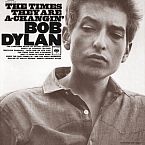
Album: The Times They Are a-Changin' (1964)
Play Video

Songfacts®:

  • This song is about the assassination of US civil rights leader Medgar Evers, who was killed in the driveway of his Mississippi home. Dylan's song takes on the larger subject of racism and injustice in America, pointing out that Evers' murder was a symptom of a greater problem. >>
    Suggestion credit:
    Bertrand - Paris, France
  • A bullet from the back of a bush took Medgar Evers' blood

    Byron De Le Beckwith assassinated civil-rights champion Medgar Evers on June 12, 1963. He shot the 37-years-old Evers as the man got into his car in front of his house in Jackson, Mississippi.

    Evers, born in Decatur, Mississippi, on July 2, 1925, had been leader of the National Association for the Advancement of Colored People (NAACP). His efforts to desegregate Jackson, Mississippi restaurants and to get black men on the police force sparked anger among the racist establishment.

    Beckwith, who was an official member of the racist organization known as the Ku Klux Klan, was immediately arrested for his crime. Following two trials in 1964, however, he was set free by hung juries, ostensibly due to lack of evidence, though most believe that racism among the jurors was the true reason. Authorities brought Beckwith back to court in 1994, using the justification of newly discovered evidence, and finally won their conviction. Jurors sentenced Beckwith to life in prison, and he died in confinement on January 21, 2001, at the age of 80.
  • An unexpected twist in Dylan's song is that Dylan, then a well-known figurehead of the progressive movement, doesn't lash out at De Le Beckwith. He doesn't decry his evil or bigotry. Rather, he condemns the power structure that he felt uses people like Beckwith in order to advance their agenda. Dylan directs his ire not at the gunman but at the powers-that-be, which Dylan believed were intentionally sowing racial division as a way to keep power.

    Dylan's perspective was a harbinger of things to come as this was the time when he started intentionally trying to separate himself from the progressives that had been riding with him to this point. It wasn't that he switched political sides but that he refused to represent any side at all, aiming for what he viewed as concerns higher (in his view) than politics, and trying to prevent himself from becoming a pawn in anyone's game.
  • Dylan recorded the song on August 6 and 7, 1963, in Studio A at Columbia Recording Studios. He did a total of seven takes before arriving at the version recorded on The Times They Are A-Changin'.
  • Dylan played this song in Greenwood, Mississippi, at a voter registration rally a month before the studio recording. This July 6, 1963, performance was recorded and can be heard today.

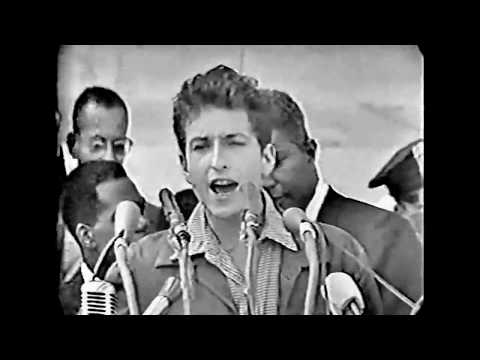
    He also performed it on August 28, 1963, for the March on Washington for Jobs and Freedom. That, too, can be seen today.
  • The songs "Too Many Martyrs (Ballad of Medgar Evers)" (1963) by Phil Ochs and "Medgar Evers Lullaby" (1964) by Judy Collins are also about Evers.

Comments: 2

  • Vincent Ferraro from Hesperia, CaThis is the song that first turned me on to Dylan's early works. Definitely a great song.
  • Guy from Woodinville, WaIn my mind, this is one of the first songs that established the brilliance of Bob Dylan. The author was a very thoughtful and insightful young man. Brilliantly-worded!
see more comments

Editor's Picks

Donnie Iris (Ah! Leah!, The Rapper)

Donnie Iris (Ah! Leah!, The Rapper)Songwriter Interviews

Before "Rap" was a form of music, it was something guys did to pick up girls in nightclubs. Donnie talks about "The Rapper" and reveals the identity of Leah.

Timothy B. Schmit

Timothy B. SchmitSongwriter Interviews

The longtime Eagle talks about soaring back to his solo career, and what he learned about songwriting in the group.

Boz Scaggs

Boz ScaggsSongwriter Interviews

The "Lowdown" and "Lido Shuffle" singer makes a habit of playing with the best in the business.

Best Band Logos

Best Band LogosSong Writing

Queen, Phish and The Stones are among our picks for the best band logos. Here are their histories and a design analysis from an expert.

Philip Cody

Philip CodySongwriter Interviews

A talented lyricist, Philip helped revive Neil Sedaka's career with the words to "Laughter In The Rain" and "Bad Blood."

Billy Steinberg - "Like A Virgin"

Billy Steinberg - "Like A Virgin"They're Playing My Song

The first of Billy's five #1 hits was the song that propelled Madonna to stardom. You'd think that would get you a backstage pass, wouldn't you?