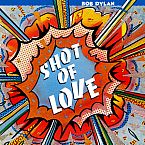
Shot Of Love

Album: Shot Of Love (1981)
Play Video

Songfacts®:

  • It's nearly impossible to know when Bob Dylan is being serious or when he's putting people on. The wooly-haired trickster has been playing games with the press forever. So, when he makes a statement as over-the-top direct as he did on "Shot On Love," it's natural to assume it's a smoke grenade.

    "The purpose of music is to elevate and inspire the spirit," Dylan told New Musical Express in 1983. "To those who care where Bob Dylan is at, they should listen to 'Shot of Love.' It's my most perfect song. It defines where I am spiritually, musically, romantically and whatever else. It shows where my sympathies lie. It's all there in that one song."

    At nearly any other stage in his career, it would be almost impossible to take the quote seriously. "Shot of Love," however, came at a very unique time in Dylan's evolution.

    The song was recorded during Dylan's "Christian period." Musically, this started with Slow Train Coming in 1979, continued with Saved in 1980 and finished up with Shot Of Love.

    Biblical imagery and Judeo-Christian ideas have always infused Dylan's music, but during the recording of this Christian trilogy of albums, they were very overt. In his personal life, Dylan had found a new faith in Jesus Christ. By all accounts, this faith was very sincere and very powerful. Critics and fans didn't much care about all of that.
  • Dylan's Christian trilogy was mostly lambasted by the press and ignored by the masses. The music was openly mocked at times.

    Knowing this, it's easy to see why Dylan felt such a powerful need for a "shot of love."
    The song harks to the First Epistle of Paul to the Corinthians (13:2), which says:

    I may have the gift of prophecy, and know every hidden truth
    I may have faith strong enough to move mountains
    But if I have no love, I am nothing


    Beyond that essential aspect of the song, much of it is pretty mysterious. We're introduced to Veronica and Mavis but no one's every been able to figure out if those are real people or what they may represent symbolically. Then there is the "man who hates" Dylan and who has murdered Dylan's father, raped his wife, tattooed his babies with a poison pen, and mocked his God.

    None of these things have ever been definitively explained.
  • Few people have called "Shot of Love" a highlight of Dylan's artistic output, though Dylan's exceptionally powerful singing has won a lot of admiration. It marks an interesting period in Dylan's story. It's also one (if his own account is to be taken at face value) that was exceptionally meaningful to him personally.
  • The first time Dylan ever played this song live was in July 1981 at Earl's Court in London.

Comments

Be the first to comment...

Editor's Picks

Andrew Farriss of INXS

Andrew Farriss of INXSSongwriter Interviews

Andrew Farriss on writing with Michael Hutchence, the stories behind "Mystify" and other INXS hits, and his country-flavored debut solo album.
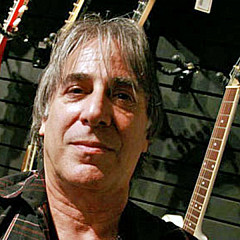
Danny Kortchmar

Danny KortchmarSongwriter Interviews

Danny played guitar on Sweet Baby James, Tapestry, and Running On Empty. He also co-wrote many hit songs, including "Dirty Laundry," "Sunset Grill" and "Tender Is The Night."
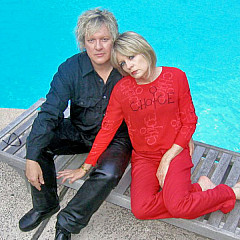
Chris Frantz - "Genius of Love"

Chris Frantz - "Genius of Love"They're Playing My Song

Chris and his wife Tina were the rhythm section for Talking Heads when they formed The Tom Tom Club. "Genius of Love" was their blockbuster, but David Byrne only mentioned it once.
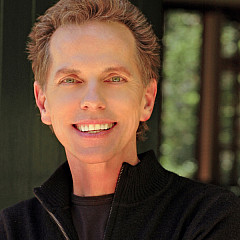
Dean Pitchford

Dean PitchfordSongwriter Interviews

Dean wrote the screenplay and lyrics to all the songs in Footloose. His other hits include "Fame" and "All The Man That I Need."
Who's Johnny, And Why Does He Show Up In So Many Songs

Who's Johnny, And Why Does He Show Up In So Many SongsSong Writing

For songwriters, Johnny represents the American man. He has been angry, cool, magic, a rebel and, of course, marching home.
Scott Gorham of Thin Lizzy and Black Star Riders

Scott Gorham of Thin Lizzy and Black Star RidersSongwriter Interviews

Writing with Phil Lynott, Scott saw their ill-fated frontman move to a darker place in his life and lyrics.