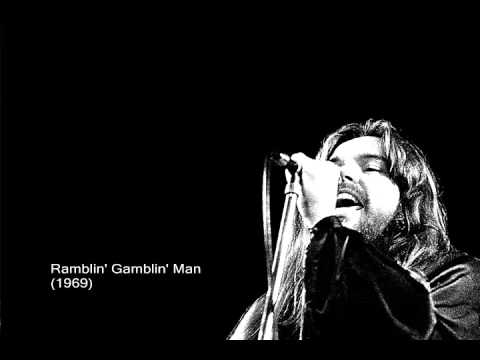
Ramblin' Gamblin' Man

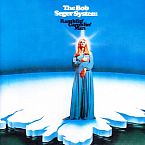
Album: Ramblin' Gamblin' Man (1968)
Charted: 17
Play Video

Songfacts®:

  • This romp of a rocker finds Bob Seger in character as a drifter who gets by on street smarts and determination. He's good with the ladies, but he warns them not to get attached: he's a ramblin' gamblin' man, and won't stick around.

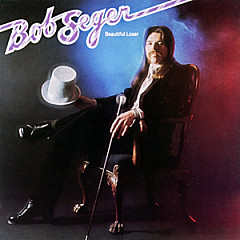
    Running a compact 2:23, it was Seger's first big hit. It charted at #17 despite receiving no airplay in most major cities, including New York, Los Angeles, and San Francisco. Seger was very popular in Detroit, but despite being a talented singer/songwriter at the beginning of the singer/songwriter era, he couldn't get any heat in most coastal cities. It wasn't until his 1975 Beautiful Loser album that Seger broke nationally.
  • A 19-year-old Glenn Frey performed acoustic guitar and backing vocals on this song shortly before he left Detroit to find fame and fortune in Los Angeles. Frey had kicked around in a few Detroit bands, but this was his first professional recording experience. He called Seger "the most important individual" in his music career because of the support and encouragement Seger provided. Three years after moving to California, Frey co-founded the Eagles.

    Aside from a love of music, Seger and Frey had another bond: They were dating twin sisters at the time.
  • Seger and his band were called "The Bob Seger System" when this song was released. It was just their second single on Capitol Records (after "2+2=?"), which they joined after their previous label, Cameo-Parkway, folded.
  • After hearing the Spencer Davis Group hit "Gimme Some Lovin'" with its distinctive Hammond B-3 organ riff, Seger went for a similar sound on "Ramblin' Gamblin' Man," and made the B-3 a staple of his live shows. Bob Schultz, who was a member of Seger's band, played it on this track.
  • You don't hear much about "ramblin'" these days, but it was a common term in the '60s and '70s. A few years later, The Allman Brothers had a big hit with "Ramblin' Man."
  • This song had a profound effect on John Mellencamp, who was 16 years old when he heard it while riding with some buddies in Seymour, Indiana. He made the driver pull over so they wouldn't lose the radio signal, and the DJ announced it was Bob Seger. "That was the beginning of a long love affair with Bob Seger's music, thoughtful and bad ass in one measure," he said in Mellencamp: American Troubadour by David Masciotra. "If there really is such a thing as Midwest Rock, it started for me that night."

Comments: 4

  • Barry from Sauquoit, NyOn February 15th 1969, the Bob Seger System performed "Ramblin' Gamblin' Man" on the ABC-TV Saturday afternoon program 'Happening '68"...
    At the time the song was in its first of three weeks at #17 on Billboard's Hot Top 100 chart, and that was also its peak position on the chart...
    The 'System' had two other Top 100 records; "Ivory" {at #97 in 1969} and "Lucifer" {at #84 in 1970}.
  • Keith from Downey, CaThis song helped drive the testosterone of teenage boys throughout the Detroit area and Southern Michigan. The Seger System played several times at University of Detroit High School; much thanks to Bill Scollin.
  • Bob from Southfield, MiThe original B side for this record was a tune called "Tales of Lucy Blue". "2+2 = ?" was released as a single about 4 months prior to the release of this song.
  • Chet from Bethel Park, PaI want "Ramblin' Gamblin' Man"... It was my "fav" on the juke box in 1969/70...

    The flip side was "2 + 2.."

    I'm old; closer to death than you are. I WANT THEM FOR MY iPOD...
see more comments

Editor's Picks

Lip-Synch Rebels

Lip-Synch RebelsSong Writing

What happens when Kurt Cobain, Iron Maiden and Johnny Lydon are told to lip-synch? Some hilarious "performances."

Kim Thayil of Soundgarden

Kim Thayil of SoundgardenSongwriter Interviews

Their frontman (Chris Cornell) started out as their drummer, so Soundgarden takes a linear approach when it comes to songwriting. Kim explains how they do it.

The Fratellis

The FratellisSongwriter Interviews

Jon Fratelli talks about the band's third album, and the five-year break leading up to it.

Tony Banks of Genesis

Tony Banks of GenesisSongwriter Interviews

Genesis' key-man re-examines his solo career and the early days of music video.

History Of Rock

History Of RockSong Writing

An interview with Dr. John Covach, music professor at the University of Rochester whose free online courses have become wildly popular.

Michael W. Smith

Michael W. SmithSongwriter Interviews

Smith breaks down some of his worship tracks as well as his mainstream hits, including "I Will Be Here For You" and "A Place In This World."