The follow-up to Bon Jovi's #1 hit "
You Give Love A Bad Name," "Livin' On A Prayer" tells the story of Tommy and Gina, two kids working to make it on their own despite constant hardships. It struck a chord with America's youth, especially those from New Jersey. The characters in the song relate to the working-class fans Bon Jovi played to: Tommy works on the docks while Gina works in a diner (there are lots of them in Jersey).
Jon Bon Jovi and Richie Sambora, the main songwriters in the group, wrote this with
Desmond Child, a prolific songwriter who was brought in by the record company to give them a more commercial sound like he did for Kiss on "
I Was Made For Lovin' You."
The characters Tommy and Gina were based on a real-life situation Desmond encountered in the late '70s with his then-girlfriend, Maria Vidal, whom he was living with. According to the notes in his
Desmond Child & Rouge: Runners In The Night album, Desmond was a New York taxi cab driver and Maria was a singing waitress in a diner. Vidal used the name "Gina Velvet" - she was nicknamed Gina by her fellow employees because she looked like the Italian actress Gina Lollobrigida.
"You Give Love A Bad Name" was also co-written by Child, who went on to write several more hits with the band, including "
Born to Be My Baby" and "
Bad Medicine."
"Livin' On A Prayer" is a musical descendent of the 1979 Kiss hit "
I Was Made For Lovin' You," written by Desmond Child and Kiss frontman Paul Stanley. In a
Songfacts interview with Desmond, he said: "Paul Stanley taught me how to write stadium anthems the Kiss way, in which the protagonist is always the winner. There's always victory. And the music is also lifting constantly upwards. I used those kinds of ideas or feelings in my collaborations with Jon Bon Jovi and Richie Sambora for the band Bon Jovi. The most perfect example of that is 'Livin' On A Prayer.'"
Bon Jovi was a support act for Kiss in 1984 and saw firsthand how a big stadium anthem could change the fortunes of a band. Kiss had several, including "
Rock And Roll All Nite."
Bon Jovi had already released two albums and even cracked the Top 40 (barely - "
Runaway" made #39) when they released "Livin' On A Prayer" on their third album,
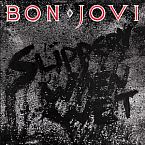
Slippery When Wet. When their moment came, they were ready, with plenty of seasoning as performers and a look refined for MTV.
Bon Jovi embodied the archetype of working-class heroes, which resonated more than ever in the '80s and helped imprint this song into the culture. Desmond Child offered some historical perspective in a
2023 interview with Songfacts. "The message is, you work hard, you build your life, and you achieve the American Dream," he said. "You can make it. In 'Livin' On A Prayer,' it says:
It doesn't make a difference if we make it or not
We've got each other and that's a lot for love
We'll give it a shotThis whole aspiring thing. We're not going to give up. Even in the face of failure, we keep trying. And that's the American way.
And remember, the '80s was the 'me generation' and it was Reagan time – the whole idea of pull yourself up by your bootstraps and all of those ideas were there. That kind of stuff really works for white people, especially. There are a lot of people who don't have advantages who can't catch a break, but in the world of Bon Jovi, all things are possible."
Derek Shulman, who was the lead singer and multi-instrumentalist in the band Gentle Giant, signed Bon Jovi to Mercury Records and put them together with Desmond Child. In a 2009
Songfacts interview with Derek, he said: "
Slippery When Wet was a really well-constructed pop album. When it was done, I knew in my gut that it was gonna be this big. Because it was the right time, the right place, the right artist. And I had learned some of the business side from being in the business that long, and also having a musical background, I knew that this was gonna be that big. And in fact I also put them together with a co-writer called Desmond Child, who could write great choruses. Here's me looking at Desmond Child and I'm thinking, Man, I wish I would have had choruses like they could write."
At first, Jon Bon Jovi wanted to leave this off the Slippery When Wet album, thinking it wasn't good enough. According to Jon, a meeting with a group of teenagers changed his mind and it was added to the album.
Richie Sambora used a talkbox on this song, which gave it a very distinctive sound. A talkbox is an electronic device that allows a guitar player to make distorted sounds with his mouth. Peter Frampton is famous for using one on his 1976 album Frampton Comes Alive, but the technique lost popularity a few years later. When Bon Jovi released this, it was the first time many young people heard a song featuring a talkbox. Peter Frampton builds all of Richie Sambora's talkboxes for him.
Jon Bon Jovi told Q magazine December 2009 about the difficulties of using a talkbox: "You know that thing is not very easy to play. Basically everything gets fed through a one-inch tube that goes in your mouth. Then you try to sing through it into a live mic. I tried it once. It will damn near take your face off. Your eyeballs are being dislodged from their sockets, man."
The album was going to be called "Wanted Dead Or Alive" (another
song on the album) and show the band on the cover dressed as cowboys. After doing the photo shoot with photographer Mark Weiss, the band decided they were taking it too seriously, changed the title to "Slippery When Wet," and found a Jersey girl with ample boobs to wear a wet T-shirt for the cover. That shoot was also with Weiss, this time at Bradley Beach in New Jersey.
It looked like they had a winner, but Bon Jovi's record label got cold feet, worried that retail chains wouldn't stock it. They needed a new cover quickly, so Jon Bon Jovi went to Weiss' studio where they wet down a garbage bag and wrote "Slippery When Wet" on it. "He didn't even stick around for the Polaroid,"
Weiss told Songfacts. "I sent it in, and that was it."
The cover with the girl was used on Japanese versions of the album.
The song opens with a 14-second synthesizer note. You could get away with that in the '80s (check out "
Take My Breath Away" by Berlin).
In a 2007 interview with
Time magazine, Jon Bon Jovi was asked what song showed "the real you." His response: "I think if there was only one, it would be a tough choice between 'Livin' On A Prayer' and '
Wanted Dead Or Alive.' Maybe because the themes of 'Wanted' are a little more universal, it makes 'Prayer' that much more unique. There is nothing that you can say is derivative about the song. It is its own entity." He went on to say: "I think I find more strength in faith than I do in organized religion. 'Livin' On A Prayer' is most certainly nondenominational."
In the 2000 Bon Jovi song "
It's My Life," the two characters from this track are mentioned in the line, "This is for the ones who stood their ground, for Tommy and Gina who never backed down." Sambora used a talkbox on that song as well.
Bon Jovi played a slow version of this September 21, 2001 as part of the "Tribute To Heroes" telethon to benefit victims of the terrorist attacks on the US. Almost 60 million people watched the show, which included performances by U2, Sting, Billy Joel, Mariah Carey, and Neil Young. Celebrities answering phones included Selma Hayek, Jack Nicholson, and Brad Pitt. The slow version was also performed at the "Concert For New York" to honor the rescue workers at The World Trade Center.
Bon Jovi performed this, along with "It's My Life," at the closing ceremonies of the 2002 winter Olympics.
On VH1's The Greatest Songs of the '80s special, this was voted the best song of the decade.
>>>
Suggestion credit:
Dawson - Draper, UT
In March 2008, "Livin' On A Prayer" returned to the UK chart at #70, thanks to its use by Gareth Gates on the celebrity Ice Skating show Dancing On Ice. Gates didn't do as well as the song: he was eliminated from the competition after his routine.
In an interview with The Guardian November 5, 2009, Jon Bon Jovi was asked whether the Tommy character was a strike-breaker. He replied: "No. He just lost his job - it wasn't that he crossed the [picket] line. The industry left the town and he didn't get the job back. It was a fictional character. The inspiration was a young couple who got pregnant and gave up everything they had, but that didn't read right, so we changed the story."
Jon Bon Jovi told The London Times in May 2010 that he never gets tired of singing this song: "Not when I see the jet with my name on it."
At the 2010 Grammy Awards, Bon Jovi performed this song as a result of a fan vote. As the show progressed, viewers were asked to choose which song the band would perform: "Livin' On A Prayer," "It's My Life" or "Always." Vote totals were not divulged, but it's likely that this fan-favorite won in a landslide. Richie Sambora talked about it after the show: "Jon came up with the idea of actually doing a three-song medley, and we opened up with 'We Weren't Born To Follow.' And then we went into the Grammy song with
Jennifer Nettles that we won - 'Who Says You Can't Go Home.' And then we had - which I thought was the interesting part of it - a contest. So the fans actually voted on the song we would play. It was legit, man. We didn't know 'til the last minute what we were gonna to do. We had them all ready to go. We rehearsed them all and then at the last minute, that's what they told us - they said, 'Livin' On A Prayer' was the one."
>>>
Suggestion credit:
DeeTheWriter - Saint Petersburg, Russia Federation
Classic songs often make their way back to the charts years later if they are used in commercials, movies or TV shows, or otherwise granted some fresh, high-profile attention. Thanks to a change in Billboard's method for tabulating the Hot 100, however, this song made it back to the chart thanks to a viral video.
In February 2013, YouTube views and other streams became a factor in the Hot 100, resulting in "
Harlem Shake" hitting the top spot. In October, a video was posted of
basketball fan Jeremy Fry dancing to "Livin' On A Prayer" during a stoppage in play at a Boston Celtics' home game from March 2009. The Celtics were the defending NBA champs and doing very well at the time; Fry's performance embodied the camaraderie and enthusiasm in the arena, as he spontaneously used his two minutes of glory to glide down an aisle, singing to delighted onlookers along the way.
Fry's dance routine drew millions of worldwide views, and on November 20, the song charted at #25, 26 years after if first appeared.
"I think the most interesting part of that song, it was the first time we ever used characters," Richie Sambora told Fuse TV. "And quite frankly it was because in our life at that point, in that juncture of time, we were 26 years old. I was. Jon was probably 24 at the time. And all we knew at that point was being on the road and women, so that's predominantly what we kind of sang about in those days. Then we decided to jump into the social lyric with 'Livin' on a Prayer,' and bring in two characters, Tommy and Gina, which essentially were some blue collar people trying to make ends meet through life, and essentially that was my parents. It could've been Jon and I in that particular part of time. It could've been anything, but what that did, they became everybody across the world. Because at a time, every couple, no matter what, is going through that hardship where they're trying to make ends meet and it's not coming easy. They gotta get over that hurdle. So that was a very inspirational song, and it's morphed and transformed throughout the years."
"Tommy" in this song was originally "Johnny," named for Desmond Child's birth name, John Barrett, and because it alliterated with "Gina." That name was too on-the-nose for Jon Bon Jovi, so they made it Tommy.
Sambora on resurrecting his old talkbox for the record: "I had put it down for many, many years, and for some reason in the studio that night, I just said, 'I'm just gonna try this whacked idea on you guys, and you're probably gonna think it's crazy but it might be really cool.' And as soon as it sounded everybody just went, Hit. Record."
According to Joe Lynn Turner, formerly of Rainbow and Deep Purple, Sambora borrowed the bass riff from Turner's "Get Tough" from his first solo album, Rescue You. Turner told Uber Rock: "Richie Sambora came up to me one night, and we were drinking pretty hard and he said, 'I'm gonna steal that riff,' and I went, 'yeah, go ahead!,' and he did!"
Jon Bon Jovi admitted in a 2020 interview with the BBC that he struggles with the song's key change these days. "I was a much younger man at the time," he said. "And you know, every single time that key change comes up, I think, 'What were you thinking?' But, you know, I was 25 and young and dumb."