Heaven By Then

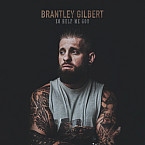
Album: So Help Me God (2022)
Play Video

Songfacts®:

  • "Heaven By Then" finds Brantley Gilbert teaming up with Blake Shelton to imagine a life without small-town values. The two describe the things they love about the southern way of life: Hank Williams, praying for rain, dirt roads, John Deere, and good manners. When those things fade away, Gilbert and Shelton hope it's because they're in heaven.
  • The song ties in with Gilbert's own aversion to change. "I'm good with the things I like, the things I love," he told Billboard. "If they're not a part of life anymore, and something happens to me and I go to heaven, I'm in a better place anyways."
  • Before he finished writing the song, Gilbert recognized it needed Shelton. "In today's age, where features and collabs are really popular, it seems to be kind of what's pushing a lot of machines," he told Apple Music. "Every now and then you write one where you hear the feature during the writing process. And this was one of those."
  • After years as a lone wolf, Brantley Gilbert started racking up duets, beginning with his Lindsay Ell collaboration "What Happens in a Small Town." Other duets since then include "The Worst Country Song Of All Time" with Toby Keith and Hardy, "Son Of The Dirty South" with Jelly Roll, and "Rolex® On A Redneck" with Jason Aldean.
  • Gilbert penned "Heaven By Then" with Brock Berryhill, Hardy, Jake Mitchell, Randy Montana, Hunter Phelps and Taylor Phillips during a February 22, 2022 nighttime writing retreat at a ranch in coastal Matagorda, Texas.

    While working on an entirely different song they got stuck on a line. When Phillips blurted out the phrase "heaven by then," he and Hardy instantly recognized it worked better as a title.

    "Hardy looked at me and was like, 'What did you just say?'" Phillips recalled. "I was trying to play it off like I didn't say nothing. And then I was like, 'Boys, I think we're writing the wrong song.' Hardy grabbed the guitar, and I mean, honestly, it was pretty much a walk in the park. It was very fastly written."
  • Gilbert and Berryhill co-produced the recording at Nashville's Sound Stage on March 23, 2022. They used a six-piece studio band for the acoustic-driven track:

    Ilya Toshinskiy and Derek Wells: guitar
    Jess Franklin: steel guitar
    Craig Young: bass
    Miles McPherson: drums
    Alex Wright: keyboards

    Wells created a descending signature lick that set the tone. "Derek has a couple of different electrics layered on there, and Ilya doubled that with the Dobro," said Berryhill. "It's a stacked part, for sure."
  • After Gilbert laid down some harmonies around Shelton, he and Berryhill decided that Vince Gill would be a better harmony singer. "It's three completely different voices," Berryhill said. "And together, it sounds so cool because you literally hear all three of their voices independently."

Comments

Be the first to comment...

Editor's Picks

Graham Nash

Graham NashSongwriter Interviews

Graham Nash tells the stories behind some of his famous songs and photos, and is asked about "yacht rock" for the first time.

Ralph Casale  - Session Pro

Ralph Casale - Session ProSongwriter Interviews

A top New York studio musician, Ralph played guitar on many '60s hits, including "Lightnin' Strikes," "A Lover's Concerto" and "I Am A Rock."

Rob Halford of Judas Priest

Rob Halford of Judas PriestSongwriter Interviews

Rob Halford dives into some of his Judas Priest lyrics, talking about his most personal songs and the message behind "You've Got Another Thing Comin'."

Corey Hart

Corey HartSongwriter Interviews

The Canadian superstar talks about his sudden rise to fame, and tells the stories behind his hits "Sunglasses At Night," "Boy In The Box" and "Never Surrender."

Incongruent Opening Acts

Incongruent Opening ActsSong Writing

Here's what happens when an opening act is really out of place with the headliner, like when Beastie Boys opened for Madonna.

Edwin McCain

Edwin McCainSongwriter Interviews

"I'll Be" was what Edwin called his "Hail Mary" song. He says it proves "intention of the songwriter is 180 degrees from potential interpretation by an audience."