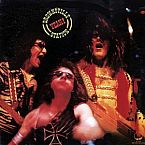
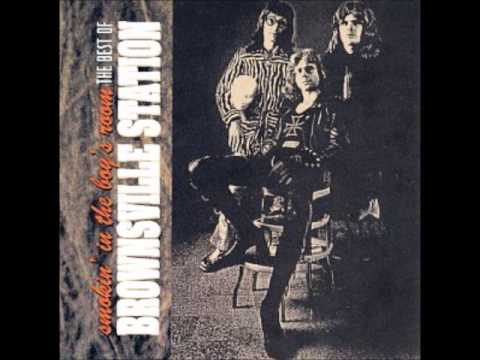
This was written by Brownsville Station lead singer/guitarist Michael "Cub" Koda. Koda wrote for various music magazines, including Goldmine, until he died in 2000.
This song is about a group of schoolboys who sneak out of class to smoke tobacco in the boys' bathroom, only to be found by the principal who reminds them "No smoking allowed in school." Cub Koda got the idea for the song from memories of hanging out at a movie theater with his childhood friends - they would smuggle cigarettes lifted from their parents into the men's room at the Clinton Theater in Ann Arbor, Michigan on Friday nights. Coda says the "old duffer" who owned the theater would come after them, but never caught them in the act.
When he found himself in a band, Koda drew from this experience to write the song, shifting the scene from the movie house to the schoolhouse.
>>>
Suggestion credit:
Alec Thorp - Yorktown Heights, NY
For school outcasts who often questioned authority, this was a very validating song. It became an anthem for frustrated youth who felt marginalized at school.
It took Koda just a half hour to write the song and an hour for the band to record it. They didn't think much of it, but the song became far and away their biggest hit. Brownsville Station - comprised of Koda, bass player Michael Lutz and drummer Henry Weck at the time - had released two album previous to Yeah! and were enjoying regional acclaim around Michigan when "Smokin' In The Boy's Room" took them to the national level.
The band was known for their high-energy stage shows, which - along with a daring choice of stagewear - earned them a spot as the opening act for Slade on their 1974 UK tour.
Producer Doug Morris (also the owner of Big Tree Records) hated the song - he refused to release it as a 45 until a Portland, Maine, FM station started to play it off an LP. Afterwards, requests for the song streamed into the record company - it had over 100,000 orders for the single before Morris changed his mind and released it.
Mötley Crüe covered this song in 1985 on their album Theatre of Pain. It was their first US Top 40, hitting #16, and it brought the song to a new generation. The song's writer Cub Koda recalls joining Crüe on stage during a stop on their tour that year and watching the kids in the audience sing his song back to him. "I felt just like Chuck Berry," he said.
Let's address the apostrophe issue in this song. We list the title as it appeared on the album and single: "Boy's Room." This is bad grammar - "Boys' Room" or "Boys Room" would be correct, unless you were indicating a room that belonged to one particular boy.
Like the digitally altered Star Wars releases, this apostrophe has been excised from the title in most listings of the song just like Greedo shoots at Han Solo. The Mötley Crüe version removed the apostrophe - they might be down with sneaking cigarettes at school, but not with misplaced punctuation.
This bathroom sign dilemma does get confusing, especially when you consider that "men's room" is correct when "boy's room" is not (you can have a group of boys, but not a group of mens). Our suggestion is to leave out the apostrophe to remove the possessive, since the users of the bathroom don't own it. The "Boys Room" would then be a room boys could use to go to the bathroom.
Cub Koda played the harmonica on this track. On the Mötley Crüe rendition, session man Mickey Raphael, who also played with Willie Nelson and Elton John, handled the harp.
This was included on the 2002 compilation CD Mullets Rock!, an album celebrating one of the most embarrassing hairstyles of all time and bands that wore them.
If Nikki Sixx had his way, Mötley Crüe would've covered "
Diamond Girl," a 1973 hit from soft-rock duo Seals & Crofts, instead. The bassist had a soft spot for the tune because it soundtracked a summertime romance when he was a teen, but his Crüemates nixed the idea after a lackluster rehearsal.