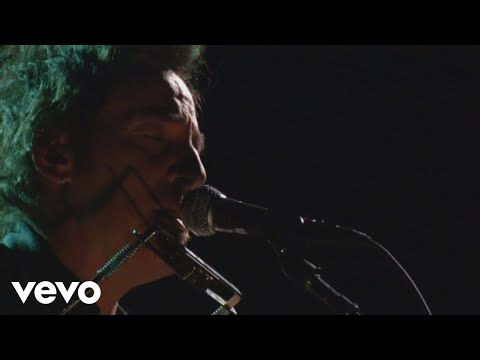
This song is about Charles Starkweather, who was 19 when he went on a murder spree in 1958. Along with his 14-year-old girlfriend Caril Fugate, he killed 11 people in Nebraska and brought out fears that rebellious movies and rock music were creating a new breed of offenders. Springsteen considered "Starkweather" as the title.
In a 1996 interview with NME, Springsteen talked about writing about unsavory characters: "You're not trying to recreate the experience, your trying to recreate the emotions and the things that went into the action being taken. Those are things that everyone understands, those are things that everyone has within them. The action is the symptom, that's what happened, but the things that caused that action to happen, that's what everyone knows about - you know about it, I know about it. It's inside of every human being. Those are the things you gotta mine, that's the well that you gotta dip into and, if you're doing that, you're going to get something central and fundamental about those characters."
The 1973 movie Badlands, starring Martin Sheen and Sissy Spacek, was inspired by Starkweather's story. After seeing a poster for the movie in a theater lobby, Springsteen used the title for his 1978 song, but did not see it until 1980. He also read a biography of Starkweather's girlfriend-accomplice, Caril Fugate.
"You can get to the point where nihilism, if that's the right word, is overwhelming," Springsteen said, explaining the song, "and the basic laws that society has set up - either religious or social laws - become meaningless. Things just get really dark."
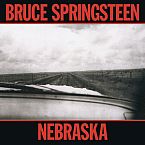
This was the title track to the first album Springsteen recorded by himself. He recorded the songs at his house with a 4-track recorder, and after playing them with The E Street Band, decided they worked best as they were.
Springsteen included four mixes of this song on the tape of demos he gave to his producer/manager Jon Landau, which would form the album.
E Street Band guitarist Steve Van Zant recalled to Rolling Stone magazine that Springsteen started cutting the tracks that made up Nebraska as demos for the band. However he saw potential in them and persuaded Springsteen to record them for an album: "I remember him playing them for me one day and said 'Here's my new songs. We'll start rehearsing them as a band soon.' And I listened to this thing and I thought to myself, 'I gotta say there's something extraordinary about this.' There was no intention of it being a record and no intention of it being released, but there was something just extraordinarily intimate about it. And I thought 'What a wonderful moment has been captured here just accidentally.' And I said to him, 'Listen, I know this is a bit strange but I honestly think this is an album unto itself and I think you should release it.' And he was like 'What do you mean? It's just demos for the band.' And I'm like 'I know you didn't intended for this to be recorded but I just know greatness when I hear it, okay? It's my thing, it's why I'm a record producer and that's why I'm your friend and I'm just telling you I think your fans will just love this and I think it's actually an important piece of work. Because it captures this amazingly strange, weirdly cinematic kind of dreamlike mood. I don't know what it is. All I know is I know greatness when I hear it and this is it, okay? And this deserves to be heard I think people will love it and I think it's a unique opportunity to actually release something absurdly intimate.'"
Introducing this song at a 1990 concert in Los Angeles, Springsteen explained: "This is a story about disconnection and isolation. I've always been fighting between feeling really isolated and looking to make some connection or find some community to belong to. I guess that's why I picked up the guitar initially. I spend enormous periods of time feeling very isolated. I guess this is a song about what happens when that side of you gets really set loose. And you don't feel the connections, and you don't feel what sense laws make or morality makes. And you're gone."
Chrissie Hynde performed this on the 2000 album
Badlands, a tribute album of songs from the album
Nebraska.
Nebraska is the only Bruce Springsteen album without his photo on either the front or back cover. "I knew I shouldn't be on there," he said in Warren Zanes' Deliver Me from Nowhere: The Making of Bruce Springsteen's Nebraska. "The world I was describing, that's what the cover needed to be."