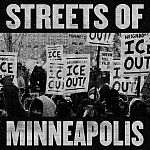
Streets Of Minneapolis

Album: released as a single (2026)
Charted: 92 106
Play Video

Songfacts®:

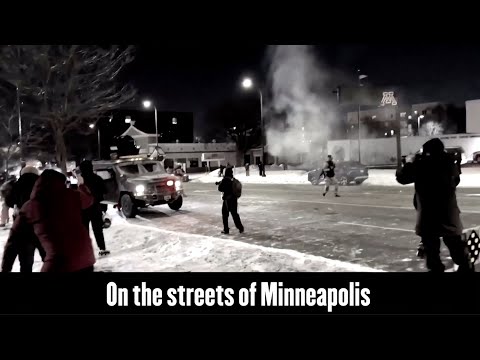
  • "Streets of Minneapolis" is a protest song by Bruce Springsteen released on January 28, 2026, in response to the fatal shootings of Renee Good and Alex Pretti by federal immigration enforcement agents during Operation Metro Surge in Minneapolis.
  • The song's title deliberately echoes Springsteen's 1993 song "Streets Of Philadelphia," a haunting meditation on and the devastating toll of AIDS. By doing so, he draws parallels between the AIDS crisis and President Trump's immigration enforcement. Both songs address state-sanctioned violence against marginalized communities.
  • Springsteen wrote the song on Saturday, January 24, 2026, the very day Alex Pretti, a 37-year-old intensive care nurse, was killed. It was recorded on Monday and released publicly Tuesday; a four-day sprint from shock to statement. The only comparable burst in his catalog is his 2020 album Letter to You, which was written in two weeks and recorded in five days, though even that looks leisurely by comparison.

    "I wrote this song on Saturday, recorded it yesterday and released it to you today in response to the state terror being visited on the city of Minneapolis," Springsteen said upon release. "It's dedicated to the people of Minneapolis, our innocent immigrant neighbors and in memory of Alex Pretti and Renée Good."
  • The song centers on the killings, drawing a sharp contrast between eyewitness video evidence and official government accounts. When federal authorities claimed self-defense, Springsteen fired back with undisguised fury:

    Their claim was self defense, sir
    Just don't believe your eyes
    It's our blood and bones
    And these whistles and phones
    Against Miller and Noem's dirty lies


    The reference to "whistles and phones" nods to grassroots activists' whistles used to warn communities of ICE activity, and smartphones used to record what would otherwise be denied.

    Springsteen names names: Donald Trump (dubbed "King Trump"), DHS Secretary Kristi Noem, and White House Deputy Chief of Staff Stephen Miller, holding them personally accountable for what he describes as "state terror." It's unusually explicit, even for an artist long unafraid of political confrontation.
  • "Streets of Minneapolis" was built fast and lean by a small circle. Springstreen's longtime producer Ron Aniello handled bass, drums, keys, and organ; Patti Scialfa provided backing vocals alongside the E Street Choir (Ada Dyer, Curtis King, Lisa Lowell, Michelle Moore). Springsteen covered lead vocals, guitars, harmonica, and percussion. Max Weinberg is notably absent; the one-day recording schedule made assembling the full E Street Band impractical.
  • The melody echoes Bob Dylan's "Desolation Row," a deliberate tip of the hat to Minnesota's most famous musical son.
  • The lyric video was directed by his longtime collaborator Thom Zimny, who has directed numerous Springsteen projects, including the documentaries Western Stars and The Gift: The Journey of Johnny Cash. It intercuts performance footage with news clips of ICE protests, clashes with federal agents, memorials, and - most controversially - video of Good and Pretti's final encounters with authorities. The video carries an explicit language warning and makes no attempt to soften its impact.
  • Springsteen performed the song live for the first time on January 30, 2026, at First Avenue in Minneapolis, during A Concert of Solidarity & Resistance to Defend Minnesota, organized by Tom Morello. It's the same venue where Prince launched his career.
  • "Streets of Minneapolis" represents the culmination of Springsteen's decades-long tradition of using music to document American social and political crises. It stands alongside songs like "Born In The U.S.A.," "The Ghost Of Tom Joad," and "American Skin (41 Shots)," works that insist patriotism means paying attention. "Streets of Minneapolis," though, exceeds even these powerful statements in its directness and explicit political targeting.

Comments

Be the first to comment...

Editor's Picks

Paul Stanley of Kiss, Soul Station

Paul Stanley of Kiss, Soul StationSongwriter Interviews

Paul Stanley on his soul music project, the Kiss songs with the biggest soul influence, and the non-make-up era of the band.

Alan Merrill of The Arrows

Alan Merrill of The ArrowsSongwriter Interviews

In her days with The Runaways, Joan Jett saw The Arrows perform "I Love Rock And Roll," which Alan Merrill co-wrote - that story and much more from this glam rock pioneer.

Matthew Wilder - "Break My Stride"

Matthew Wilder - "Break My Stride"They're Playing My Song

Wilder's hit "Break My Stride" had an unlikely inspiration: a famous record mogul who rejected it.

Angelo Moore of Fishbone

Angelo Moore of FishboneSongwriter Interviews

Fishbone has always enjoyed much more acclaim than popularity - Angelo might know why.

Ben Kowalewicz of Billy Talent

Ben Kowalewicz of Billy TalentSongwriter Interviews

The frontman for one of Canada's most well-known punk rock bands talks about his Eddie Vedder encounter, Billy Talent's new album, and the importance of rock and roll.

Who Wrote That Song?

Who Wrote That Song?Music Quiz

Do you know who wrote Patti Smith's biggest hit? How about the Grease theme song? See if you can match the song to the writer.