I Just Might

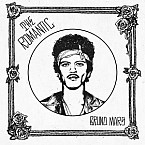
Album: The Romantic (2026)
Charted: 5 1
Play Video

Songfacts®:

  • "I Just Might" finds Bruno Mars back in familiar terrain. It's a mid-tempo, funk-polished disco-pop groove that opens with a tidy four-count, as if the band is checking to make sure everyone's ready before stepping onto the dance floor. Then Mars lays out the premise: romance is possible, but only if the object of his attention can dance. If she moves as well as she looks, the paperwork is approved. If not, the meeting is adjourned. Love, in this universe, requires rhythm.
  • The song is courtship as performance review. This is the same man who once promised to "catch a grenade" and later promised to "leave the door open" for a love interest. Here, though, the door stays on the chain until the feet do the talking. Mars treats dancing not as a metaphor but as a practical skill.
  • Released on January 9, 2026, "I Just Might" arrived amid persistent tabloid murmurs about the status of Mars' long relationship with Jessica Caban, which began around 2011. For years, Mars' public persona leaned heavily toward the devoted partner. But by 2024–2025, breakup rumors and social-media speculation were developing. Against that backdrop, "I Just Might" plays like a subtle recalibration: less marry you, more let's see what you've got. The mood is flirtatious rather than sworn-in.
  • Mars wrote the track with longtime collaborators Philip Lawrence, Christopher Brody Brown and Dernst "D'Mile" Emile II, with production handled by Mars and D'Mile. If it sounds like it shares DNA with An Evening With Silk Sonic, that's because it does; D'Mile co-produced that 2021 project with Anderson Paak, and the same vintage instincts are at work here. The song leans on bright guitar stabs, a buzzy, elastic bassline, and brassy punctuation that could have wandered in from "Skate" or "Smokin Out The Window" without anyone asking for ID.
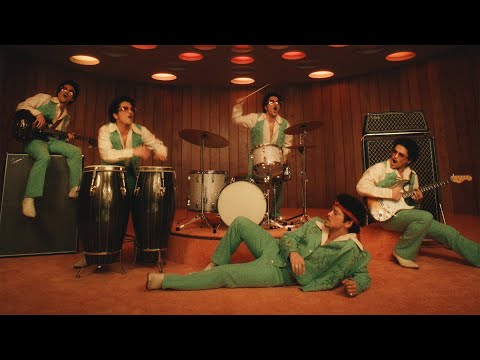
  • The '70s-inflected music video keeps the joke going. Mars appears as five lime-green-suited versions of himself, forming a live band on an old-school TV set, then he steps out to dance beneath multi-colored lights. Directed by Mars and Daniel Ramos, the clip doubles down on the retro aesthetic that defined the Silk Sonic era.
  • "I Just Might" debuted at #1 on the US Billboard Hot 100. It was Bruno Mars' 10th chart-topping single and his first to debut directly at the summit.
  • "I Just Might" was the #1 song in the US when the Grammys took place on February 1, 2026. Mars performed the song at the ceremony and also joined Rosé to open the show with their collaboration "APT.," which was nominated for Record Of The Year and Song Of The Year.
  • Released as the lead single from The Romantic, "I Just Might" helped propel the album to #1 in the US. It was Mars' second chart-topping album, following 2012's Unorthodox Jukebox.

Comments

Be the first to comment...

Editor's Picks

Julian Lennon

Julian LennonSongwriter Interviews

Julian tells the stories behind his hits "Valotte" and "Too Late for Goodbyes," and fills us in on his many non-musical pursuits. Also: what MTV meant to his career.

Barney Hoskyns Explores The Forgotten History Of Woodstock, New York

Barney Hoskyns Explores The Forgotten History Of Woodstock, New YorkSong Writing

Our chat with Barney Hoskyns, who covers the wild years of Woodstock - the town, not the festival - in his book Small Town Talk.

Timothy B. Schmit of the Eagles

Timothy B. Schmit of the EaglesSongwriter Interviews

Did this Eagle come up with the term "Parrothead"? And what is it like playing "Hotel California" for the gazillionth time?

Jack Tempchin - "Peaceful Easy Feeling"

Jack Tempchin - "Peaceful Easy Feeling"They're Playing My Song

When a waitress wouldn't take him home, Jack wrote what would become one of the Eagles most enduring hits.

Howard Jones

Howard JonesSongwriter Interviews

Howard explains his positive songwriting method and how uplifting songs can carry a deeper message.

Harold Brown of War

Harold Brown of WarSongwriter Interviews

A founding member of the band War, Harold gives a first-person account of one of the most important periods in music history.