Neil Young wrote this after breaking up with the group because of what he called "An identity crisis." He quickly returned to the band and recorded this song. In a Rolling Stone interview about what broke up Buffalo Springfield; Young said, "I was going crazy, you know, joining and quitting and joining again. I began to feel like I didn't have to answer or obey anyone. I needed more space." Meanwhile, his Buffalo Springfield bandmate Stephen Stills concurs, saying in part: "We were of the age where you can very easily get the diva syndrome before you've sold any records or anything and all that stuff, and there was a little of that. And it was so laden with talent, this bunch, that we just hit the track going too fast that we went into the wall with no skid marks. It was just... we spun out. But we spun out because we didn't realize how hot the car was."
This track took over 100 hours to record, which was an eternity by 1967 standards. "Broken Arrow" sometimes draws raised eyebrows for being so oddly arranged - rather like the Beatles' psychedelic period such as "
Revolution 9." Perhaps it is this song which longtime Young collaborator David Briggs had in mind when he said, "When you make rock and roll, the more you think, the more you stink."
Dewey Martin, who was Buffalo Springfield's drummer, sang the first verse of Mr. Soul in this tune. The track was produced by Jack Nitzsche, and the jazzy piano solo at the end is by Don Randi.
>>>
Suggestion credit:
Steve - Los Angeles, CA
Of "Broken Arrow," Peter Frampton had this to say: "Ever since the Buffalo Springfield, 'Broken Arrow' - I think that's the one that did it for me, that just put him at the top of my list as one of my favorites. And to have him and Stephen Stills in the same band, 'cause I love both of them, was incredible. But Neil is just an amazing performer as well as, obviously, the amazing songs he's written. I'm a big fan."
In 1996, Young released an album titled Broken Arrow.
Engineer Jim Messina recalled to Uncut magazine in 2021: "When Neil brought the song in, he wanted to use all these separate pieces. That was a first for me, but I knew what we had to do to make it work. I got a chance to see how his mind worked in terms of piecing all those images together.
The last part has that jazz part in it, which I never understood why he wanted it there. But when it all came together, it was quite wonderful. I would never have pictured it in that way, but Neil did.
Sitting back and watching him think it through, then bringing the band in and getting them to play it, then putting that little piece in the end; it was fascinating. I remember him standing up when it was done, with a huge smile on his face, and saying, 'That's it. That's great.'"
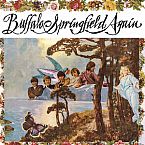
In the sleeve notes for Buffalo Springfield Again, Young dedicates "Broken Arrow" to Ken Koblun, a Canadian musician who played with Young several times in the 1960s, including a short sting with Buffalo Springfield in early 1967. Koblun was Young's old friend, playing with him way back in 1963 with The Squires, Young's first serious band. Buffalo Springfield called on Koblun's services after bassist Bruce Palmer was arrested and deported back to Canada for drug possession at the very time when "For What It's Worth" was hot on the charts.
When authorities deported Palmer, Koblun had been playing with a group named 3's A Crowd, which isn't so much remembered today but was a band with some commercial success, particularly in Canada. Cass Elliot of The Mamas & the Papas co-produced the band's only album, Christopher's Movie Matinee, in 1968. Koblun left that group posthaste and hopped in with Buffalo Springfield. Everything went well except Koblun thought he was there to occupy the position full-time, while Buffalo Springfield were looking at him as only a temporary replacement.
Young couldn't bring himself to tell Koblun he was out of the band in person, so he wrote him a note on February 10 letting him know that his services were no longer needed. This is part of a pattern in Young's life, as he was known throughout his career for burning bridges and abandoning friends at the drop of the hat. Young himself has categorized this as a devotion to following his music wherever it took him, and that is the way it's frequently been mythologized. On the other side, many were left hurt and feeling betrayed, and whether Young's acts were devotional or just plain selfish is largely a matter of perspective (as with most things in life).
The dynamics of this particular conflict were even more intriguing because Koblun had also abandoned 3's A Crowd to be with Buffalo Springfield and, interestingly, had actually turned down Stephen Stills and Richie Furay in 1965 - he could have been a founding a member of Buffalo Springfield before Young even entered the picture.
According to Koblun, Young selected the title "Broken Arrow" because it's an Indian term for "friendship after war" (Don't Be Denied, 1992, p. 198). In that same quote, Koblun says that the song isn't "about" him so much as about Young's guilt for sending him away from Buffalo Springfield.
For his part, Young openly dedicated the song to Koblun in the album's liner notes and added in Don't Be Denied: "I dedicated it to him because he had gone through a rough time."
Despite his brief tenure with the band, Koblun is in one of the few video-recorded bits of Buffalo Springfield, appearing in a fully mimed (the band pretending to play while actually moving to prerecorded music) performance of "For What It's Worth" on Where The Action Is, a variety showed created by Dick Clark.