On The Road To Find Out

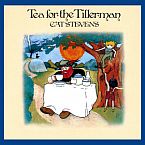
Album: Tea For The Tillerman (1970)
Play Video

Songfacts®:

  • "On The Road To Find Out" is about a young man who wants to see the world for himself, so he sets out on a journey to clear his mind and see what he can discover. It was inspired by a deep spiritual emptiness in Cat Stevens' life. He was not writing about traveling in a literal sense but in finding out who he was and the purpose, if any, of his existence. Stevens had fame and fortune thrust upon him at an early age (he was 18 in 1967 when his first three singles charted in his native UK), and like so many in a similar position he looked at what he'd accomplished and realized it had brought him neither happiness nor peace of mind.

    This was one of the songs he wrote after recovering from tuberculosis, a disease that had all but been eradicated in the Western world by the time he contracted it, and which in his case was caused by personal neglect and fast living.

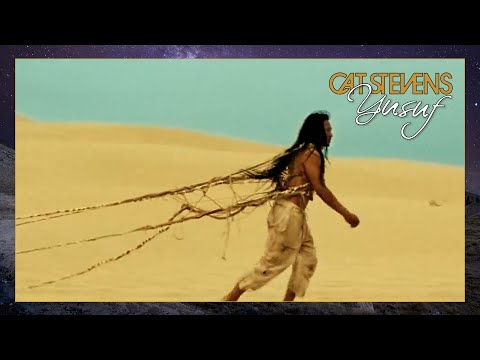
    In 1977, he converted to Islam after several years of serious contemplation of religion. He played his final concert in November 1979 then withdrew totally from music for over two decades. In 2004, after his return as Yusuf Islam, he featured in a TV documentary where he told presenter Alan Yentob that his songs were a narrative to his life – none more so than "On The Road To Find Out."
  • The last couplet reads:

    The answer lies within, so why not take a look now?
    Kick out the Devil's sin, pick up, pick up a good book now


    When asked about this he told Alan Yentob that – as far as he recalled - he had originally written "pick up the Good Book now" - an obvious allusion to the Bible, but had altered it to avoid its being taken up by "Bible bashers."
  • Although they are separated by three decades, and the latter is written in the third person singular, "On The Road To Find Out" is strikingly similar in content to "Drops Of Jupiter (Tell Me)" by Train, which was inspired by an entirely different subject but has been and can be interpreted as a voyage of self-discovery. >>>
    Suggestion credit:
    Alexander Baron - London, England, for above 3
  • Looking back on the song in 2020, Stevens told Entertainment Weekly that the song foretold what was going to happen to him, and that the "good book" his sings about ended up being the Koran, which his brother gave him in 1975. "Before I received any book, I was writing about this book that was going to change my life," he said. "And wow."
  • After recording two albums on the Deram label with producer Mike Hurst, Stevens signed with Island (A&M in the US) and took on ex Yardbird Paul Samwell-Smith as producer. With Alun Davies on guitar, they recorded the album Mona Bone Jakon, which was followed by Tea For The Tillerman. According to Samwell-Smith, they were playing a gig in Aberdeen, Scotland, when Stevens and Davis started composing this song in the dressing room.

Comments: 8

  • Tinagay Riddle, Retired Army from Louisville, KentuckyCat Stevens spoke to me in my teen years. I felt spiritual but could not feel happy. I promised myself that I would meet him some day, talk about it, and I would write about it. My ambition, written in my high school annual, was to get on Cat’s “Road to Find Out.” I ALWAYS knew the last words were to have been to “pick up the good book now.” I entered the military, picked up many books, learned much, served in Saudi Arabia and Bosnia and admire his commitment to God and what he said during an interview, “you have to be true to yourself and what you believe.”
  • John Roberts from Chicago, IllinoisHe even sings 'Pick up the Good Book now' here https://www.youtube.com/watch?v=OPv0-9Q79a4 "A good book" makes no sense if you are "kicking out the Devil's sin". If atheists don't like hearing about religion, don't listen to Cat Stevens.
  • Steve from Melbourne, AustraliaI could be drawing a long bow here but having read Bunyan's 'Pilgrims Progress' I am struck by the similarities between song and story. A young man dissatisified with his life, leaves his home and family to set out on a journy to discover what is tryly important. Of course both texts share a christian connection.
  • Walter from Austin, TxHarold buys a Hearse first. His mom has it taken away and gives him a nifty Jaguar to replace it. Harold promptly converts the Jaguar into a Hearse.
  • Joe from Sacramento, Caharold didnt buy the hearse he had a jaguar i think was the car cutinto a car that looked like a hearse
  • Janice from Folsom, CaThis song was played at both my brother's and father's funerals. A perfect way to sum up the journey they'd been on, and the one they were embarking on. Through out life, we are truly on the road to find out.
  • Peter Griffin from Quahog, Riyesss
  • Brian from Fullerton (the Paris Of Oc), CaThis is the song playing in the film Harold and Maude when Harold buys his hearse. For some reason, it's a beautiful scene.
see more comments

Editor's Picks

Who Did It First?

Who Did It First?Music Quiz

Do you know who recorded the original versions of these ten hit songs?

Mick Jones of Foreigner

Mick Jones of ForeignerSongwriter Interviews

Foreigner's songwriter/guitarist tells the stories behind the songs "Juke Box Hero," "I Want To Know What Love Is," and many more.

Vince Clarke

Vince ClarkeSongwriter Interviews

An original member of Depeche Mode, Vince went on to form Erasure and Yaz.

Martin Page

Martin PageSongwriter Interviews

With Bernie Taupin, Martin co-wrote the #1 hits "We Built This City" and "These Dreams." After writing the Pretty Woman song for Go West, he had his own hit with "In the House of Stone and Light."

Max Cavalera of Soulfly (ex-Sepultura)

Max Cavalera of Soulfly (ex-Sepultura)Songwriter Interviews

The Brazilian rocker sees pictures in his riffs. When he came up with one of his gnarliest songs, there was a riot going on.

Tony Iommi of Black Sabbath, Heaven And Hell

Tony Iommi of Black Sabbath, Heaven And HellSongwriter Interviews

Guitarist Tony Iommi on the "Iron Man" riff, the definitive Black Sabbath song, and how Ozzy and Dio compared as songwriters.