If I Had A Million Dollars

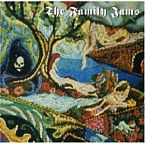
Album: The Family Jams (1997)
Play Video

Songfacts®:

  • The word millionaire - or variants thereof - appears to have originated in the early 18th Century; by 1999 there were reported to be over forty-seven thousand millionaires in Britain, and ten years later, a staggering 7.8 million "millionaire households" in the United States. Of course, the rise in wealth is not so impressive when one takes into account inflation, but when this song was written, in the late 1960s, a million dollars in cash was still a tidy sum.

    Running to around two and a half minutes, the questions are asked if I had a million dollars: "Would you do anything that I asked you to do?" and "What would you have me do?"

    When one realizes this song was written by Charles Manson, the answers to these questions becomes both horrifying and rhetorical. Manson was a small time criminal who had learned the guitar in prison. He was born in Cincinnati in 1934, and had drifted to California where, at the height of the flower power/hippy era, he morphed into a Svengali-like figure, although he - and some of his followers - viewed him more as a Christ-like figure. He formed a commune living in the desert where he and his disciples (his Family) lived. All were white, and most were young women, though there were also a few men.

    On the night of August 9, 1969 - on Manson's directions - several family members entered the home of the film director Roman Polanski, and murdered his heavily pregnant actress wife Sharon Tate and four others. The following night, the wealthy businessman Leno LaBianca and his wife were killed in an equally brutal fashion.

    On January 25, 1971, after a lengthy trial, Manson and three young women - all Family members - were convicted of what had become known as the Tate-LaBianca Murders, and sentenced to death. Charles "Tex" Watson was convicted in a separate trial. After a Supreme Court ruling in February 1972, all five had their sentences commuted to life imprisonment.
  • "If I Had A Million Dollars" is the 11th track on the double album The Family Jams, which was released in 1997. The songs were recorded in 1970, i.e. between the murders and the arrests. Manson was said to have been anxious to have his songs released commercially while he was awaiting trial, but for obvious reasons none of the big record companies would touch him with a bargepole, although there were earlier releases, including some recordings by Manson himself in prison. Manson does not appear on the original recording, which featured Steve Grogan as lead vocalist with Red, Blue, Gypsy, Brenda, Ouisch and Capistrano.

    In spite of life having given him a raw deal, Manson obviously had talent, and having developed at least one music industry contact, he could have achieved fame instead of notoriety, and become a force for good instead of the man who killed the '60s. >>>
    Suggestion credit:
    Alexander Baron - London, England, for above 2

Comments

Be the first to comment...

Editor's Picks

Andrew Farriss of INXS

Andrew Farriss of INXSSongwriter Interviews

Andrew Farriss on writing with Michael Hutchence, the stories behind "Mystify" and other INXS hits, and his country-flavored debut solo album.

Danny Kortchmar

Danny KortchmarSongwriter Interviews

Danny played guitar on Sweet Baby James, Tapestry, and Running On Empty. He also co-wrote many hit songs, including "Dirty Laundry," "Sunset Grill" and "Tender Is The Night."

Chris Frantz - "Genius of Love"

Chris Frantz - "Genius of Love"They're Playing My Song

Chris and his wife Tina were the rhythm section for Talking Heads when they formed The Tom Tom Club. "Genius of Love" was their blockbuster, but David Byrne only mentioned it once.

Dean Pitchford

Dean PitchfordSongwriter Interviews

Dean wrote the screenplay and lyrics to all the songs in Footloose. His other hits include "Fame" and "All The Man That I Need."

Who's Johnny, And Why Does He Show Up In So Many Songs

Who's Johnny, And Why Does He Show Up In So Many SongsSong Writing

For songwriters, Johnny represents the American man. He has been angry, cool, magic, a rebel and, of course, marching home.

Scott Gorham of Thin Lizzy and Black Star Riders

Scott Gorham of Thin Lizzy and Black Star RidersSongwriter Interviews

Writing with Phil Lynott, Scott saw their ill-fated frontman move to a darker place in his life and lyrics.