Relaxin' At Camarillo

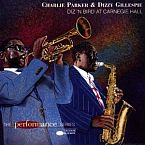
Album: Diz 'N Bird at Carnegie Hall (1947)
Play Video

Songfacts®:

  • The "Camarillo" is Camarillo State Hospital in Ventura County, California. Parker was sent there after spending 10 days in jail, charged with indecent exposure, resisting arrest, and suspected arson.

    Charlie parker moved to California from New York after cashing in his return ticket for heroin money. During this time junk was hard to come by, and he substituted it with large quantities of alcohol, which greatly altered his behavior for the worse. Parker racked up a string of charges, including indecent exposure, resisting arrest and suspected arson, which led to a 10 day stint in prison. All of these offenses happened on a single unlucky night - July 29, 1946 - when Parker had streaked through a hotel lobby, then set his hotel bed on fire with an unsupervised cigarette.

    In Bird Lives, the biography of Parker's Dial Records label boss, Ross Russell (published in 1973), he describes the incident that led to Parker's arrest and rehabilitation. "The very next night after that infamous session [part of the 'Dial sessions' recorded in Los Angeles], Bird got drunk and set his hotel room on fire. He was found wandering in the hall of his hotel and in the street, half naked. He was arrested and was sent to the Psychopathic Ward of the Los Angeles State Jail, booked as insane."

    Parker stayed at Camarillo for six months. He wrote "Relaxin' at Camarillo" shortly after his release from the hospital, and his return to New York where his heroin addiction continued.
  • It was Dial Records head Ross Russell who titled this jazz instrumental "Relaxin' At Camarillo." Parker wanted to call it "Past Due," and was not pleased with Russell's title.

    In Henry Martin's 2020 book Charlie Parker, Composer, he writes: "Parker certainly named some of his pieces and probably approved titles that weren't his, but the only tune whose title particularly disturbed him is 'Relaxin' At Camarillo,' which he wished to be called 'Past Due.'"

    It stands to reason that Parker might haven wanted to put the memory of his breakdown and Camarillo behind him. >>
    Suggestion credit:
    Jp Thomas - San Francisco, CA
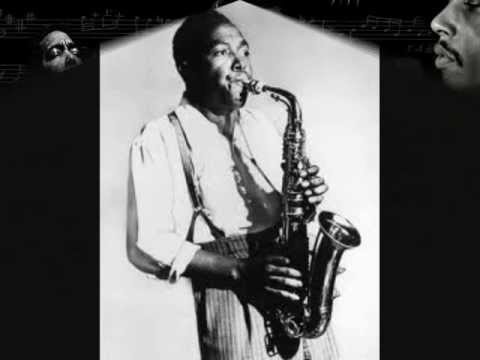
  • Charlie parker played alto sax on this track. The other musicians on the track are:

    Howard McGhee - trumpet
    Wardell Gray - tenor sax
    Dodo Marmarosa - piano
    Red Callender - bass
    Don Lamond - drums
    Barney Kessell - guitar
  • In beat generation novelist Jack Kerouak's book Dharma Bums (published in 1958) he describes Camarillo as a place "where Charlie Parker'd been mad and relaxed back to normal health."
  • Parker's trumpet player, Howard McGhee, said that he was assigned to pick up Parker and bring him to the session. When he went by to get him, Parker was in the bathtub, where he had just written 12 bars of "Relaxin' At Camarillo."

    In an interview with Phil Schaap, McGhee said: "Man, those 12 bars hung up the rehearsal session. Nobody could play it. We started out trying to play it, but the syncopation comes off the beat. It's syncopated so differently from anything we heard, so we didn't know what was happening - and I transposed it! I fixed it up for the whole band, but nobody could play it but Bird."
  • Camarillo was known as the "Country Club" when compared to the other local state mental hospitals of Norwark and Patton.

    While in Camarillo, Parker played saxophone in the hospital band, and they performed in a small bandstand on Saturday nights. He also passed time there by tending a lettuce patch. His third wife, Doris Sydnor, moved to California so that she could visit him three times a week. She had to take a job as a waitress to support herself.
  • The first version of this song was arranged by the foremost jazz theorist, pianist and composer, George Russell. Russell was the author of The Lydian Chromatic Concept of Tonal Organization (published in 1953), a work of biblical importance for jazz musicians and educators that had a far reaching impact on bebop musicians including Miles Davis and Bill Evans in developing a modal style of jazz in the late 1950s.
  • Camarillo State Hospital closed in July 1997. The campus of California State University, Channel Islands, has occupied the site since 2002. >>
    Suggestion credit:
    Victor - San Diego, CA
  • The Beverly Hills Hotel has sometimes been misrecognized as Camarillo State Hospital on the front cover of the Eagles Hotel California album. The two buildings have very similar tower structures and are both in California. However, a closer comparison between them shows that the hospital only has one main tower, while the hotel has two smaller towers to either side of the large central tower. This mistaken identity has given rise to fan interpretations of the lyrics of "Hotel California" as being a metaphor for a mental hospital.

Comments: 8

  • Jp Thomas from San FranciscoEven if The Eagles' "Hotel California" DID feature a photo of Camarillo State Hospital on the cover, WTF does that have to do with Charlie Parker? That kind of trivia belongs on the Wikipedia page for Camarillo, California, not this article on "Relaxin' at Camarillo".
  • Steffen from Camarillo, CaI'm from Camarillo, and am a big fan of Charlie Parker. I've played some transcriptions of his solos on sax and you really start to appreciate the guy when you're still trying, after hours and hours of practice, to copy something he did in a moment on a whim. Cool song for sure. By the way, Rev. Ryan, I was told that he got his nickname simply because he ate so much fried chicken. Have you heard that before?
  • Joel from Columbia, ScMan I absolutey dig Charlie Parker. I used to get stoned and just listen to him all night when I was a freshman in college.
  • Rev. Ryan from Camarillo, Ca..and im a student at csuci. lol.. its an awesome school.. i highly recomend it. 8)
  • Rev. Ryan from Camarillo, CaThe Bird Charlie Parker got his nick name, because in highschool, he would practice for housr at a local park, because his neighbors would complain. so the cops would allow him to play and practice as long as it was far enough away from the residential area. people heard his alto so often in the park that he got the nick name the bird.

    if you read a new history of jazz by alyn shipton on page 452, there is a direct quote.
  • Matthew from Portland, OrEvery jazz musician should know two things about Charlie Parker blues: the key it is in - no transposing allowed, e.g. Cool Blues is in C concert, not B flat, so take your old real book and put in through the paper shredder! The other thing is to play them by memory; if you have to have a chart, you are training yourself to have bad ears. Relaxin' at Camarillo is one of the essentials, and Parker called it "Past Due" so learn it NOW!! The more familiar title was given by Dial founder Ross Russell, an adept engineer but totally unreliable historian. While we're on the subject of Bird, yet another thing that Charlie Parker had in common with Mozart is that neither of them ever achieved one moment of triumph in their entire lives, so if anyone uses an expression like "the triumph of Charlie Parker," by definition they must mean after he died.You can't rewrite history just to sell more books and hope that nobody will notice.
    Matthew, Portland OR
  • Kika from Nyc, NyThis song is wonderful!
  • Ted from Loveland, CoCharlie Parker (alto sax), Howard McGhee (trumpet), Wardell Gray (tenor), Dodo Marmarosa (piano), Barney Kessel (guitar), George 'Red' Callender (bass), Don Lamond (drums). Hollywood February 1947

    The ingenious piano intro devised by pianist Dodo Marmarosa is a reminder what a loss his disappearance from the jazz scene was to the music. Wardell Gray, who takes the second solo here, was another majestic musician who suffered a tragic early demise. A deceptively tricky blues tune written in the cab on the way to session, the Camarillo of the title is the name of the mental institution from where Parker had recently emerged, refreshed and healthy, as his playing here conveys.
see more comments

Editor's Picks

Gary Brooker of Procol Harum

Gary Brooker of Procol HarumSongwriter Interviews

The lead singer and pianist for Procol Harum, Gary talks about finding the musical ideas to match the words.

Andy McClusky of OMD

Andy McClusky of OMDSongwriter Interviews

Known in America for the hit "If You Leave," OMD is a huge influence on modern electronic music.

Waiting For The Break of Day: Three Classic Songs About All-Nighters

Waiting For The Break of Day: Three Classic Songs About All-NightersSong Writing

These Three famous songs actually describe how they were written - late into the evening.

Donald Fagen

Donald FagenSongwriter Interviews

Fagen talks about how the Steely Dan songwriting strategy has changed over the years, and explains why you don't hear many covers of their songs.

Graham Nash

Graham NashSongwriter Interviews

Graham Nash tells the stories behind some of his famous songs and photos, and is asked about "yacht rock" for the first time.

Michael Sweet of Stryper

Michael Sweet of StryperSongwriter Interviews

Find out how God and glam metal go together from the Stryper frontman.