Chris Rainbow

Chris Rainbow Artistfacts

  • November 18, 1946 – February 11, 2015
  • Chris Rainbow was born Christopher James Harley in Glasgow. He changed his surname after spotting the name "Christopher Rainbow" in a TV news reporter's on-screen credit one evening - he and his friends agreed it was the perfect stage name. The switch was also practical: Steve Harley of Cockney Rebel was at the peak of his fame, and Rainbow didn't want any confusion between the two.
  • Before he became a musician, Rainbow trained and worked as a graphic artist from 1964 to 1972. He didn't form his first band, Hopestreet, until he was 25, releasing two singles on Regal Zonophone and Parlophone between 1972 and 1973.
  • Rainbow's early solo singles, "Give Me What I Cry For" and "Solid State Brain," became unlikely radio (but not chart) hits in the mid-1970s thanks to heavy rotation by DJs Kenny Everett and Tony Blackburn. Everett, then at Capital Radio in London, was a particular champion of Rainbow's music and helped build his cult following.
  • Rainbow built his own recording studio on the Isle of Skye, where he lived from the 1970s onwards. His only solo studio albums were Home of the Brave (1975), Looking Over My Shoulder (1977), and White Trails (1979) - all released before he turned 33.
  • Rainbow sang on Alan Parsons Project albums from Eve (1979) right through to Parsons' 1999 solo album The Time Machine. Alan Parsons nicknamed Rainbow "the one-man Beach Boys" for his extraordinary ability to layer vocal harmonies entirely by himself in the studio.
  • In the early 1980s he joined the progressive rock band Camel as a touring and recording member, appearing on the albums The Single Factor (1982) and Stationary Traveller (1984) and touring with them in 1982 and 1984. He also provided vocal work for Jon Anderson of Yes on the albums Song of Seven (1980) and Animation (1983).
  • Rainbow provided backing vocals on Culture Club's 1984 album Waking Up with the House on Fire, including on the lead single "The War Song," which reached #2 in the UK. He shared vocal duties on the track with backing singers Helen Terry, Phil Pickett, and Clare Torry.
  • Rainbow became a respected record producer in Scotland (working under his birth name Chris Harley) producing multiple albums for Scottish Celtic rock band Runrig throughout the 1980s and 1990s, including Heartland (1985), The Cutter and the Clan (1987), and Amazing Things (1993).
  • More than a decade after his death aged 68 from Parkinson's disease in February 2015, Rainbow made his Billboard Hot 100 debut. The nearly 50-year-old deep cut "Be Like A Woman" from White Trails entered the chart in April 2026 after gaining traction on TikTok, where its hazy retro sound attracted millions of users.

Comments

Be the first to comment...

Editor's Picks

Sam Hollander

Sam HollanderSongwriter Interviews

The hitmaking songwriter/producer Sam Hollander with stories about songs for Weezer, Panic! At The Disco, Train, Pentatonix, and Fitz And The Tantrums.
Yacht Rock Quiz

Yacht Rock QuizFact or Fiction

Christopher Cross with Deep Purple? Kenny Loggins in Caddyshack? A Fact or Fiction all about yacht rock and those who made it.
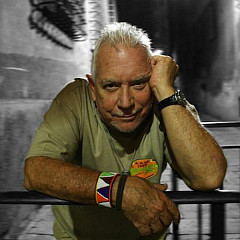
Eric Burdon

Eric BurdonSongwriter Interviews

The renown rock singer talks about "The House of the Rising Sun" and "Don't Let Me Be Misunderstood."
Artis the Spoonman

Artis the SpoonmanSong Writing

Even before Soundgarden wrote a song about him, Artis was the most famous spoon player of all time. So why has he always been broke?
Women Who Rock

Women Who RockSong Writing

Evelyn McDonnell, editor of the book Women Who Rock, on why the Supremes are just as important as Bob Dylan.
Matthew Wilder - "Break My Stride"

Matthew Wilder - "Break My Stride"They're Playing My Song

Wilder's hit "Break My Stride" had an unlikely inspiration: a famous record mogul who rejected it.