Stealing Cinderella

Album: Starting Now (2007)
Charted: 56
Play Video

Songfacts®:

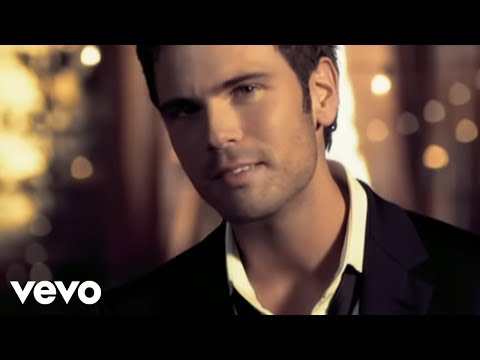
  • This ballad finds Chuck Wicks asking a father's permission to marry his daughter, with allusions to the fairy tale Cinderella. The song was inspired by Wicks' girlfriend who worked at Disney World in Florida; her job was to dress up as the princess and greet visitors.
  • The tune was co-written by Wicks along with songwriters George Teren and Rivers Rutherford. Teren shared the story behind the song with Bart Herbison of Nashville Songwriters Association International (via The Tennessean) : "I remember Rivers and I were scheduled (to write) every Wednesday," he recalled. "This was the Wednesday after Thanksgiving. Chuck came in, and I had maybe written with him once, and we didn't know him all that well. He was going to be cutting the final round (of songs) for his first album in about a week or two, so we knew this was a really good opportunity to work with him. We kicked around a few ideas, and didn't really hit on anything that was floating our boat."

    "Then Chuck started talking about going back home," Teren continued. "I think he'd been living in Orlando, Florida, before he moved up here to pursue his music. And he still had a girlfriend in Orlando. He'd been back for Thanksgiving break and had spent time with her. She worked at Disney World, and her job was to play Cinderella. I think this was one of the first times he had spent time with her family."

    "Apparently her father was a pretty imposing and slightly intimidating guy. He came back talking about it.," he added. "In the song, it says he was asking for her hand (in marriage). That's not exactly true. They were headed that way, but it didn't work out. That's how the whole thing started."

    "The one thing I remember, he was talking about how she played Cinderella, and there were these pictures up of her as a little girl," Teren concluded. "I kept thinking, 'Well there's a lot of good pictures here, but what's the point of the song?' A half hour into it, we came up on the idea that he was the guy that was stealing Cinderella. We actually wrote it fairly quickly. I think it was about three hours or so."
  • The story of Cinderella is a traditional fairy tale. In 1697 A Frenchman, Charles Perrault published a collection of eight fairy tales entitled Histoires ou contes du temps passé. As well as Cinderella, his book also included The Sleeping Beauty, Red Riding Hood, Bluebeard and Puss in Boots.

    Not until Perrault's publication did Cinderella wear glass slippers, or "pantouffles en verre." Perrault mistranslated this phrase and thought it was equivalent to "pantouffles en vair," which actually means slippers made from white squirrel fur.

    In 1729, Robert Samber translated the fairy tale collection into English. It was popularized in Britain as Histories, or Tales of Past Time, and later in America as Mother Goose Tales.

Comments

Be the first to comment...

Editor's Picks

Gary Lewis

Gary LewisSongwriter Interviews

Gary Lewis and the Playboys had seven Top 10 hits despite competition from The Beatles. Gary talks about the hits, his famous father, and getting drafted.

Jack Tempchin - "Peaceful Easy Feeling"

Jack Tempchin - "Peaceful Easy Feeling"They're Playing My Song

When a waitress wouldn't take him home, Jack wrote what would become one of the Eagles most enduring hits.

Keith Reid of Procol Harum

Keith Reid of Procol HarumSongwriter Interviews

As Procol Harum's lyricist, Keith wrote the words to "A Whiter Shade Of Pale." We delve into that song and find out how you can form a band when you don't sing or play an instrument.

Richie Wise (Kiss producer, Dust)

Richie Wise (Kiss producer, Dust)Songwriter Interviews

Richie talks about producing the first two Kiss albums, recording "Brother Louie," and the newfound appreciation of his rock band, Dust.

Donald Fagen

Donald FagenSongwriter Interviews

Fagen talks about how the Steely Dan songwriting strategy has changed over the years, and explains why you don't hear many covers of their songs.

Don Dokken

Don DokkenSongwriter Interviews

Dokken frontman Don Dokken explains what broke up the band at the height of their success in the late '80s, and talks about the botched surgery that paralyzed his right arm.