Kaleidoscope

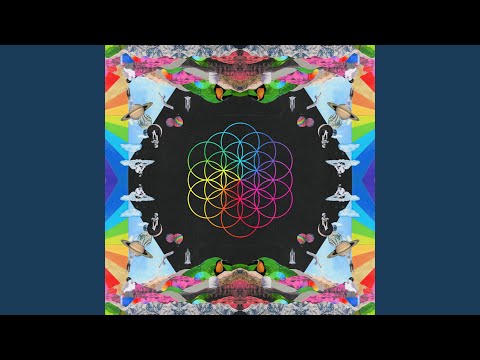
Album: A Head Full Of Dreams (2015)
Play Video

Songfacts®:

  • Martin told The Wall Street Journal the poem helped him get through the breakdown of his marriage to Gwyneth Paltrow, which left him feeling "depressed and overwhelmed." "It kind of changed my life," he said of the work. "It says that everything that happens to you is OK."

    "The Guest House is about accepting the negative along with the positive," he continued. "It's about every feeling that you have being a gift. Self-doubt and depression as well as all the joyful feelings are all useful if you can harness them."
  • The kaleidoscope is an optical toy, where the user sees many beautiful, colourful patterns. It was invented in 1817 by Scottish physicist Sir David Brewster (December 11, 1781 – February 10, 1868). He also invented the binocular camera, the polyzonal lens and the lighthouse illuminator, as well as coming up with an improved version of the stereoscope applied to photography, which was the first portable, 3D viewing device.

    The word "kaleidoscope" is derived from the Ancient Greek kalos, "beautiful, beauty", eidos, "that which is seen: form, shape" and skope, "to look to, to examine."
  • The use of a kaleidoscope by a song writer is generally as a metaphor for a vast diversity of something such as emotions, passions or cultures. Miguel's "Kaleidoscope Dream," for instance, describes a woman with so many qualities, she is almost like a dream. Other lyrical examples include:

    "Uncharted" by Sara Bareilles ("Jump start my kaleidoscope heart. Love to watch the colors fade.")

    "Welcome to New York" by Taylor Swift ("Walkin' through a crowd, the village is a glow. Kaleidoscope of a loud, heart beats under coats. Everybody here wanted somethin' more. Searchin' for a sound we hadn't heard before.")

    "Can You Feel The Love Tonight" by Elton John ("There's a time for everyone if they only learn. That the twisting kaleidoscope moves us all in turn.")

    Alternatively the "kaleidoscope" can be used in a more psychedelic way to describe something very colorful - most famously when John Lennon sung of a girl's "kaleidoscope eyes" in The Beatles' "Lucy In The Sky With Diamonds."
  • Barack Obama features on this song. The White House granted permission for a portion of the recording of the President singing "Amazing Grace" at the funeral of Charleston shooting victim Clementa C. Pinckney to be used. Chris Martin told The Sun: "We have a tiny clip of the president singing 'Amazing Grace' at that church. Because of the historical significance of what he did and also that song being about, 'I'm lost but now I'm found.'"

    Martin commented to The Daily Telegraph regarding why he chose to use the Barack Obama sample. "In a situation when he could have gone very revengeful and aggressive, he chose to do that, which was a powerful statement. That's a good way of looking at life. Gracefully going through whatever you are going through."
  • Speaking about this song with Entertainment Weekly, Chris Martin said, "It's about appreciating every day and not getting too overwhelmed by some of the heavier things in life."
  • The song comprises a spoken extract from The Guest House accompanied by a lofty piano-led instrumental. The poem by 13th-century Persian poet Rumi compares the people of a guest house to the diverse "kaleidoscope" of experiences a human being has in their lifetime. Rumi tells the reader to welcome all the "guests" and to be grateful for them, however good or bad they may be.
  • President Obama has had some success with previous recordings. He has won the Grammy for Best Spoken Word Album twice: for Dreams From My Father in 2006 and The Audacity Of Hope in 2008.
  • The narrator is American poet Coleman Barks, who is renowned as an interpreter of Rumi and other Persian mystic poets.
  • Asked how you clear a sample of the American president, Martin replied: "I asked a friend who was going to see him. And Obama said, 'I'm sure we can make that happen.'"

Comments

Be the first to comment...

Editor's Picks

Tommy James

Tommy JamesSongwriter Interviews

"Mony Mony," "Crimson and Clover," "Draggin' The Line"... the hits kept coming for Tommy James, and in a plot line fit for a movie, his record company was controlled by the mafia.

Steely Dan

Steely DanFact or Fiction

Did they really trade their guitarist to The Doobie Brothers? Are they named after something naughty? And what's up with the band name?

David Gray

David GraySongwriter Interviews

David Gray explains the significance of the word "Babylon," and talks about how songs are a form of active imagination, with lyrics that reveal what's inside us.

JJ Burnel of The Stranglers

JJ Burnel of The StranglersSongwriter Interviews

JJ talks about The Stranglers' signature sound - keyboard and bass - which isn't your typical strain of punk rock.

Tim McIlrath of Rise Against

Tim McIlrath of Rise AgainstSongwriter Interviews

Rise Against frontman Tim McIlrath explains the meanings behind some of their biggest songs and names the sci-fi books that have influenced him.

George Clinton

George ClintonSongwriter Interviews

When you free your mind, your ass may follow, but you have to make sure someone else doesn't program it while it's wide open.